
Centocelle Archaeological Park, area facing Via Papiria
/ Code
Location: Rome
Date: 2025-2026
Project: Permanent installations for accessibility of the Centocelle park for the Jubilee celebrations
Client: Department of Environmental Protection
Assignment: Technical and economic feasibility study, detailed design
Role: Design (PFTE and Detailed Design), Safety (CSP, CSE), and Construction Management
Status: Under construction
Working group: CHVL Architetti Associati; Consultants: Eng. Stepa Ingegneria srl; Agronomist Dr. Paolo Ghini
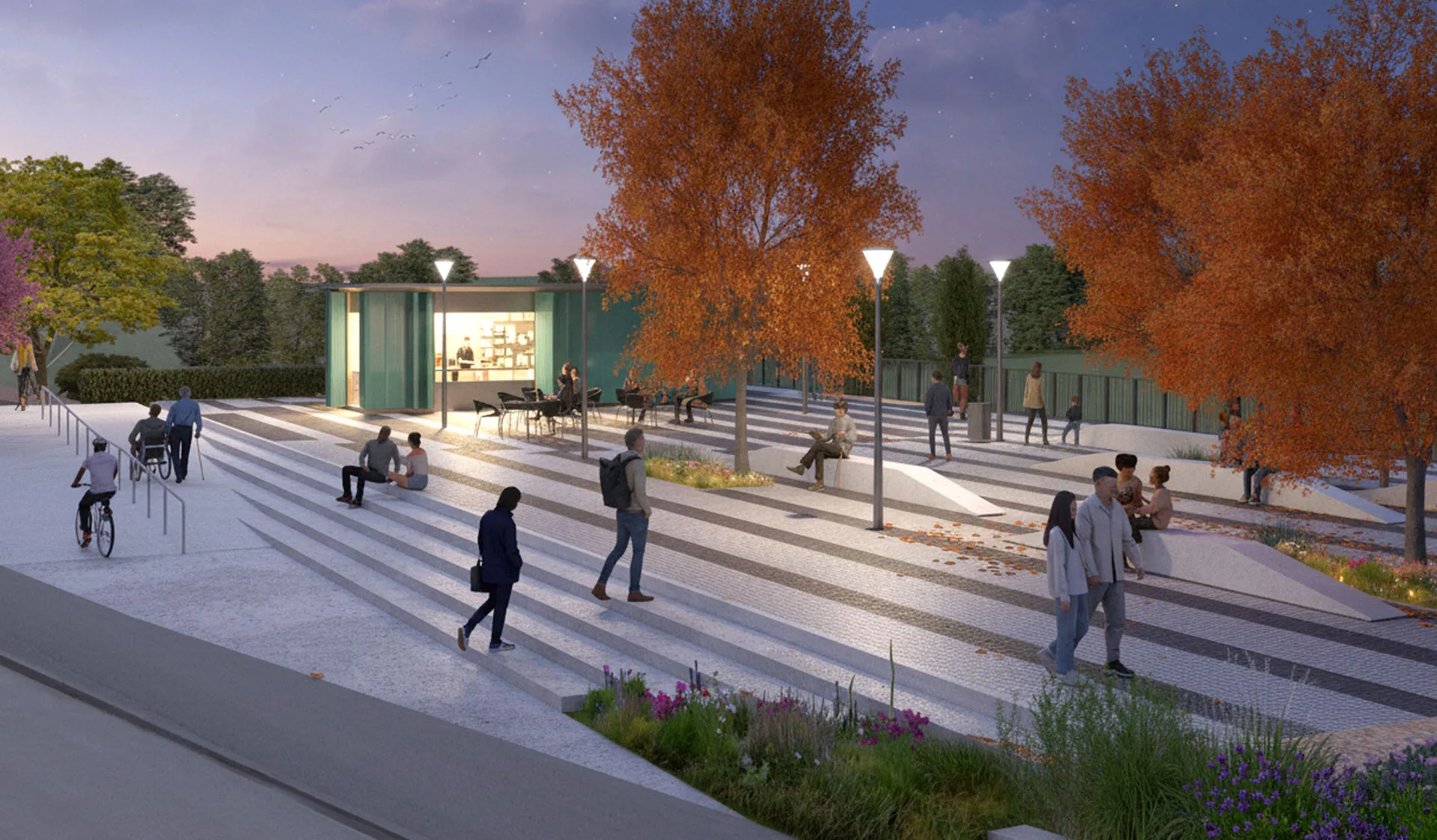
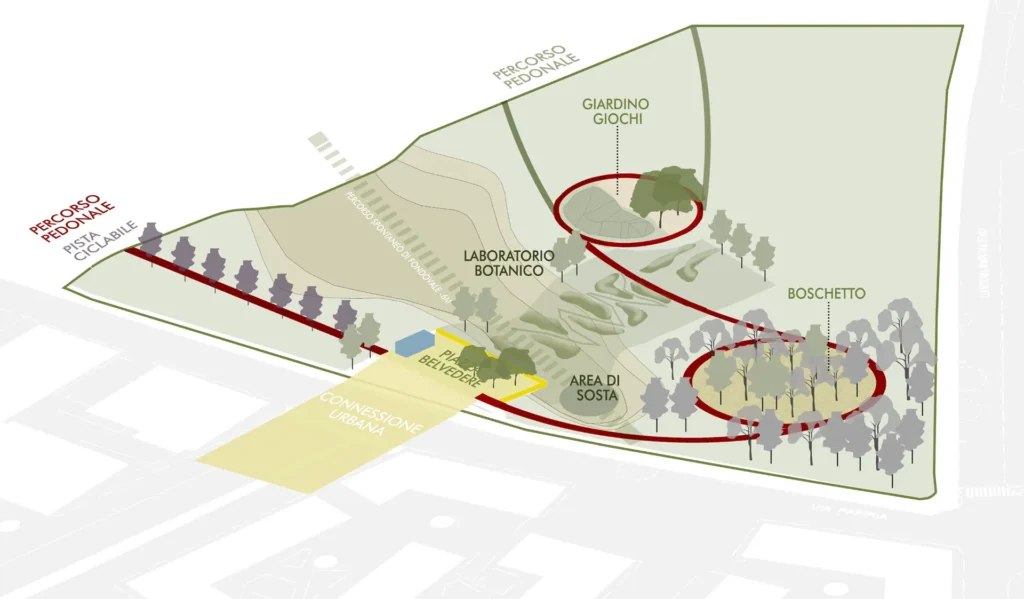
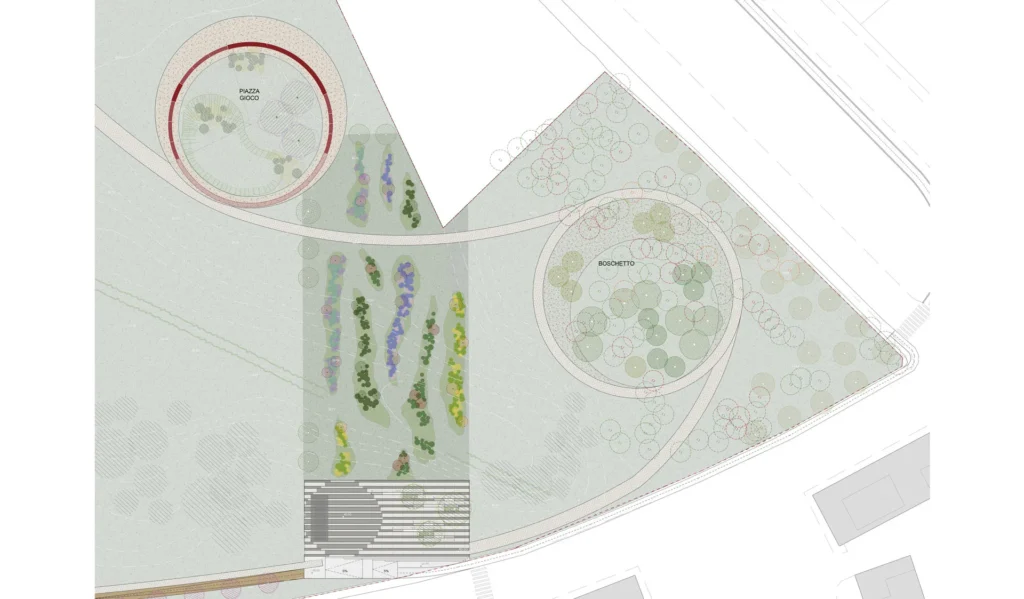
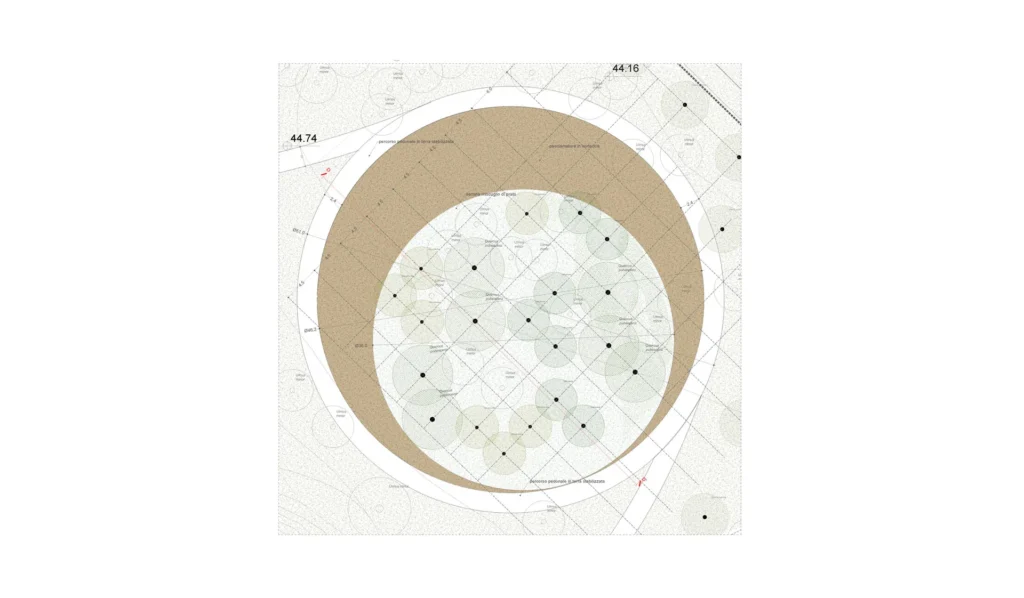
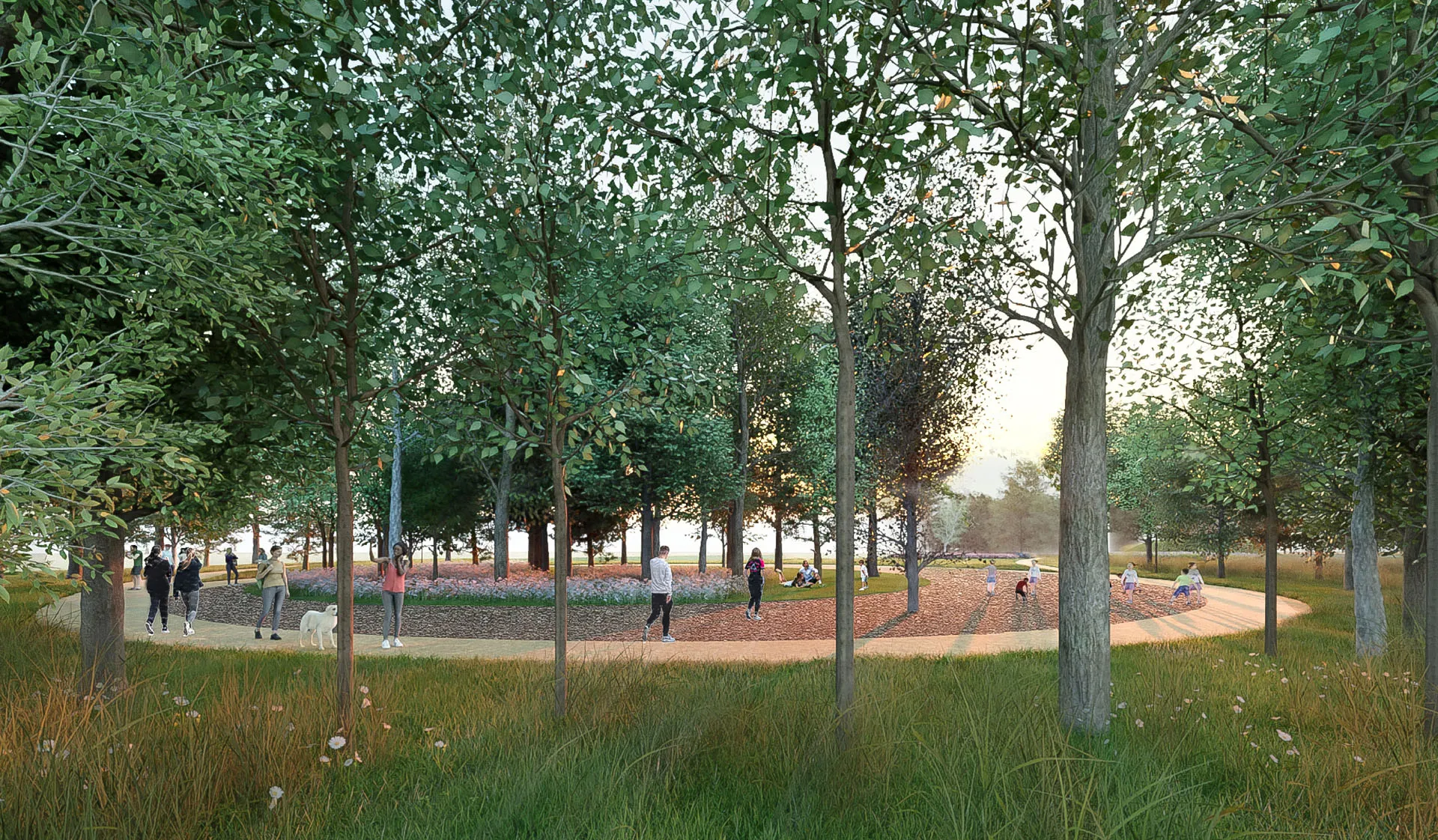
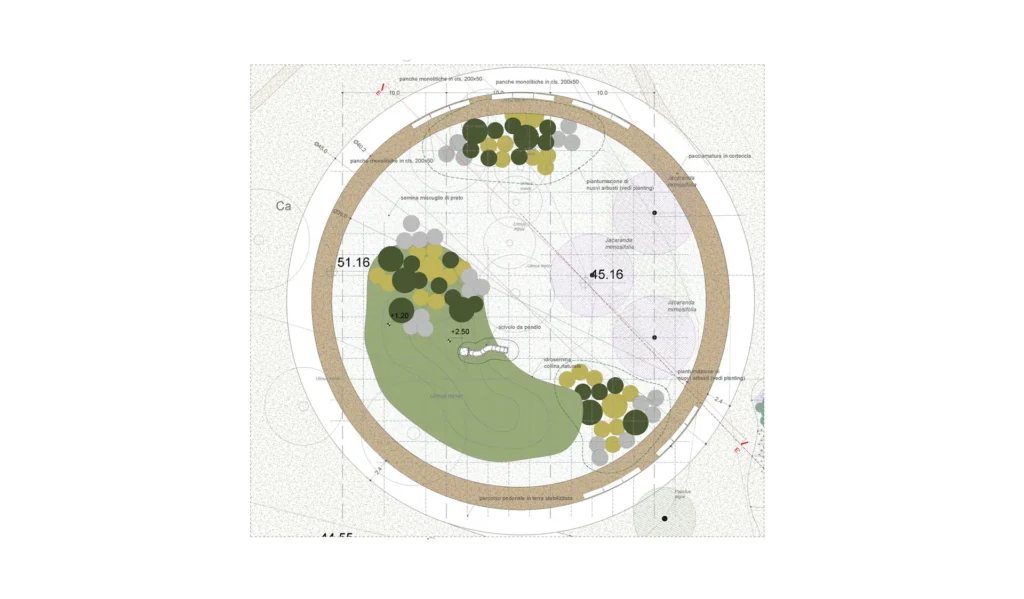
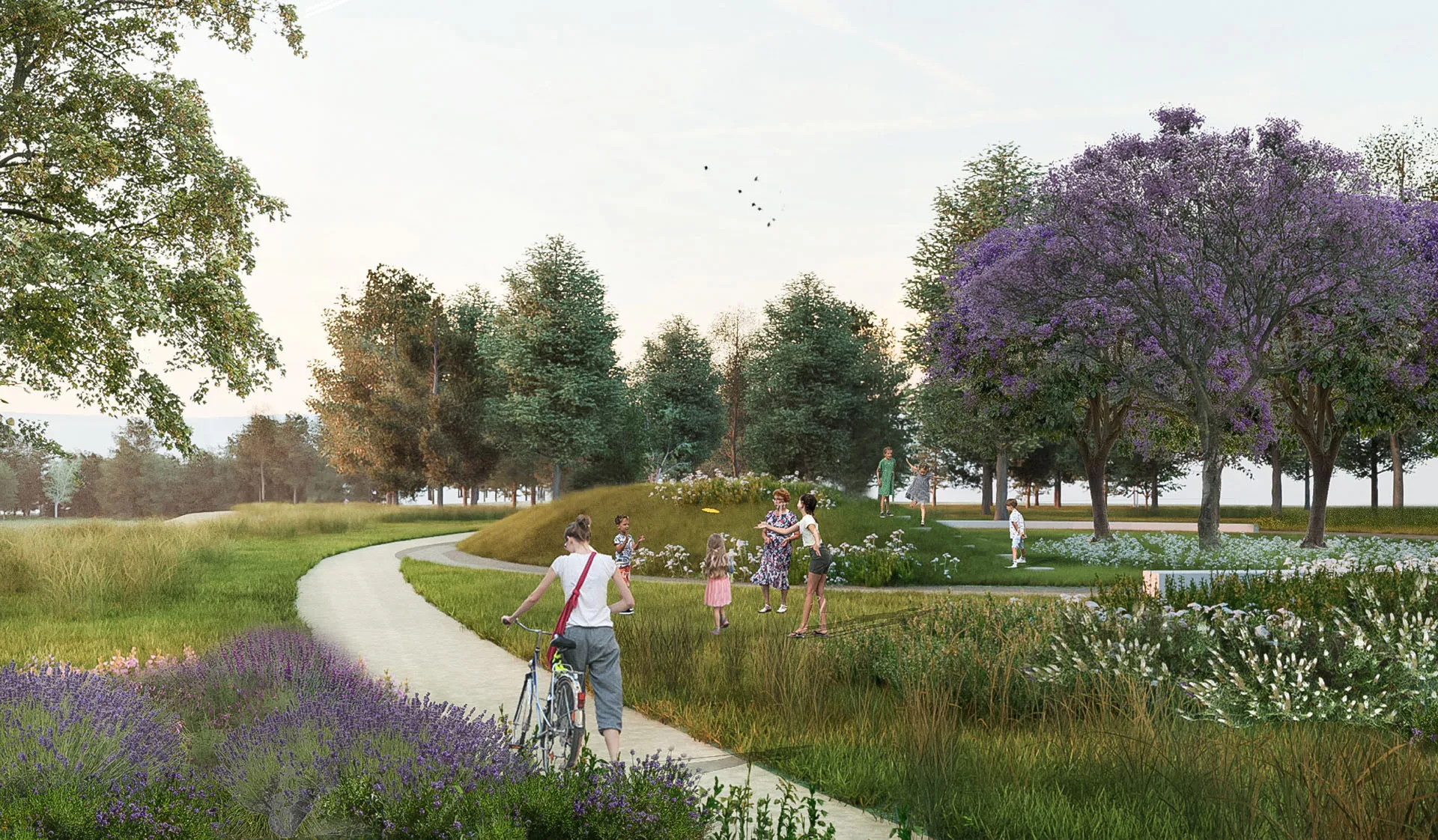
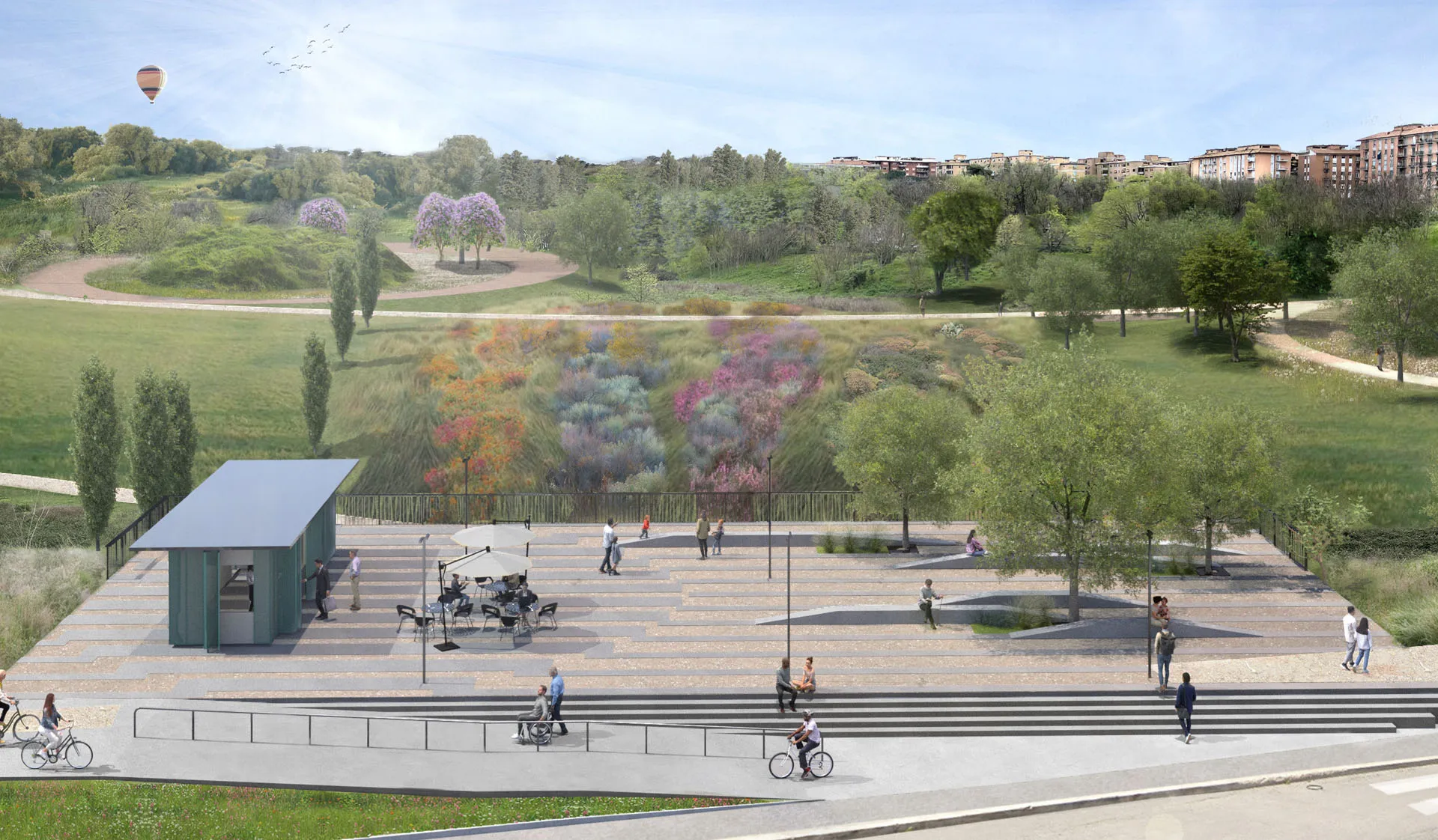
The project aims to redevelop the southern area of the Centocelle Archaeological Park, creating an access point from the Tuscolano-Don Bosco district of Rome. A portion of the Urban Park covering approximately 48 hectares is being designed, developing several elements to create a new access area from the southern front along Via Papiria and integrating permeability and accessibility from the densely populated neighboring neighborhoods.
The creation of the public space at the southern entrance to the park is conceived as an urban platform that, on one side, constitutes the terminus of a clearly visible road axis, and on the other, becomes a springboard that draws the eye to embrace the park’s natural space. To this end, a public plaza is planned at the southern entrance to the park, overlooking a natural area enhanced as a botanical laboratory.
This space will serve as an incubator for plant species, promoting sensory and educational experiences related to the world of plants. The cultivated species will gradually spread throughout the park, enriching the landscape with new seasonal configurations. The project envisions the most orographically complex area being landscaped with plantings that create a visually interesting botanical puzzle, designed to enrich the park’s biotope with species compatible with the local climate, for educational and environmental purposes.
Accessible and permeable paths will connect the square to two other areas:
- The grove, a flowery meadow shaded by existing trees, with the addition of new specimens and the replacement of dead or invasive plants.
- The play garden, a natural play area for children, with shaped soil and a wealth of seasonal blooms that attract butterflies and birds.
An open and livable space for all residents will be created, gathering the flow of both pedestrian paths and the two cycle paths (the parallel one along Via Papiria and the orthogonal one from Via Marco Fulvio Nobiliore) and directing them towards the new park paths, which will be connected to those currently under construction.