

Chapel of S. Andrea of Università dei Pescivendoli
/ Code
Location: Rione Sant’Angelo, Rome
Date: 2023-2024
Project: Restoration of the chapel and movable paintings
Client: Special Superintendence for Archaeology, Fine Arts and Landscape of Rome
Assignment: Technical and economic feasibility study, detailed design
Role: Appointed designers
Working group: CHVL Architetti Associati; Consultants: KeoRestauro s.n.c
Under the special supervision of the Superintendence of Rome: Dr. Alessandra Acconci
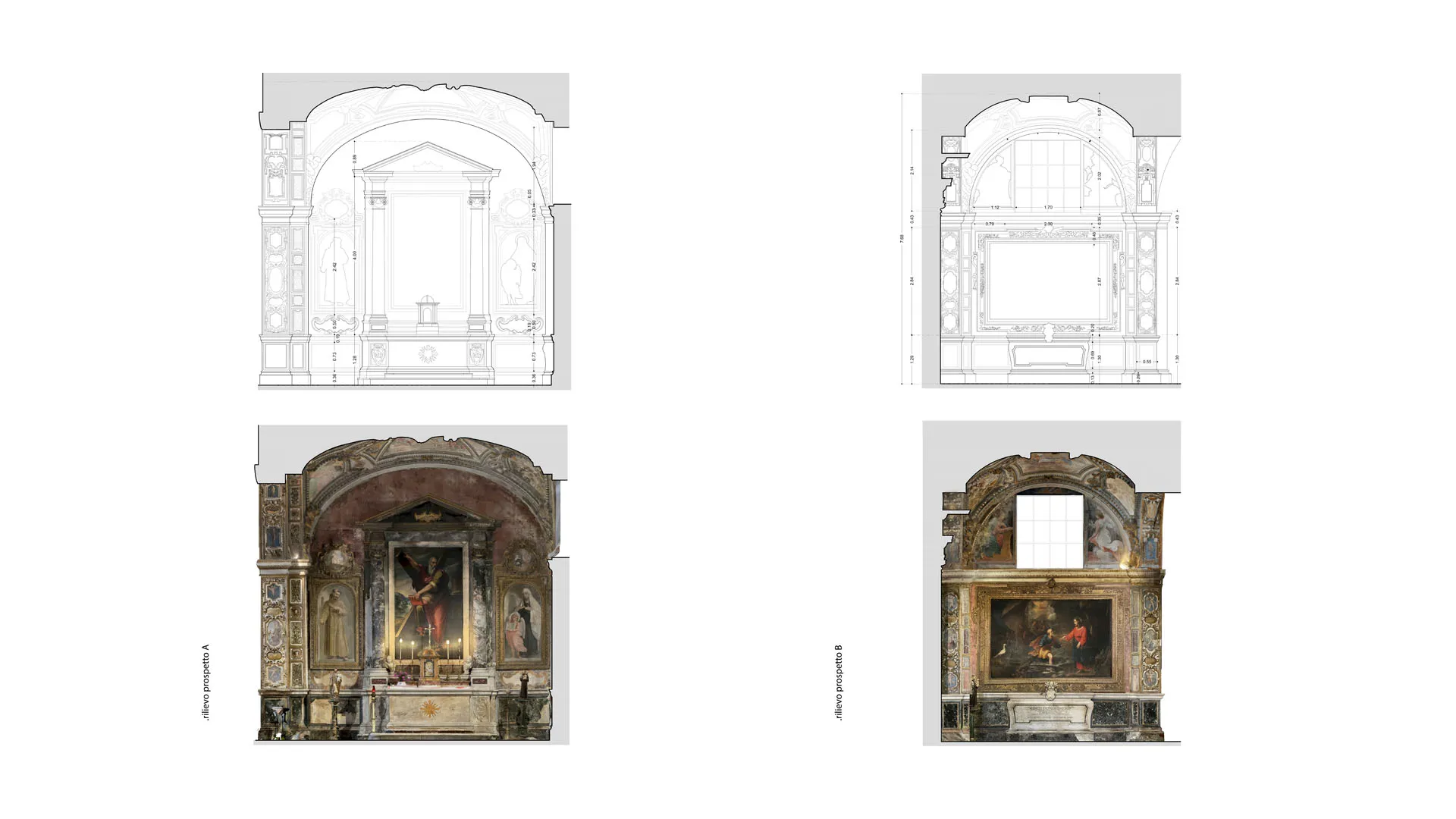
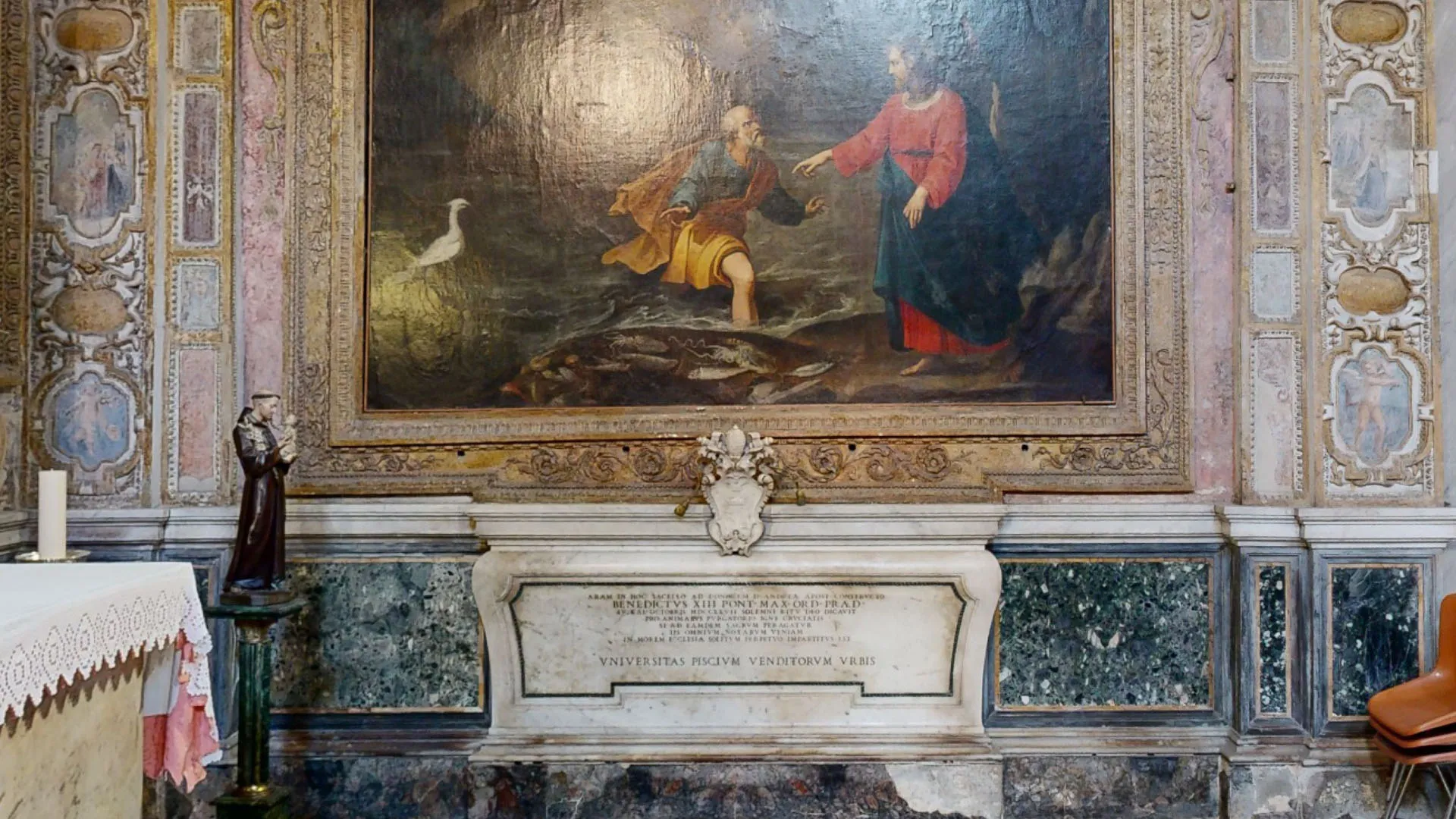
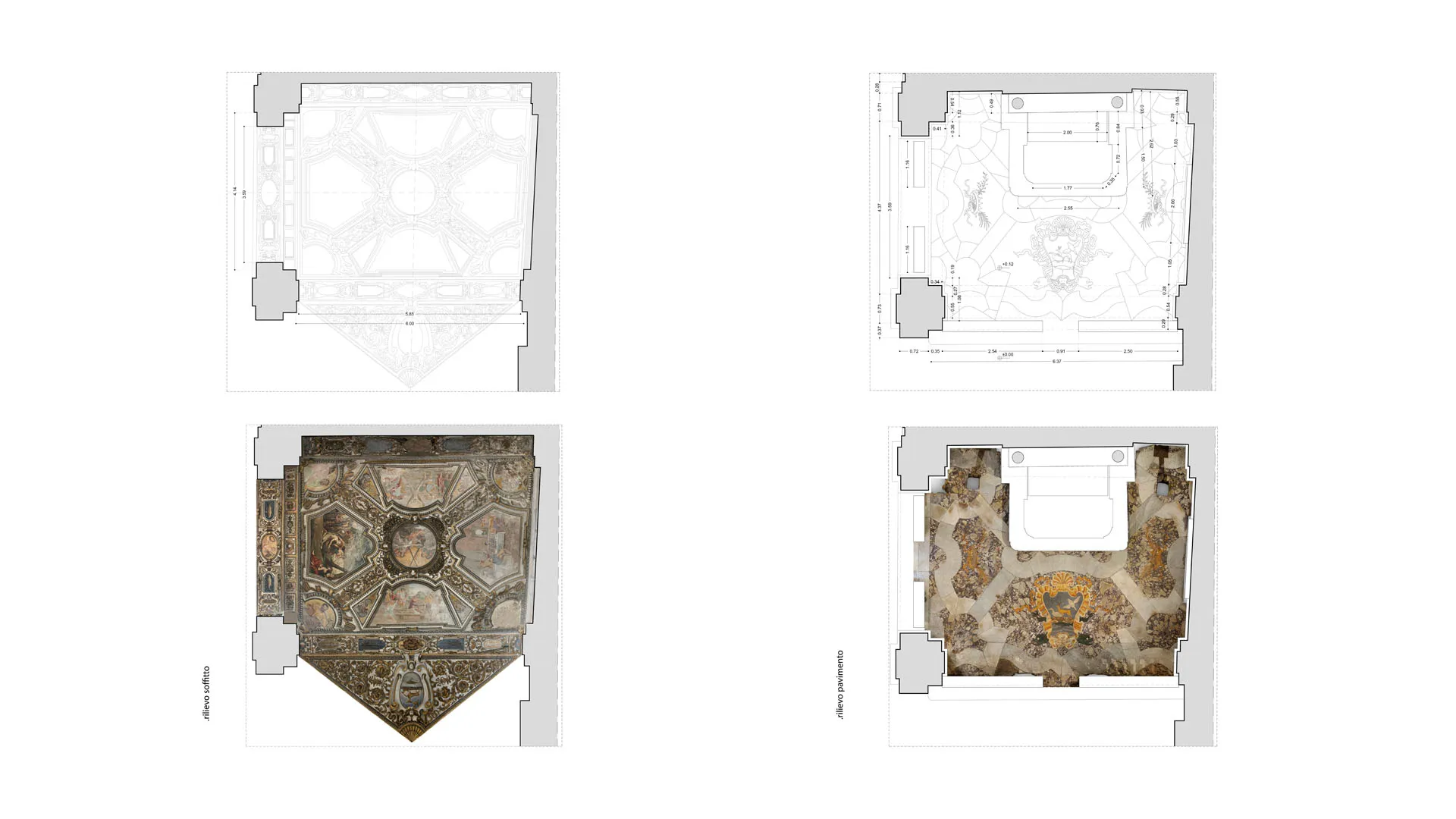
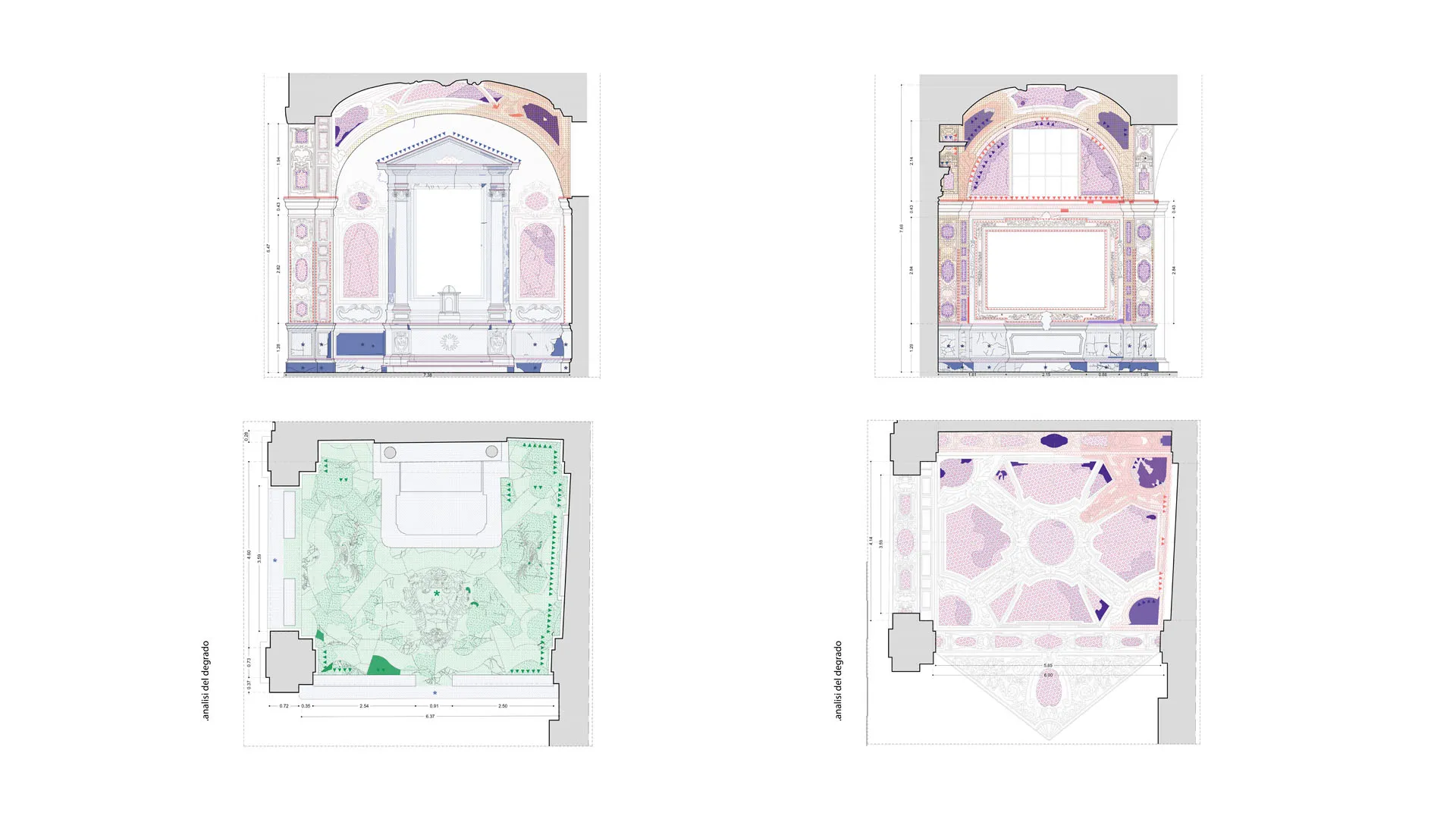
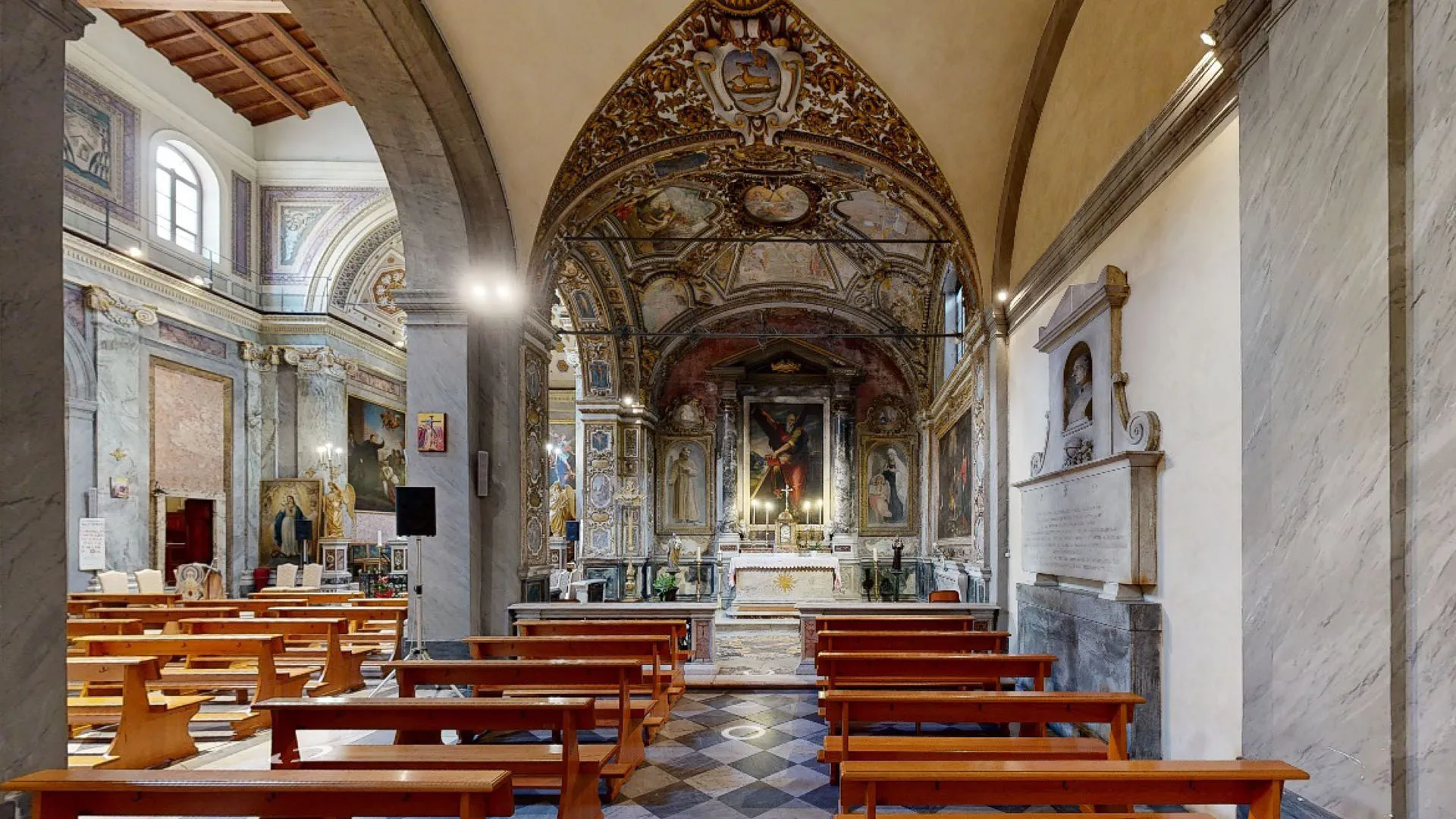
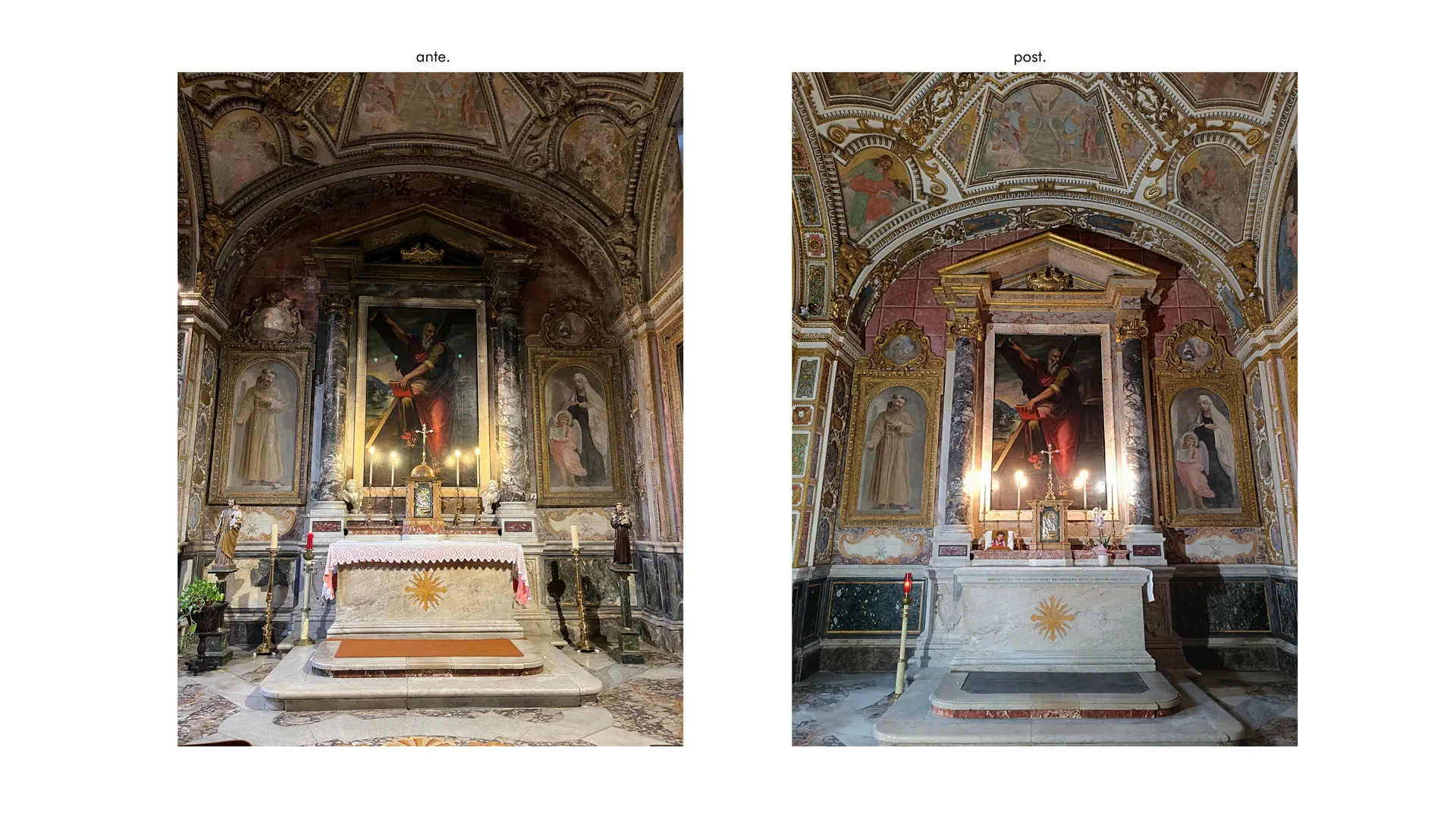
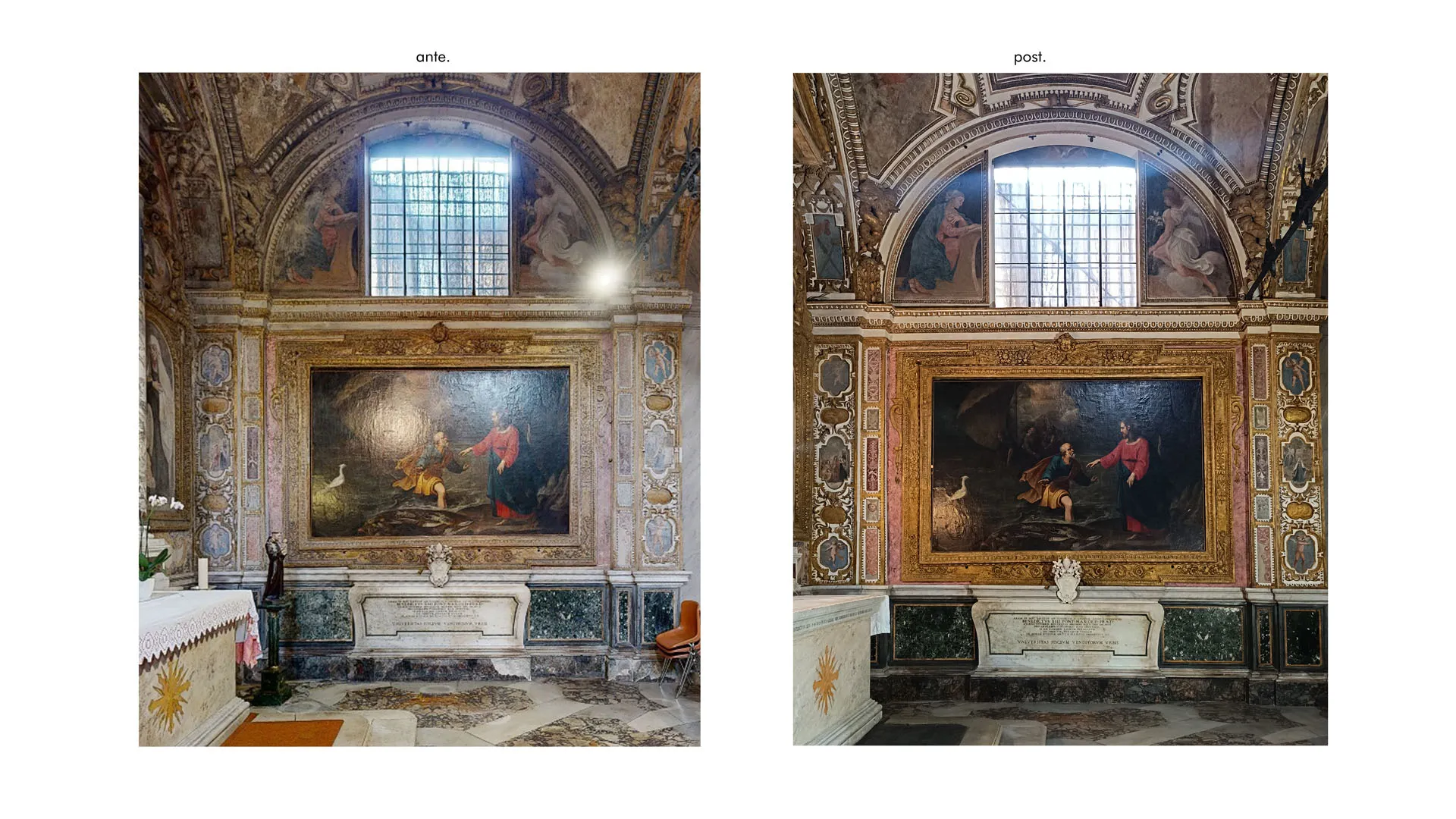
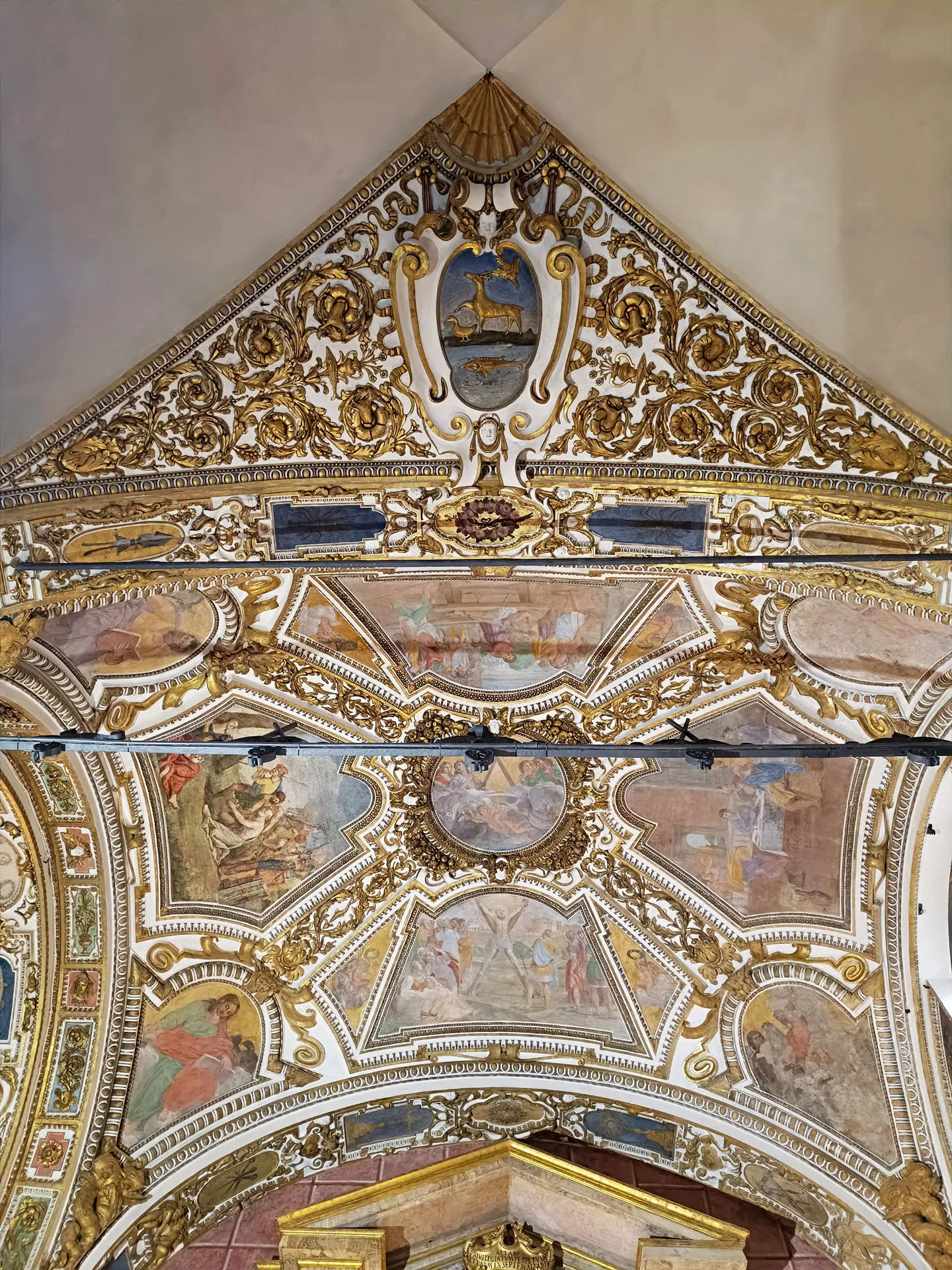
The chapel of Sant’Andrea was acquired by the Università dei Pescivendoli in 1579 and rebuilt at its expense in 1583. Governed by its own statutes, it enjoyed constant maintenance over time. Suppressed at the end of the 18th century by decree of Pius VII, it had previously been rebuilt between 1579 and 1619 and today stands next to the presbytery.
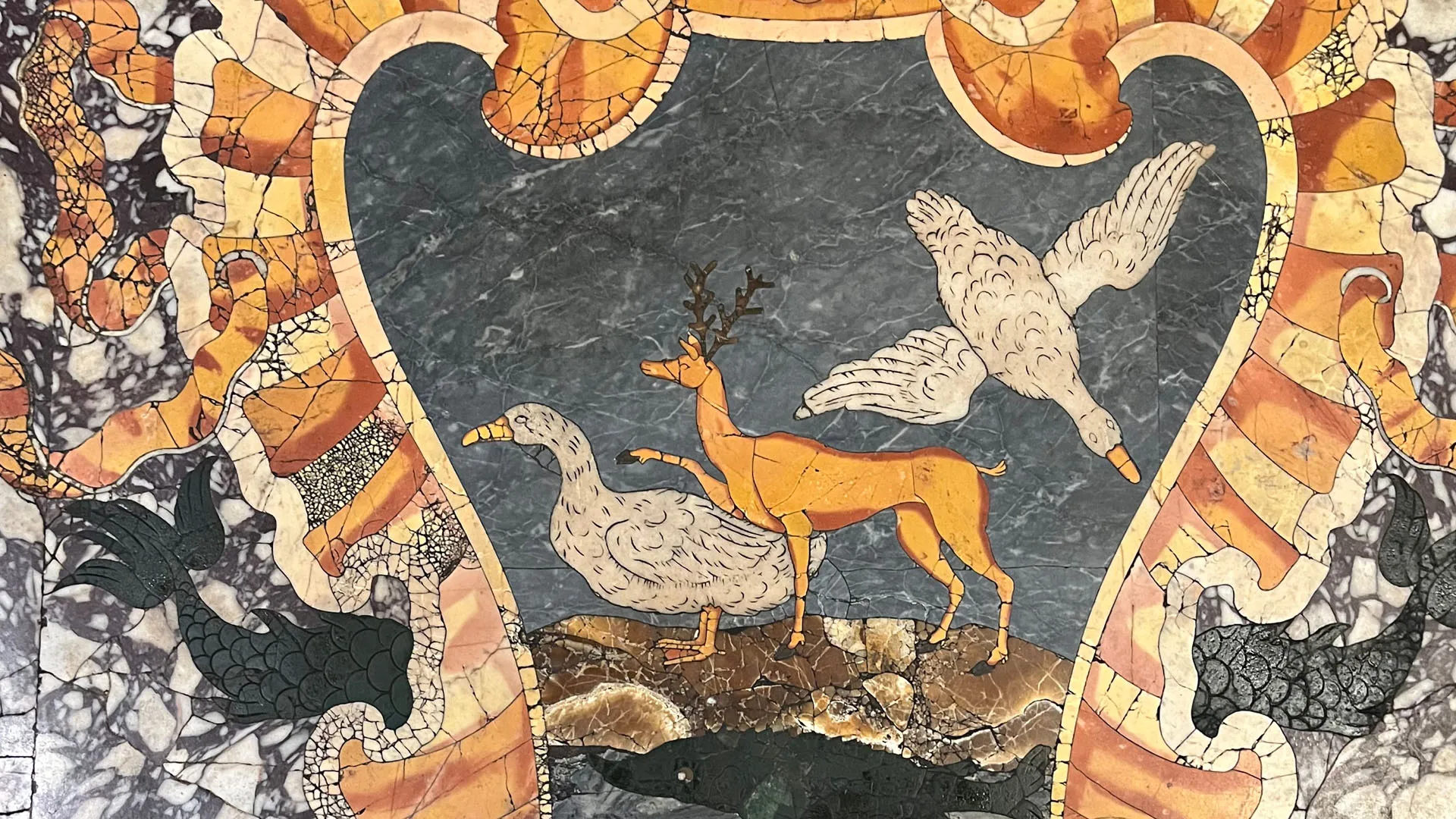
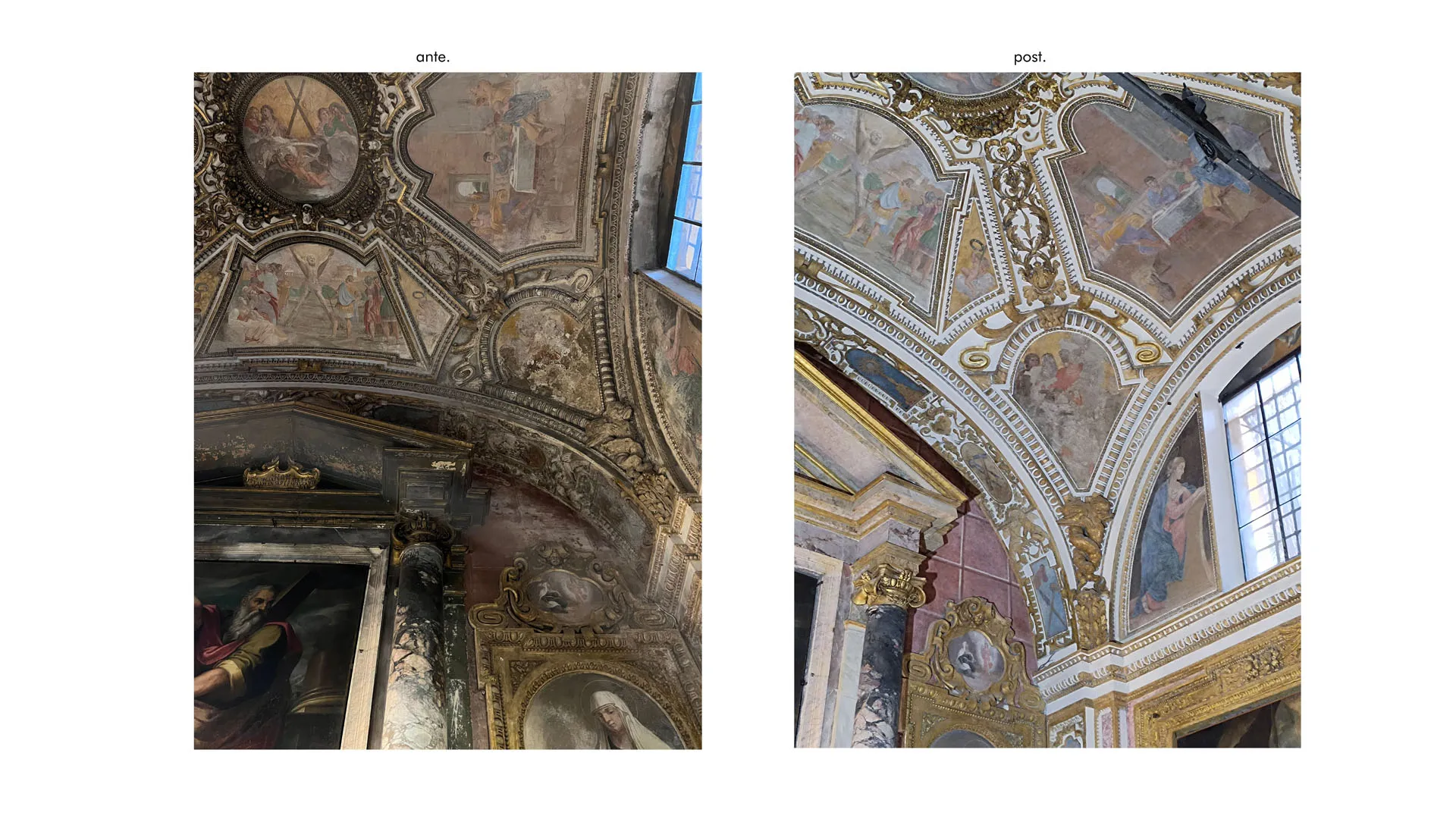
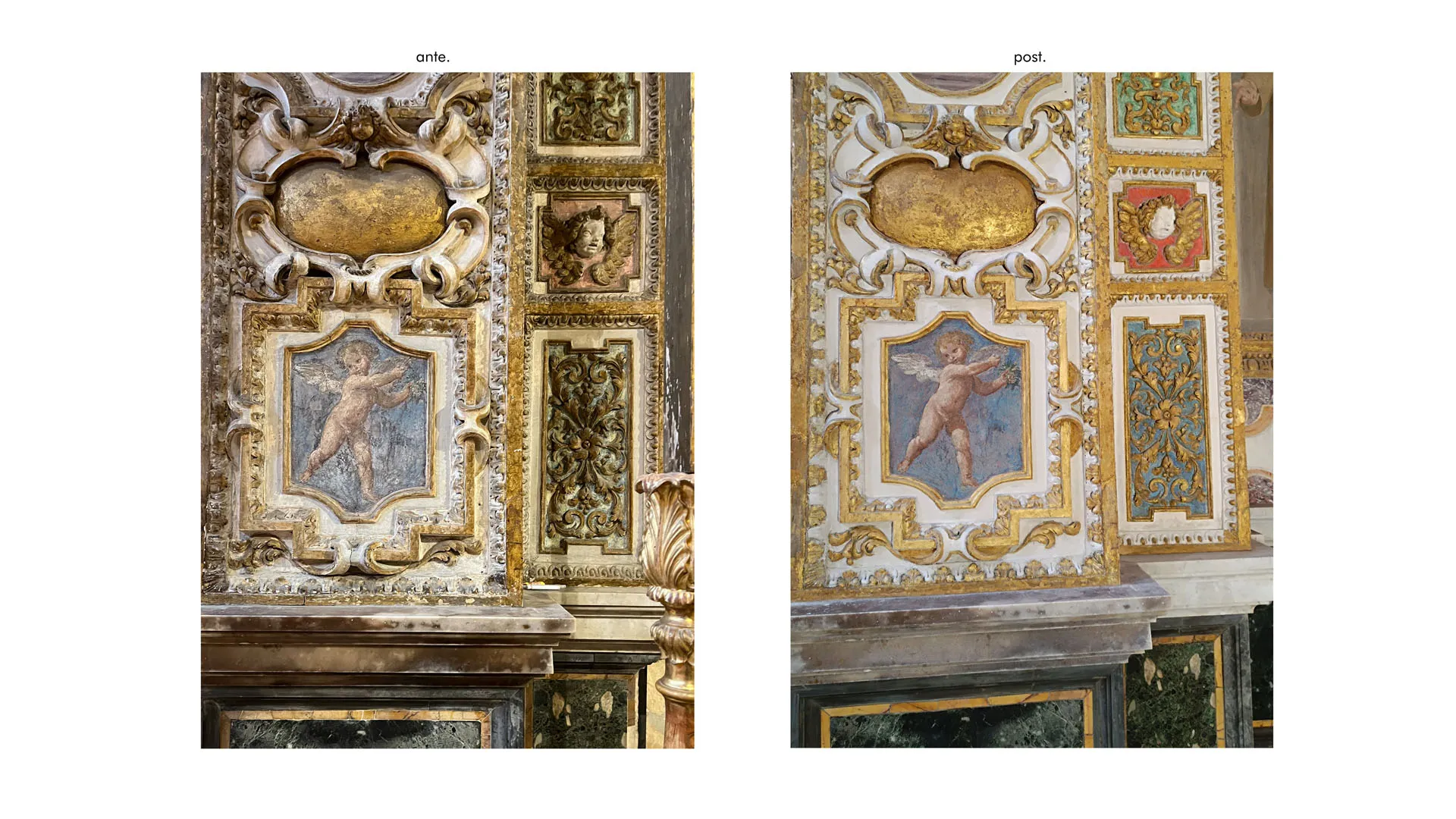
The polychrome marble altar features a tabernacle surmounted by a tympanum supported by Corinthian columns. The chapel has a rectangular plan and a ribbed vault decorated with gilded stucco featuring geometric motifs, ovules, dentils, and plant motifs. The fish depicted allude to the species sold in the Pescaria del Portico Severiano. The opus sectile floor features the University coat of arms at the center, with a fish, a deer, and two geese, symbols of activity, nobility, and loyalty, respectively. The chapel was reconsecrated in 1727 by Benedict XIII.
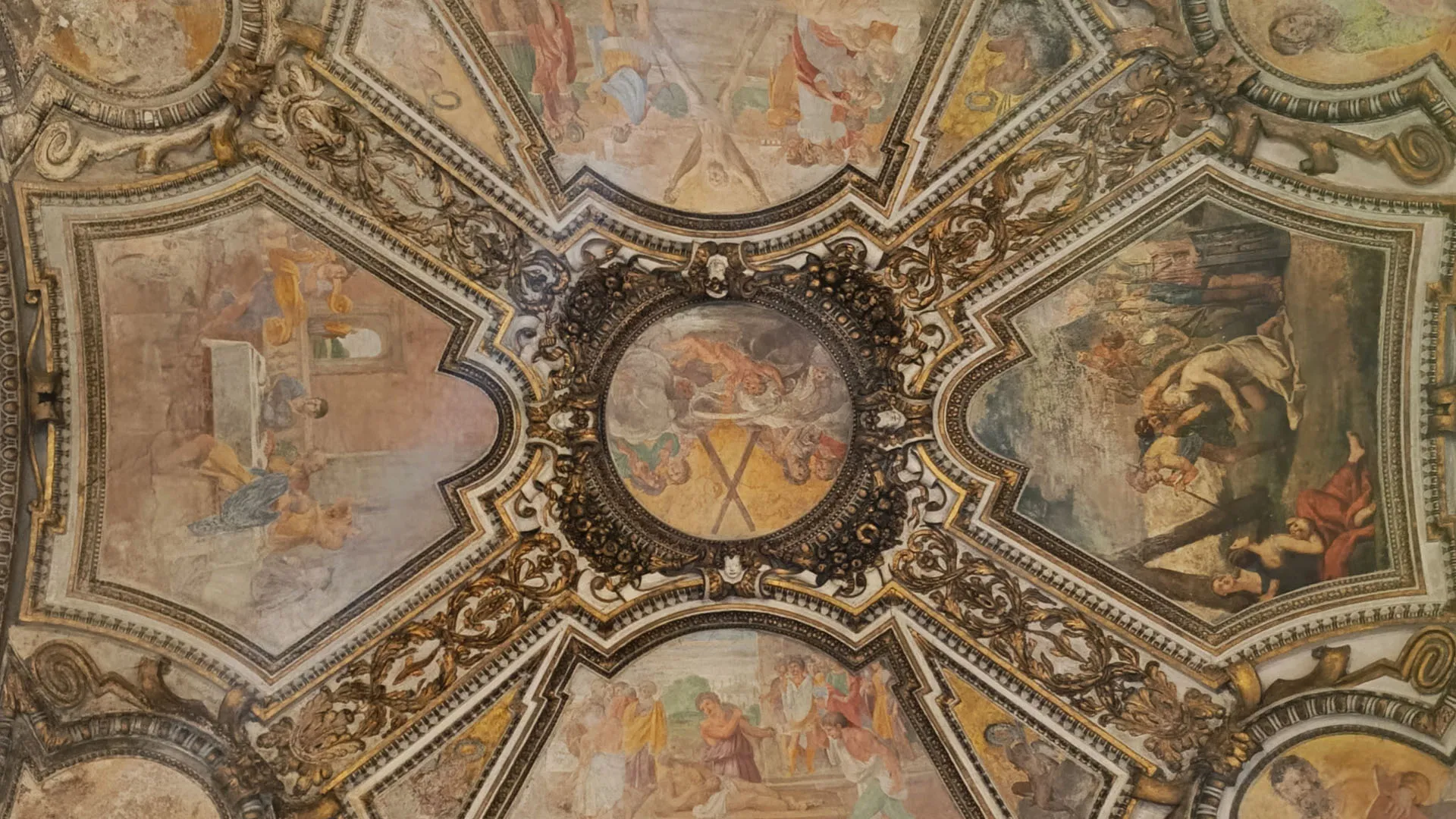
In 1618-1619, Innocenzo Tacconi created the wall paintings on the vault, divided into panels within stucco frames: they depict scenes from the life of Saint Andrew, the Evangelists, the Annunciation, and episodes from the lives of Saint Francis and Saint Francesca Romana.
Most of the damage to the Chapel of Sant’Andrea stems from rising damp from below and rainwater seepage from above. All the work, restorations, and reconstructions undertaken over the centuries were undertaken to try to stem these phenomena, which have always endemically afflicted the building. Recent restorations (Carbonara) have improved the building’s condition and stabilized the causes of the deterioration.
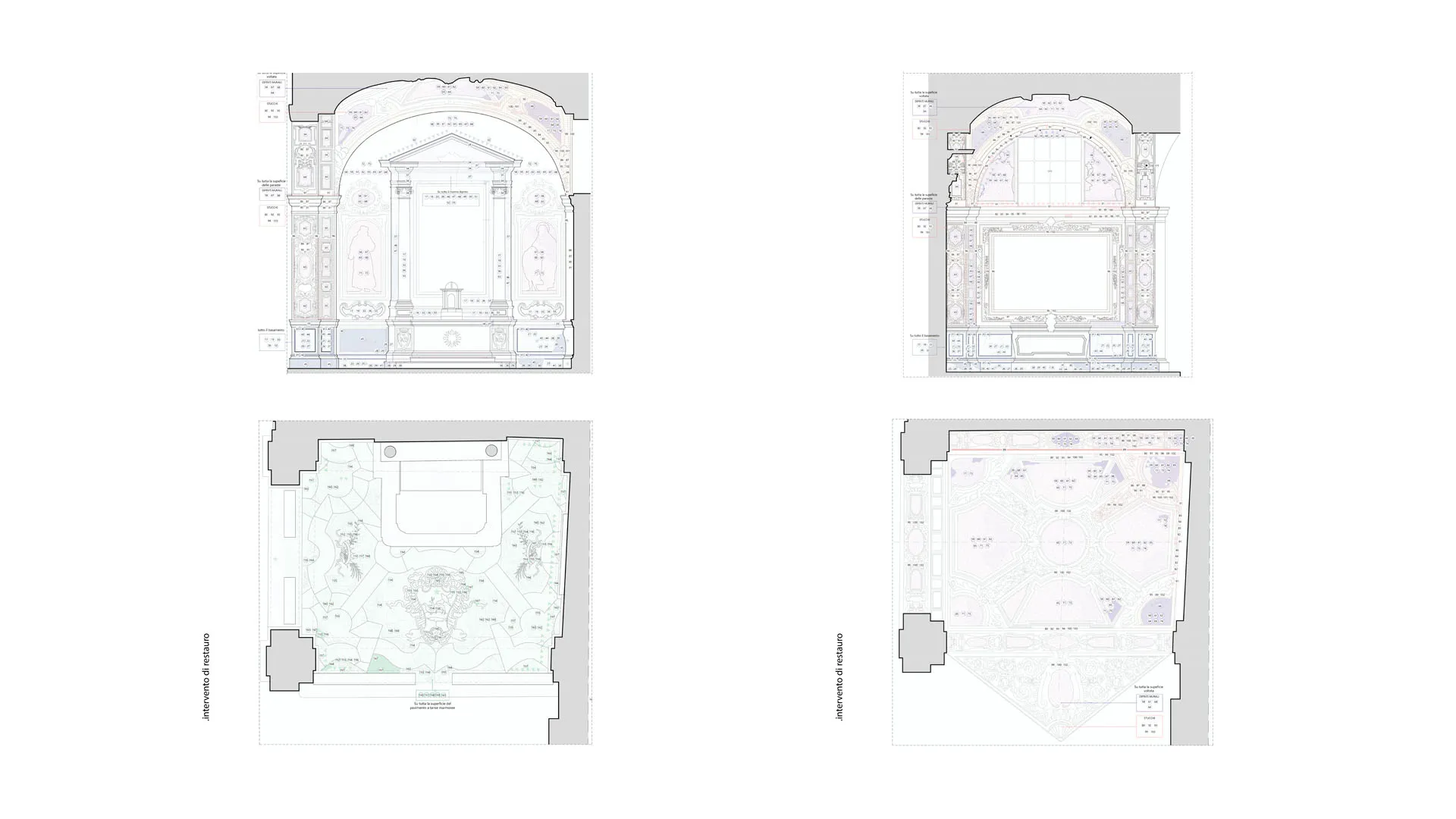
The project was implemented starting with preliminary research and documentation, and the restoration of material elements was undertaken: marble; stucco; frescoed wall paintings; and lime and tempera paintings.
A series of paintings, which were to be relocated to the sacristy, was also restored.