

Restoration of the presbytery with frescoes by the Zuccari
/ Code
Location: Rome
Date: 2023-2024
Project: Restoration of the presbytery and frescoes
Client: Special Superintendence for Archaeology, Fine Arts and Landscape of Rome
Assignment: Technical-economic feasibility study, detailed design
Role: Appointed designers
Status: Completed
Working group: CHVL Architetti Associati (team leader); Consultants: KeoRestauro s.n.c., architect A. Giovannoni
Under the high supervision of the Superintendence of Rome: Dr. Alessandra Acconci
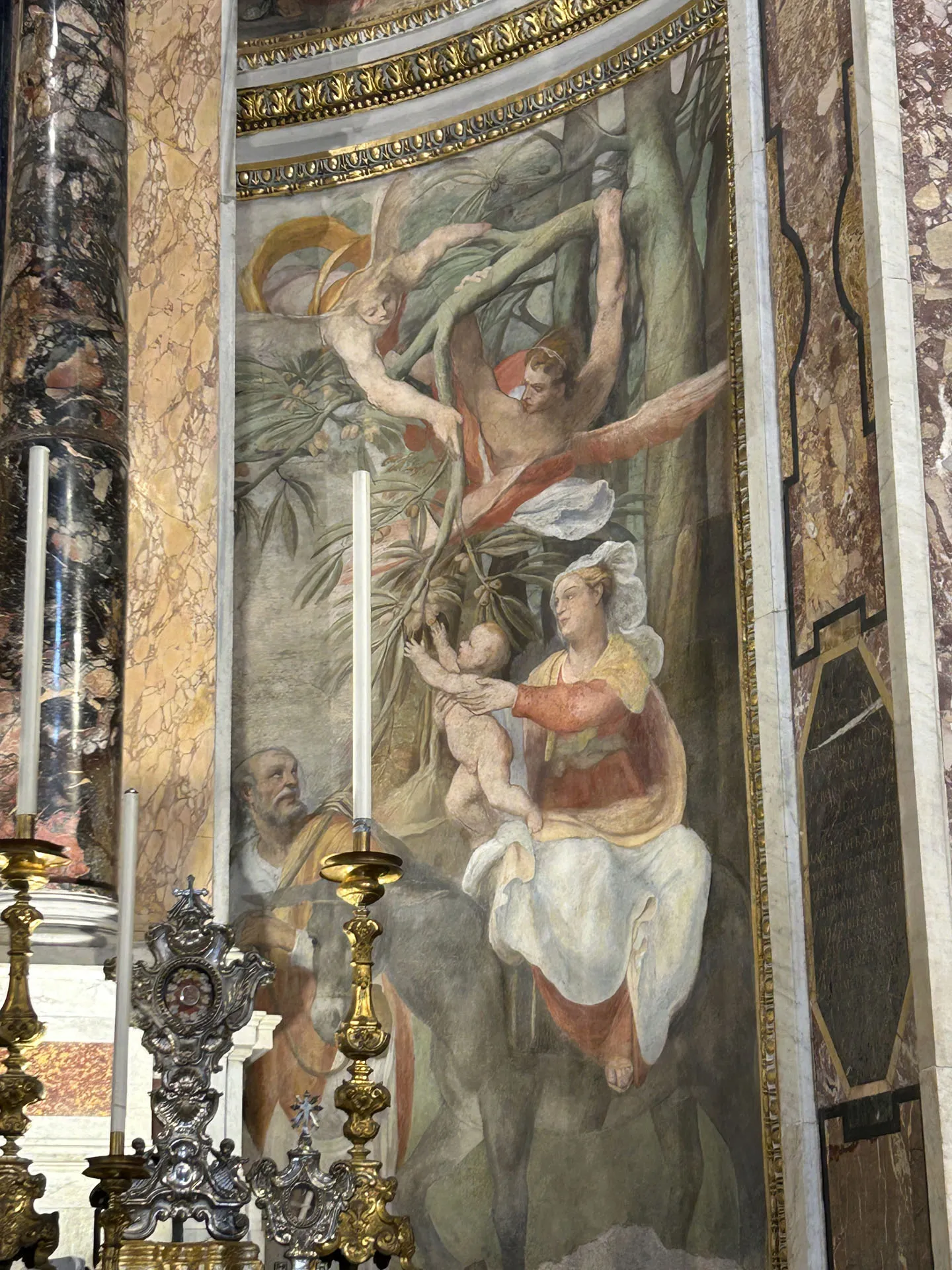
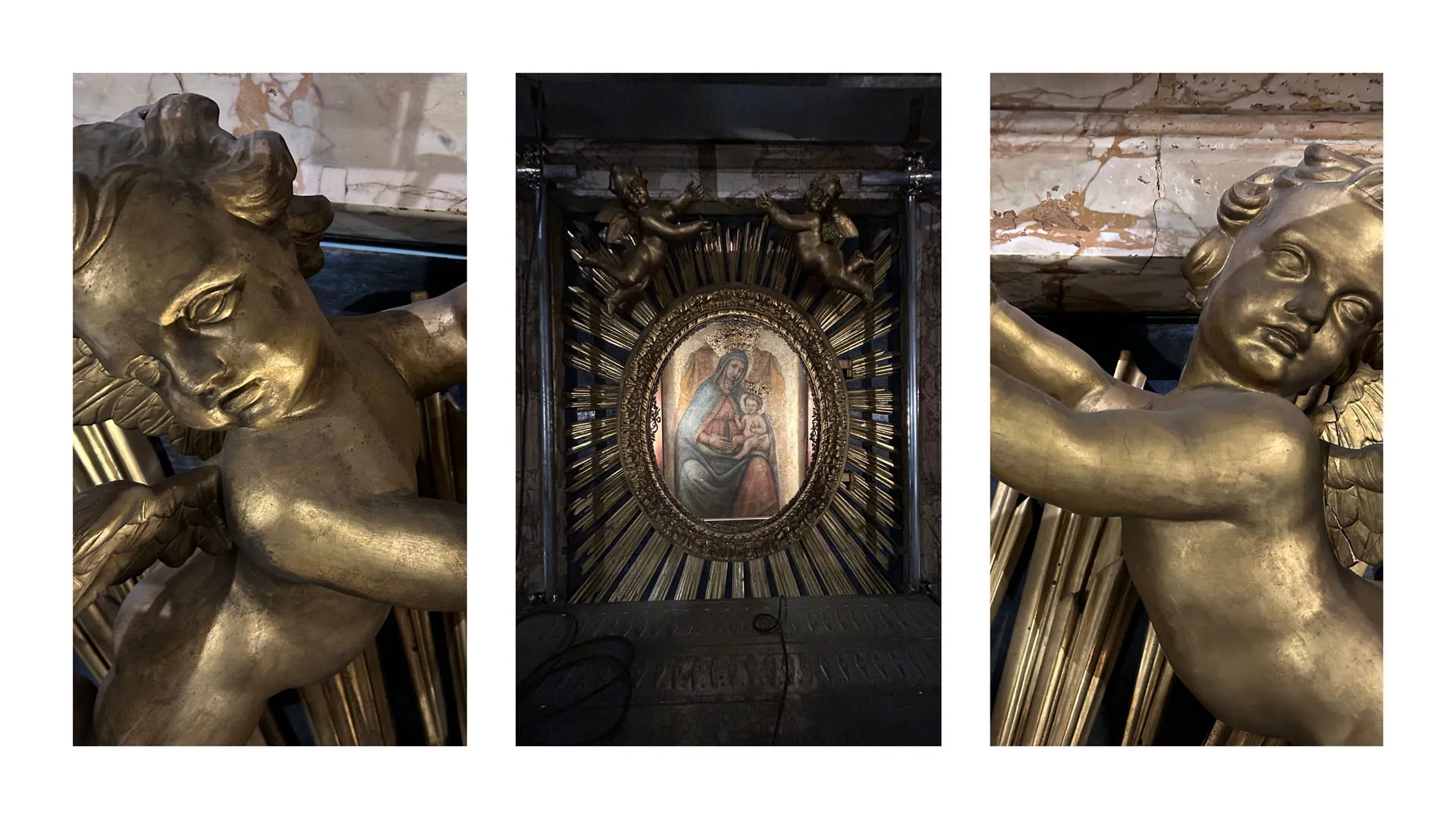
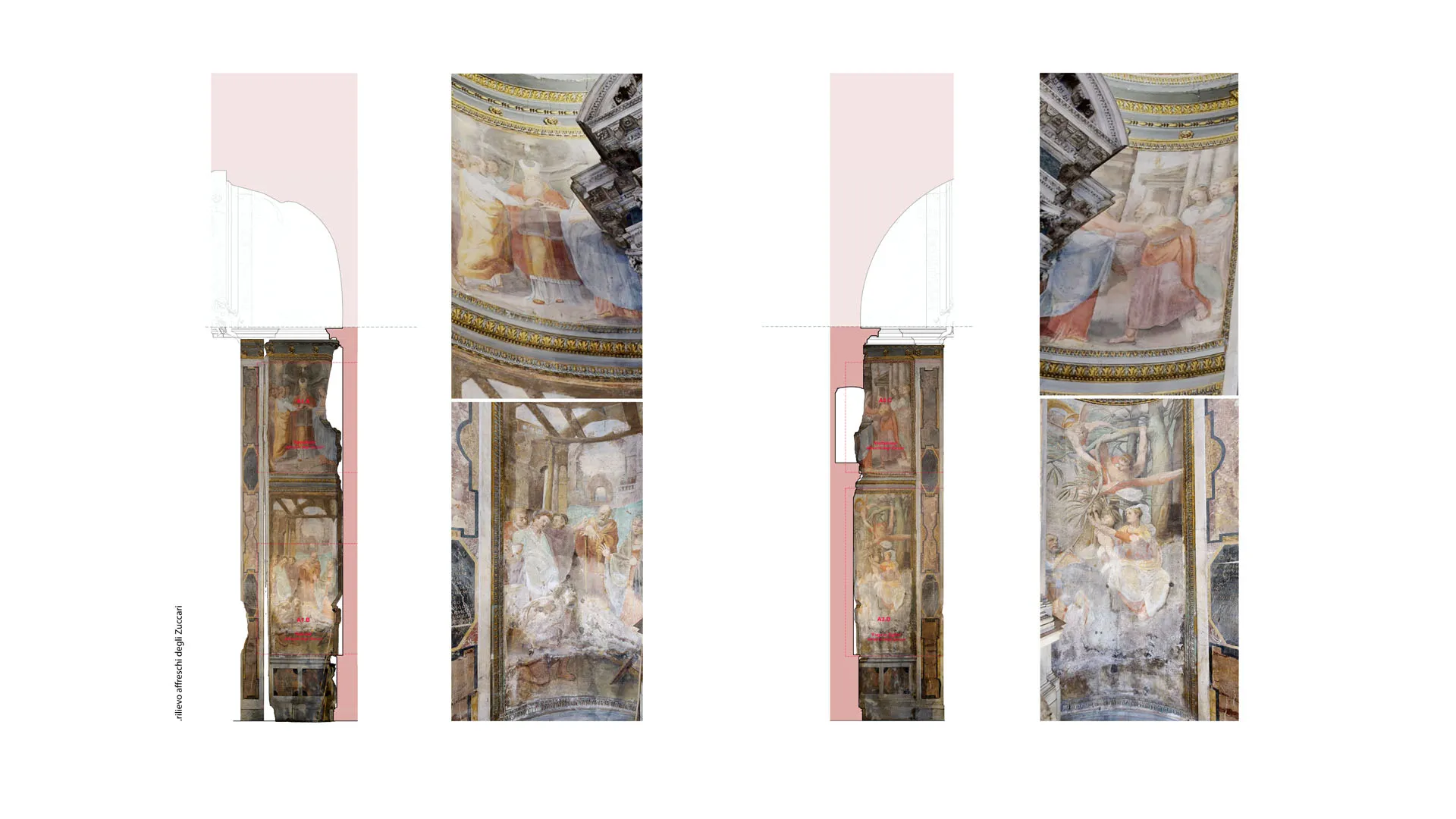
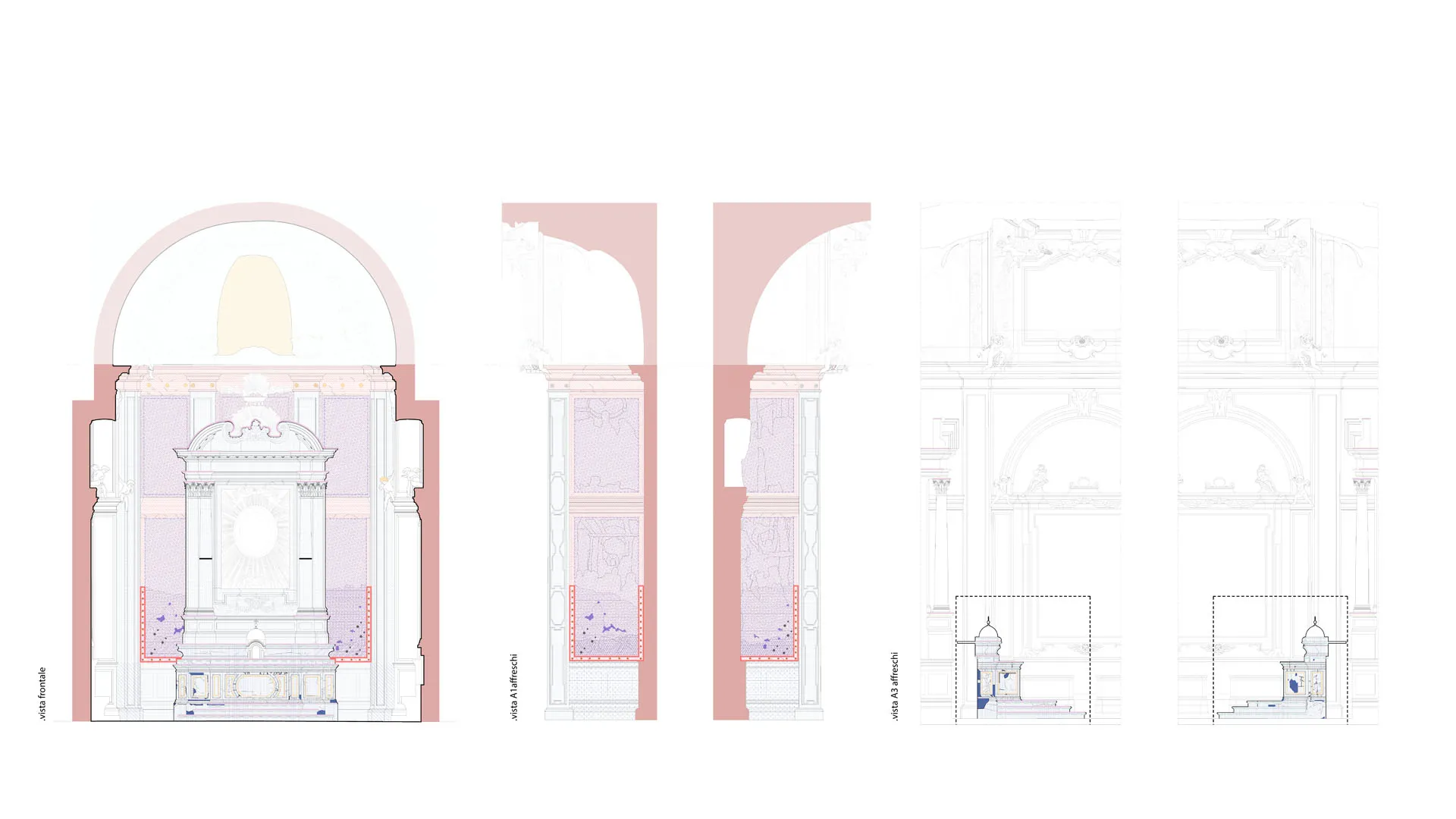
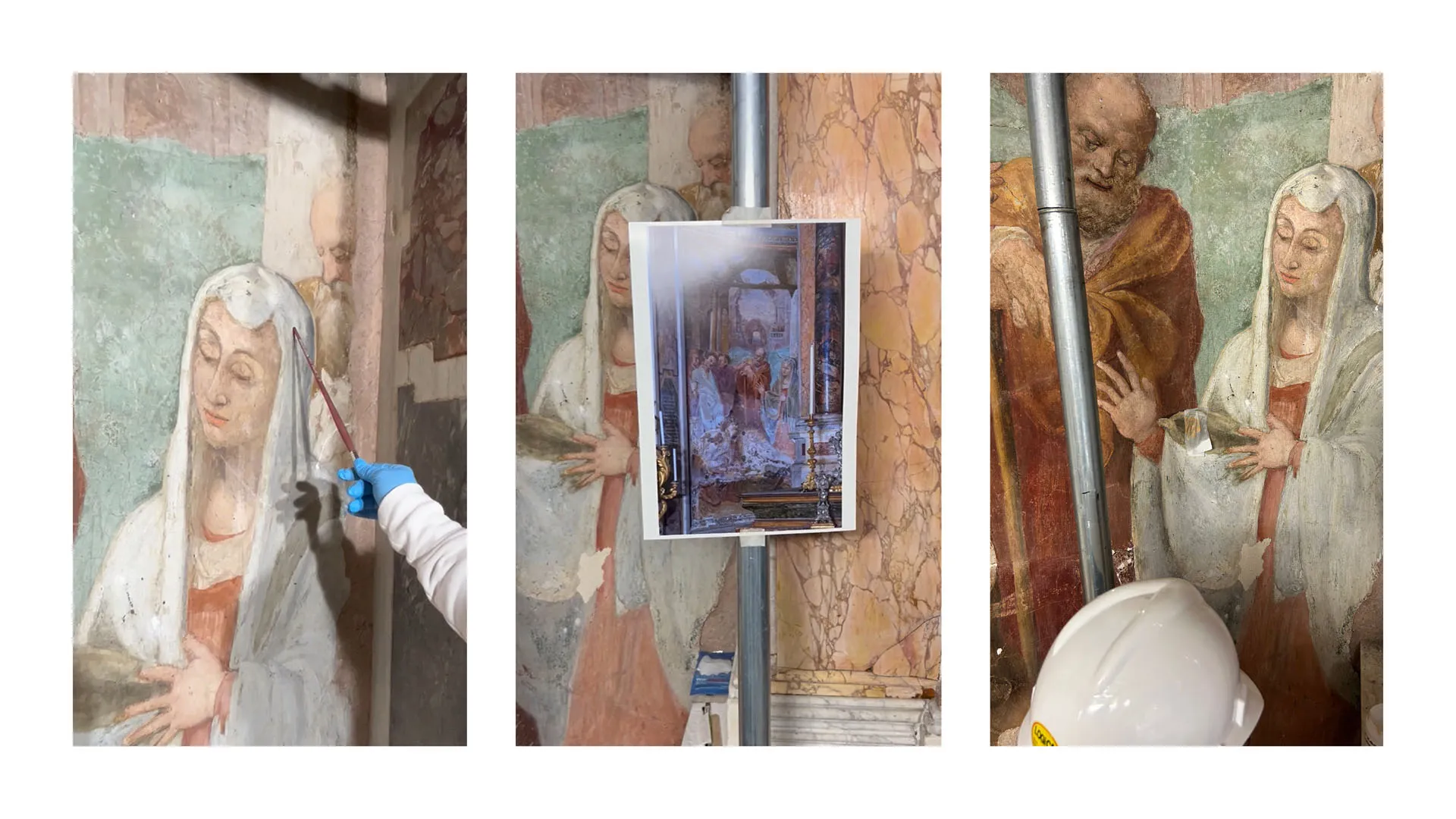
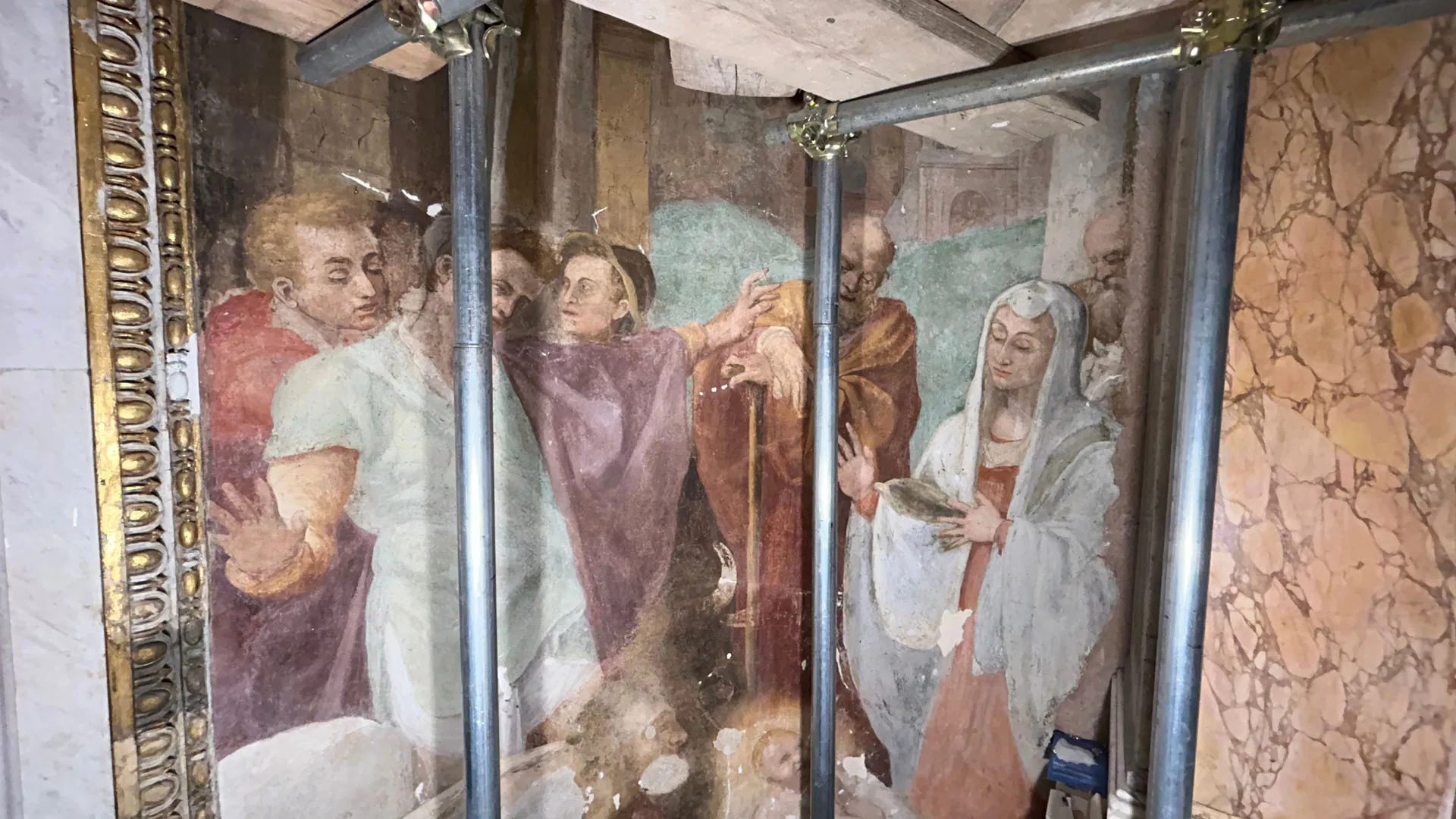
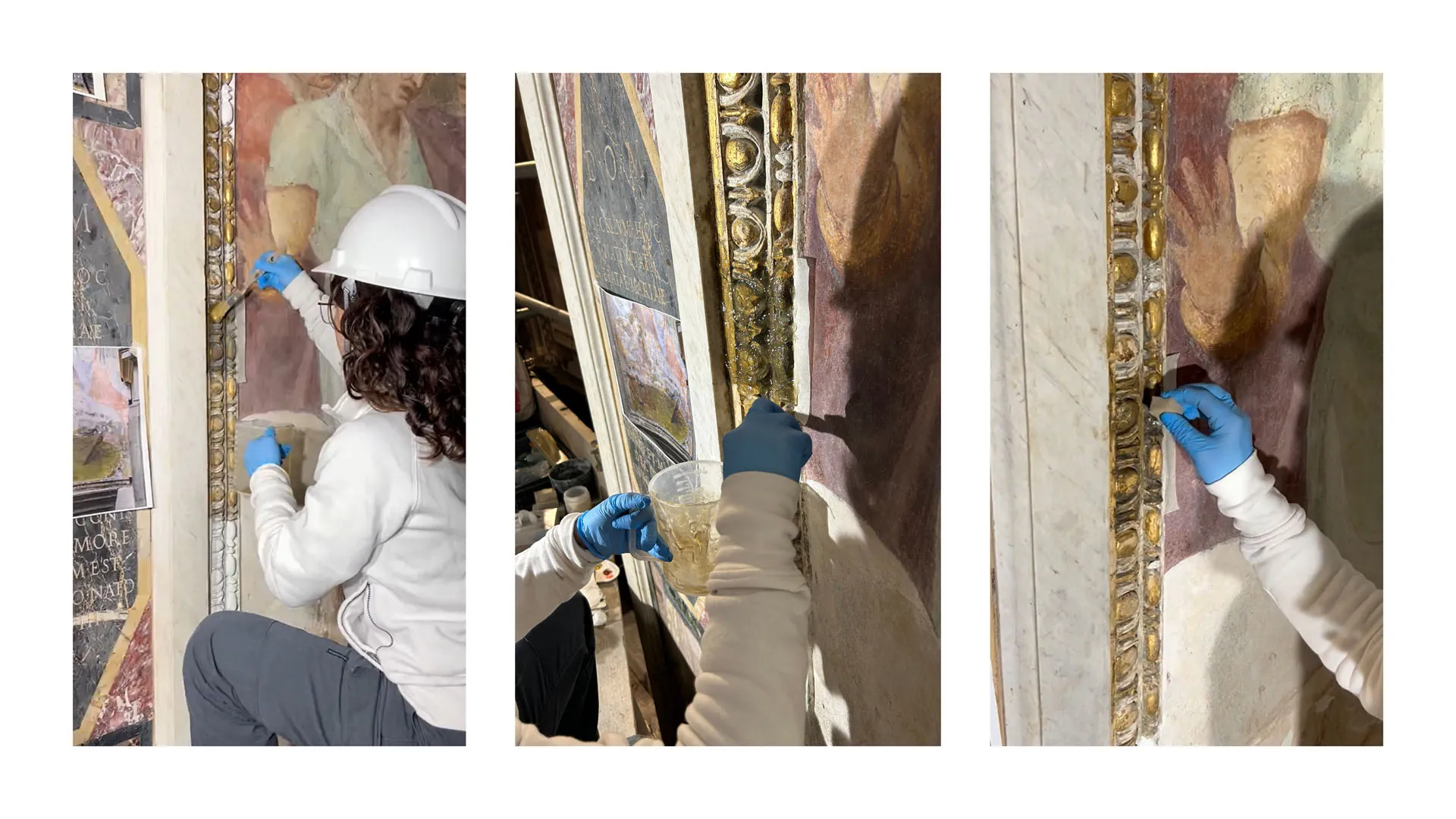
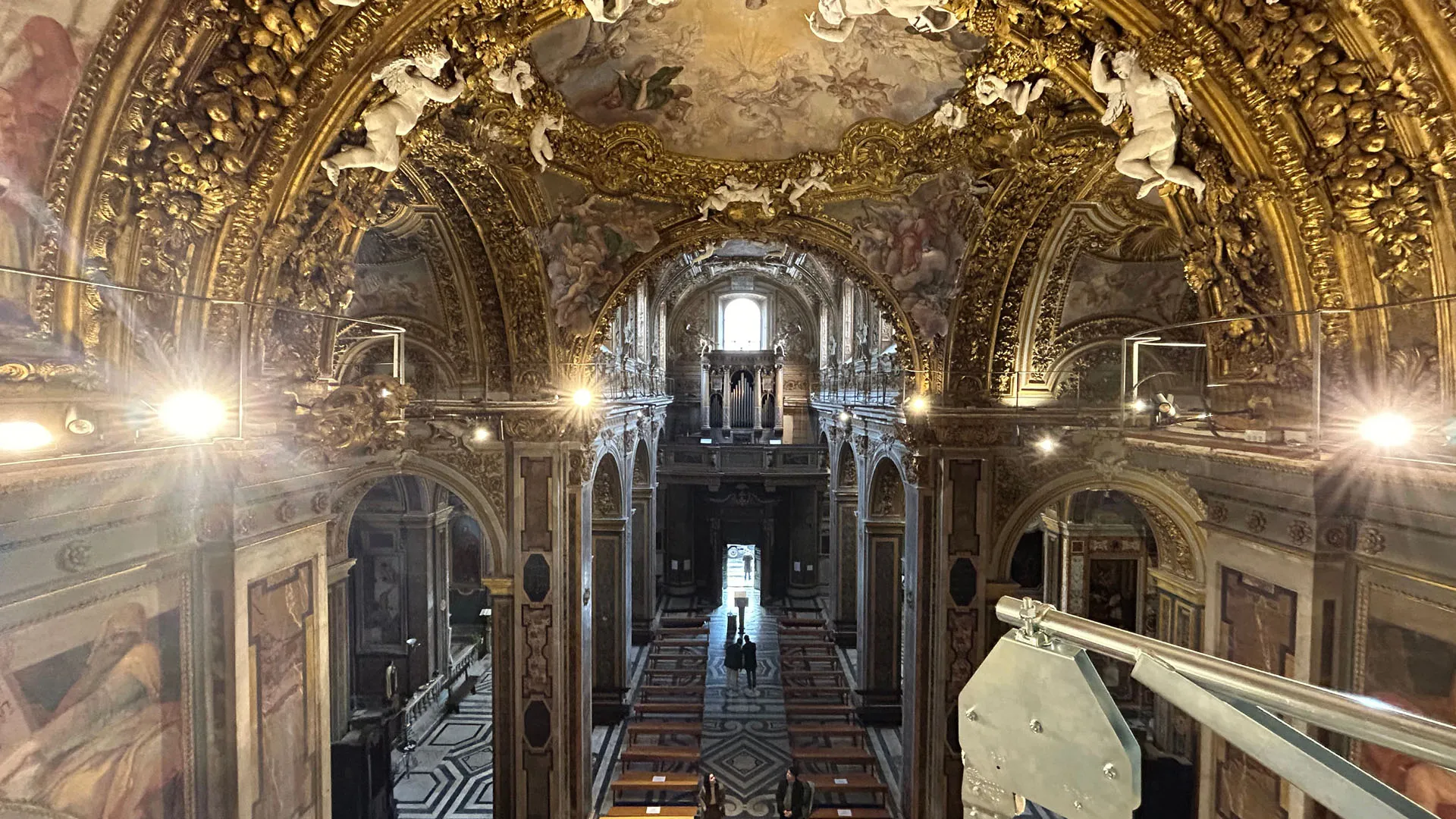
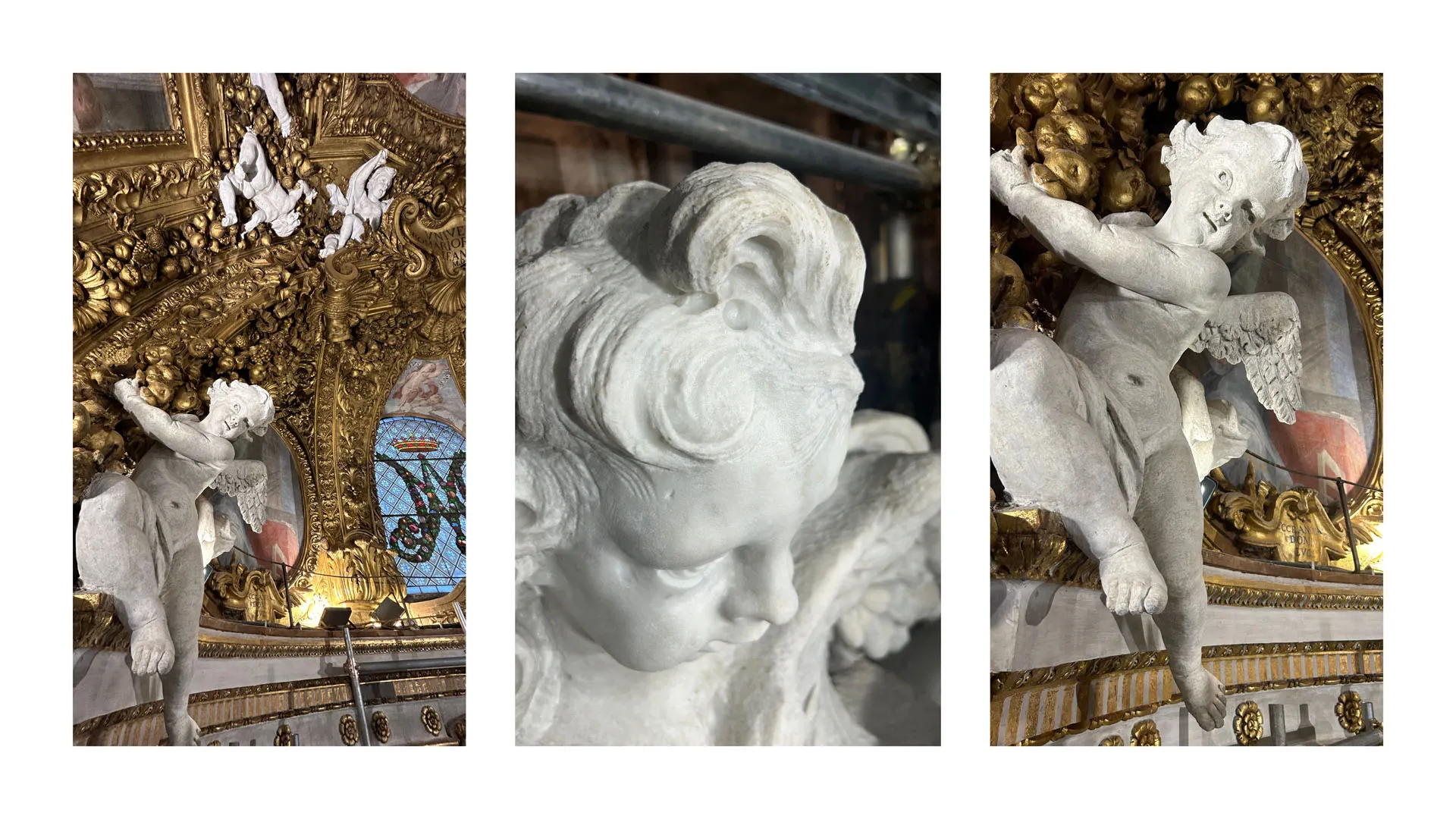
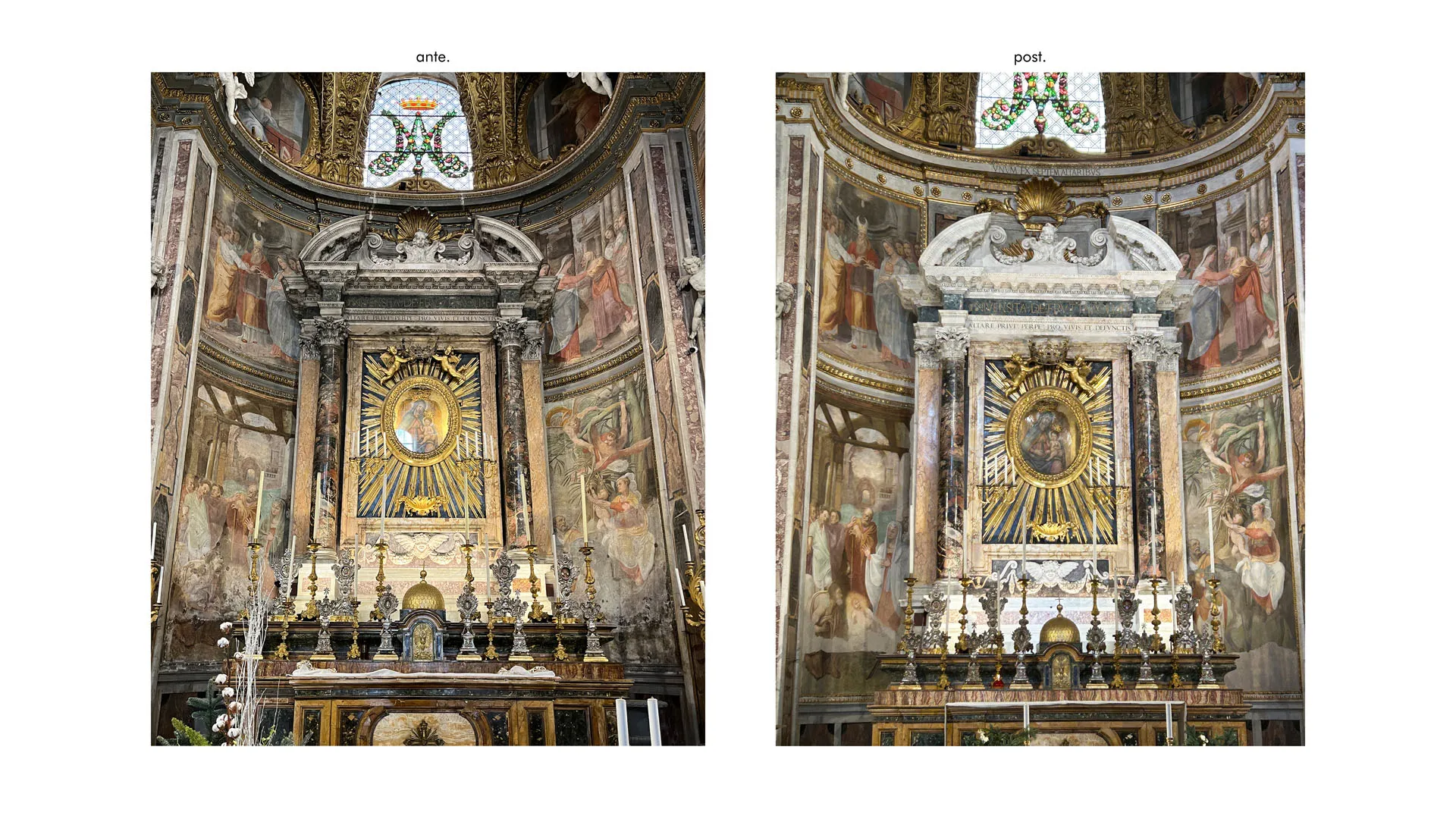
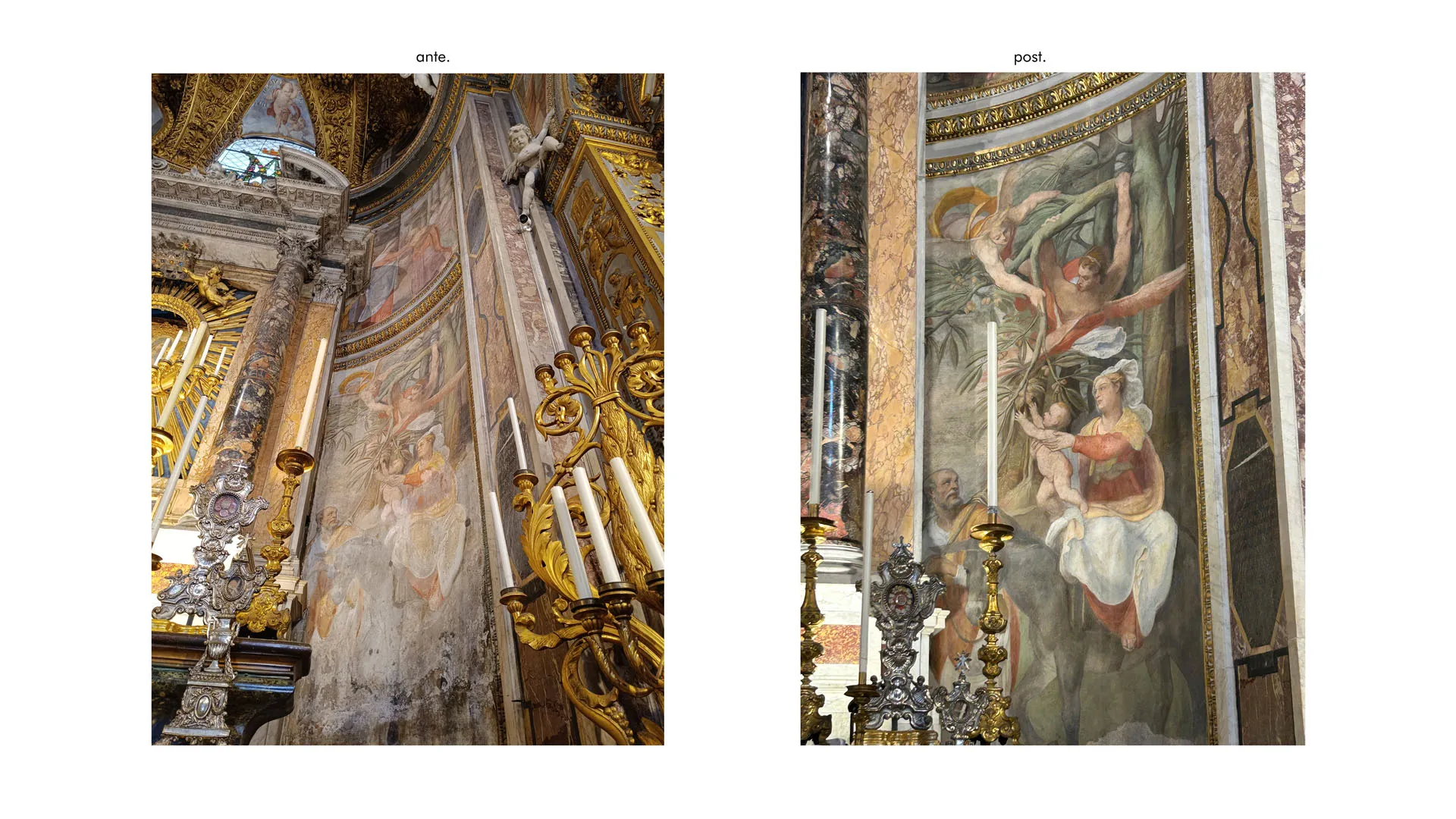
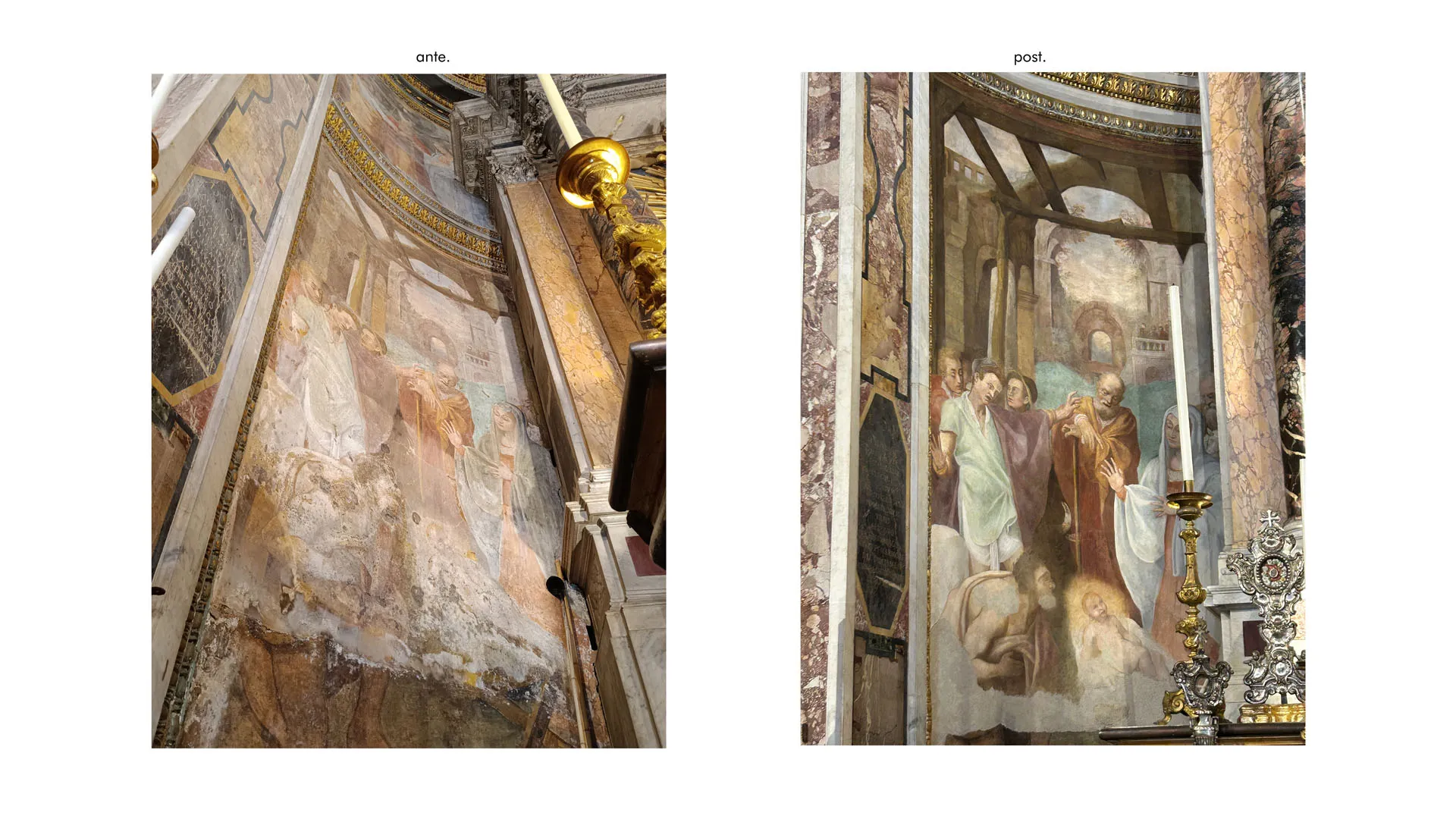
The current 16th-century church features fresco and stucco decorations, created from the mid-16th century onward and spanning the next two centuries. This work demonstrates the taste and financial resources of the Confraternity of Fruit Vendors, which enabled them to hire prominent artists such as Taddeo and Federico Zuccari, as well as the church’s architect, Jacopo Barozzi da Vignola, Niccolò Martinelli of Pesaro, and finally Giovanni Baglione.
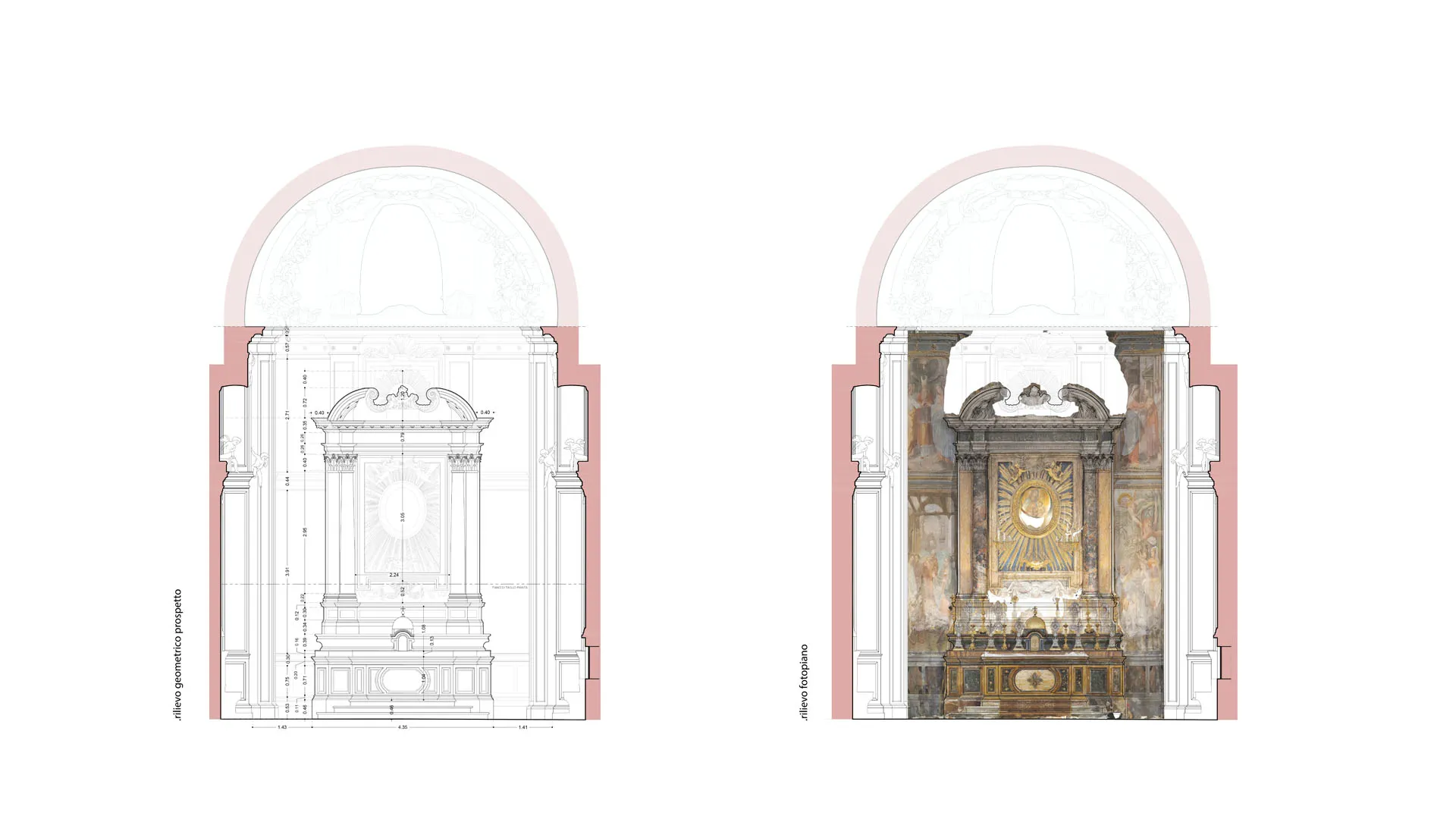
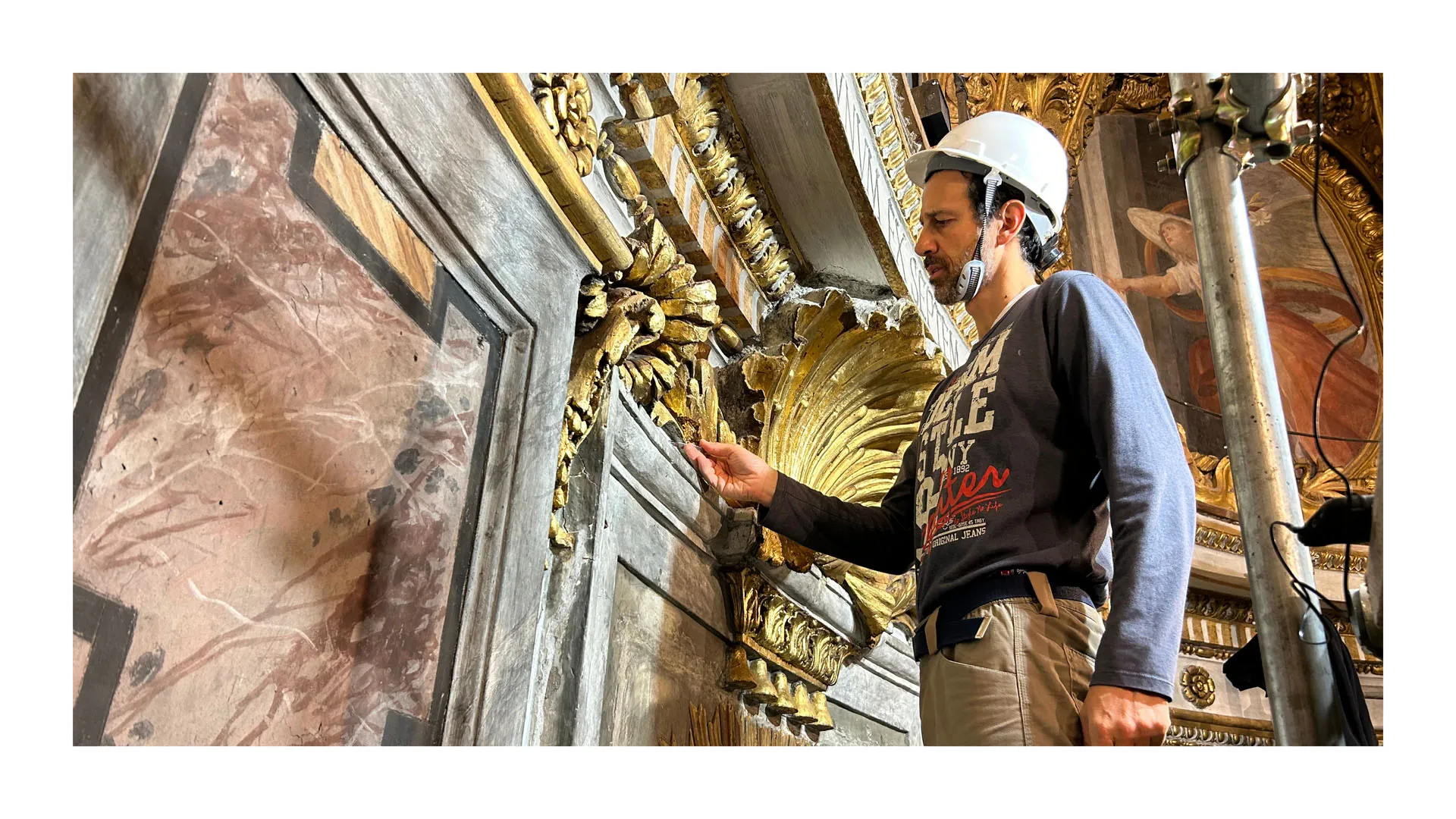
The project proposal focuses on the restoration of the apse area of Santa Maria dell’Orto through the restoration of the painted and gilded stucco surfaces and other features. The overall objective is the full restoration of its liturgical function, which is intended to be achieved by eliminating potential threats to public safety and fully restoring the aesthetic value of the presbytery, which is in a state of widespread deterioration, largely due to issues related to the site’s humidity, which have been resolved following recent remediation work.
The apse of Santa Maria dell’Orto has undergone several interventions in recent years, but these have not resolved the problem of rising damp. The altar is in an advanced state of decay: the various constituent parts, particularly the thin marble cladding, are no longer present. Many gaps are the result of inconsistent interventions over the years.
The frescoes by Taddeo and Federico Zuccari and Baglione were in a serious state of decay, especially in the lower section, where capillary water has been present, leaving unmistakable traces.
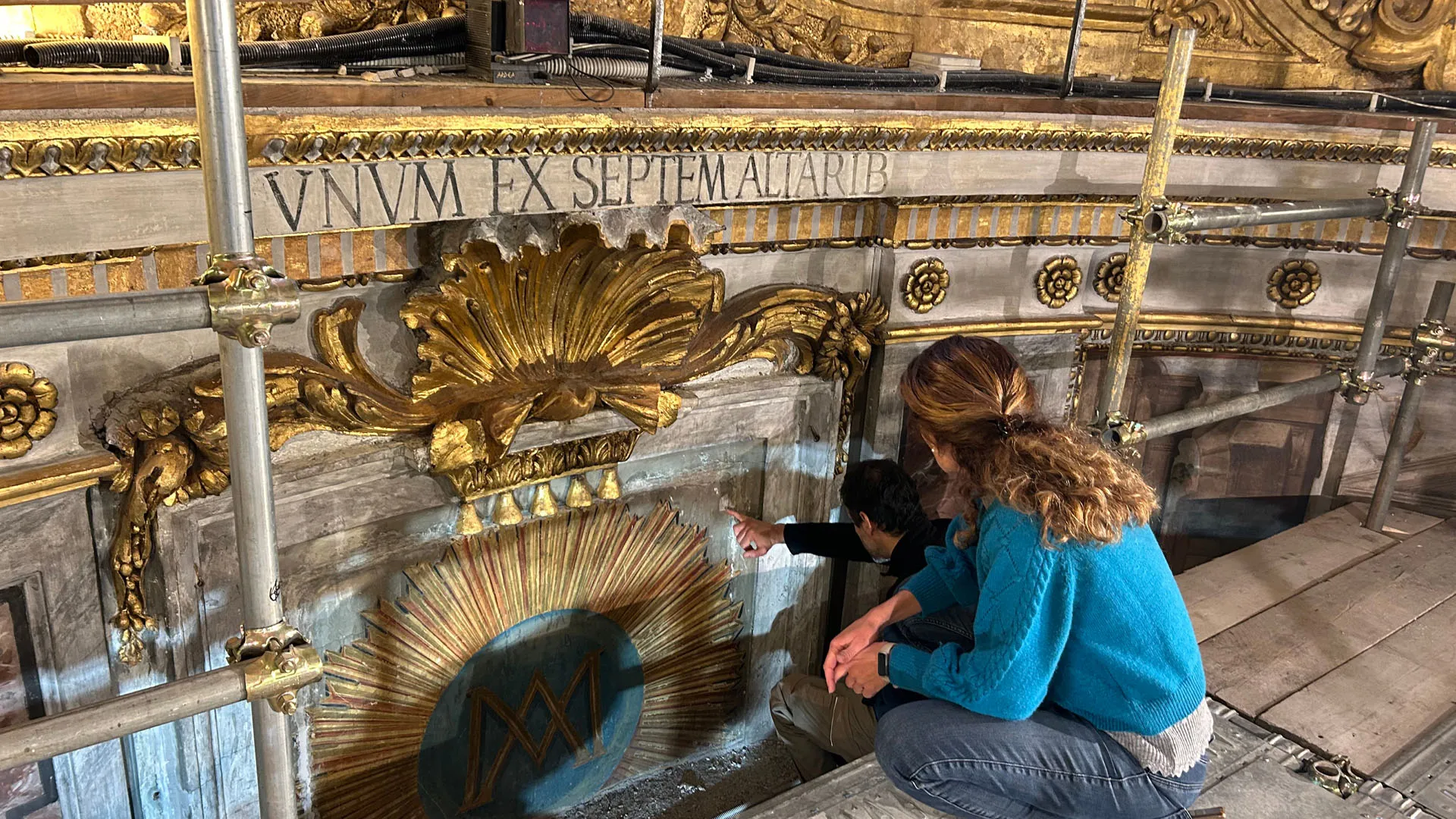
The restoration, based on the study of historical archival sources and on-site investigations, brought to light parts of the layout and color scheme that had been significantly altered.
The restoration involved the entire decorative section of the apse: polychrome marble, mural paintings, and gilded stucco. The result of the work is a new valorization and rediscovery of the decorative elements, up to the narrative thread of the pictorial cycle.