
Architectural and functional redevelopment of spaces in the rationalist building on Via Roma
/ Code
Location: Palermo (PA)
Date: 2024
Project: Invited competition for the architectural and functional redevelopment of buildings owned by Poste Italiane
Client: Poste Italiane
Assignment: SECOND PLACE AWARDED PROJECT for the new spaces of the CAMPUS ITALIA – ADVANCED EDUCATION CENTER of Poste Italiane
Role: Team leader
Status: Completed
Working group: CHVL Architetti Associati, SEQUAS Ingegneria srl, Eng. Giovanni Agostino, TARI architects, Architect Claudia Clementini, Architect Lorenza Bartolazzi, Architect Daniele Serretti
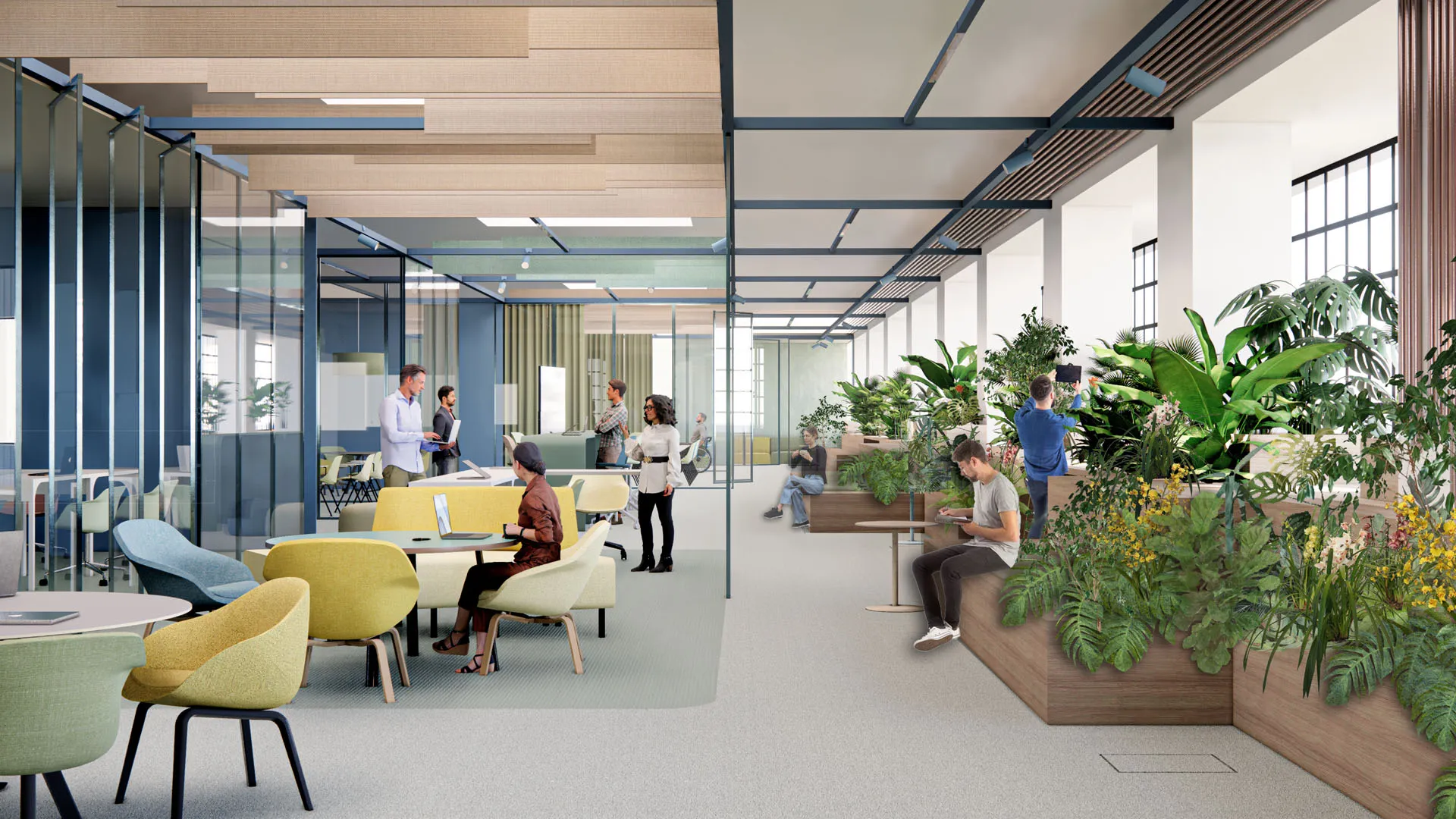
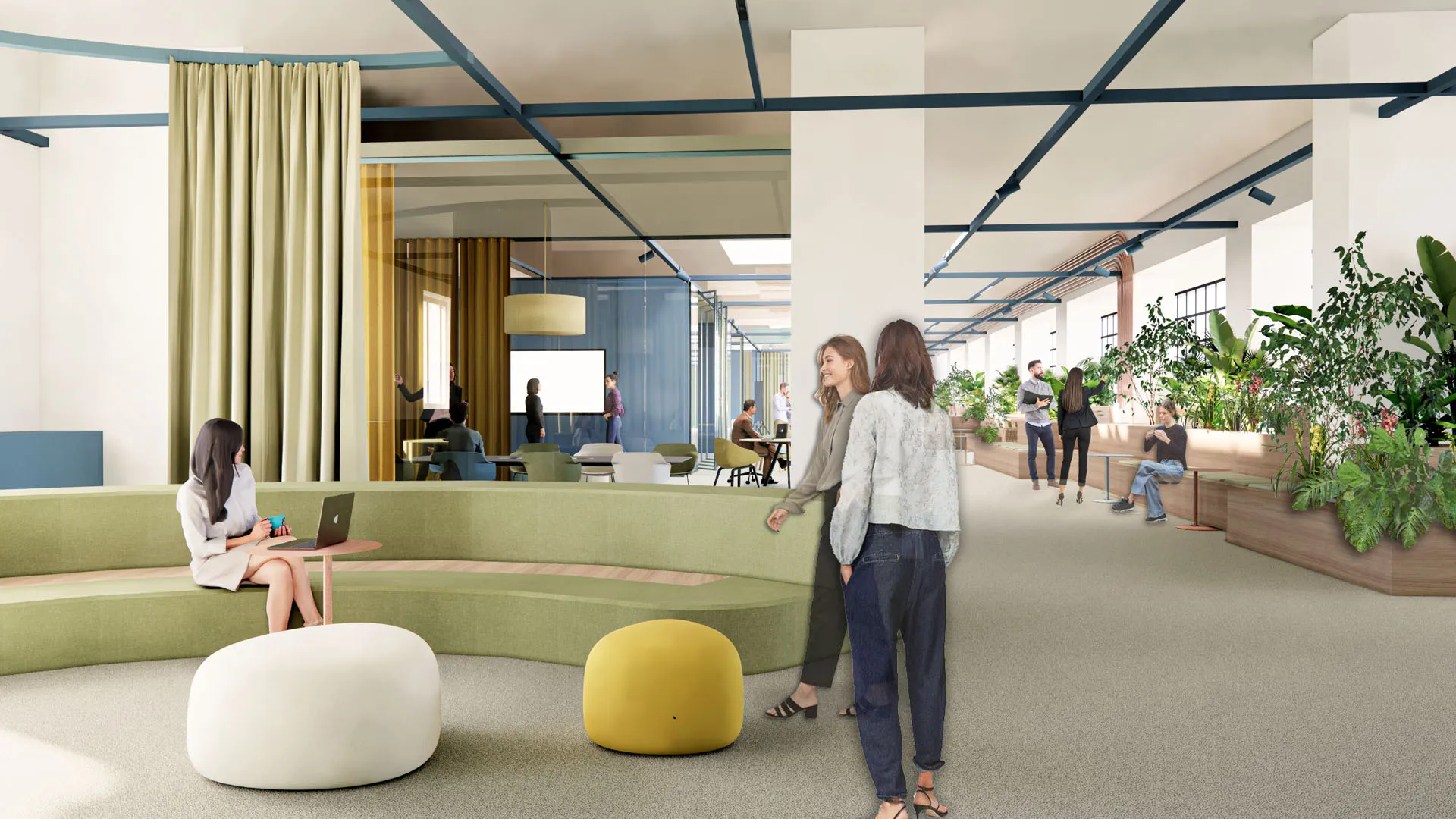
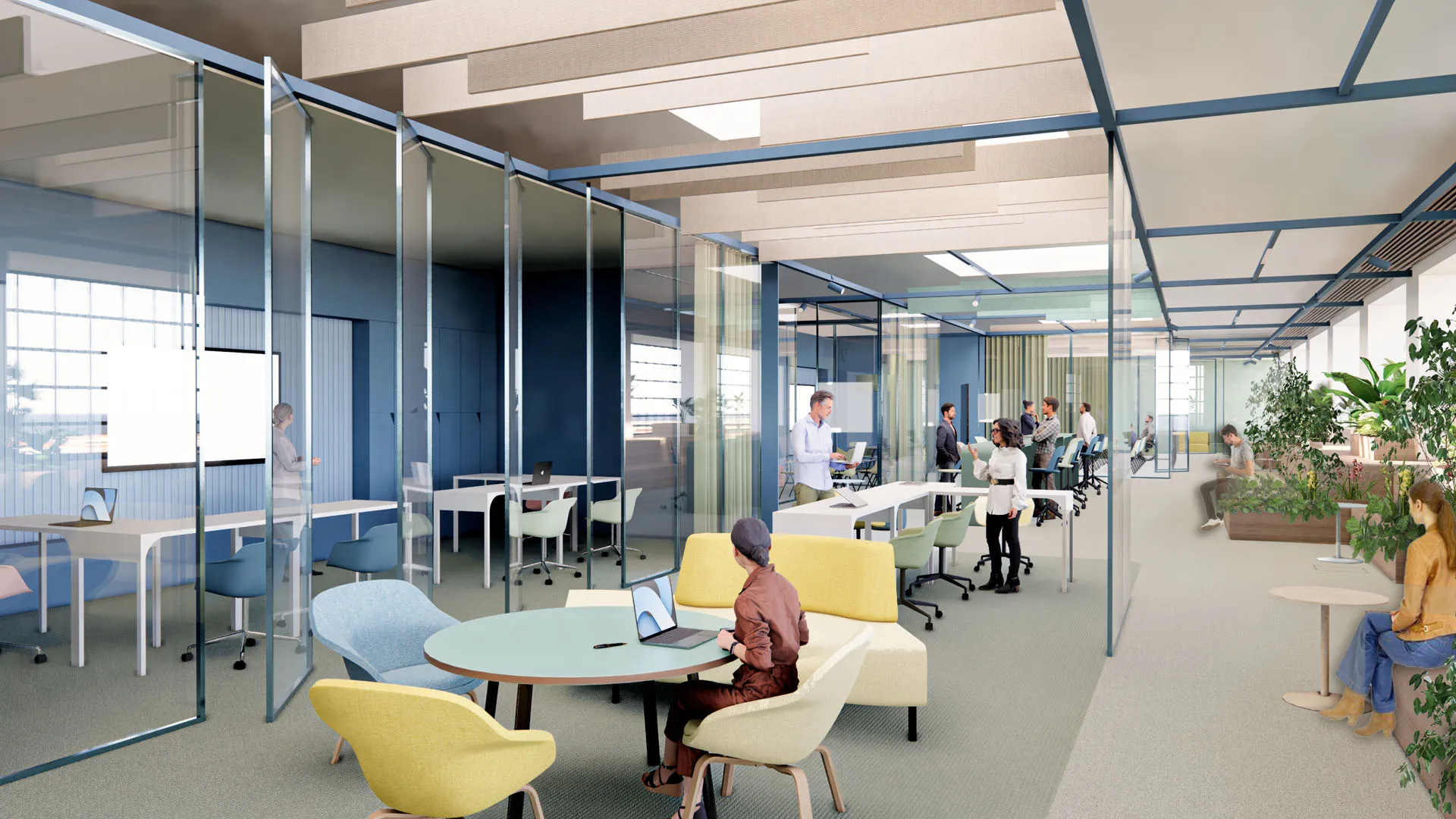
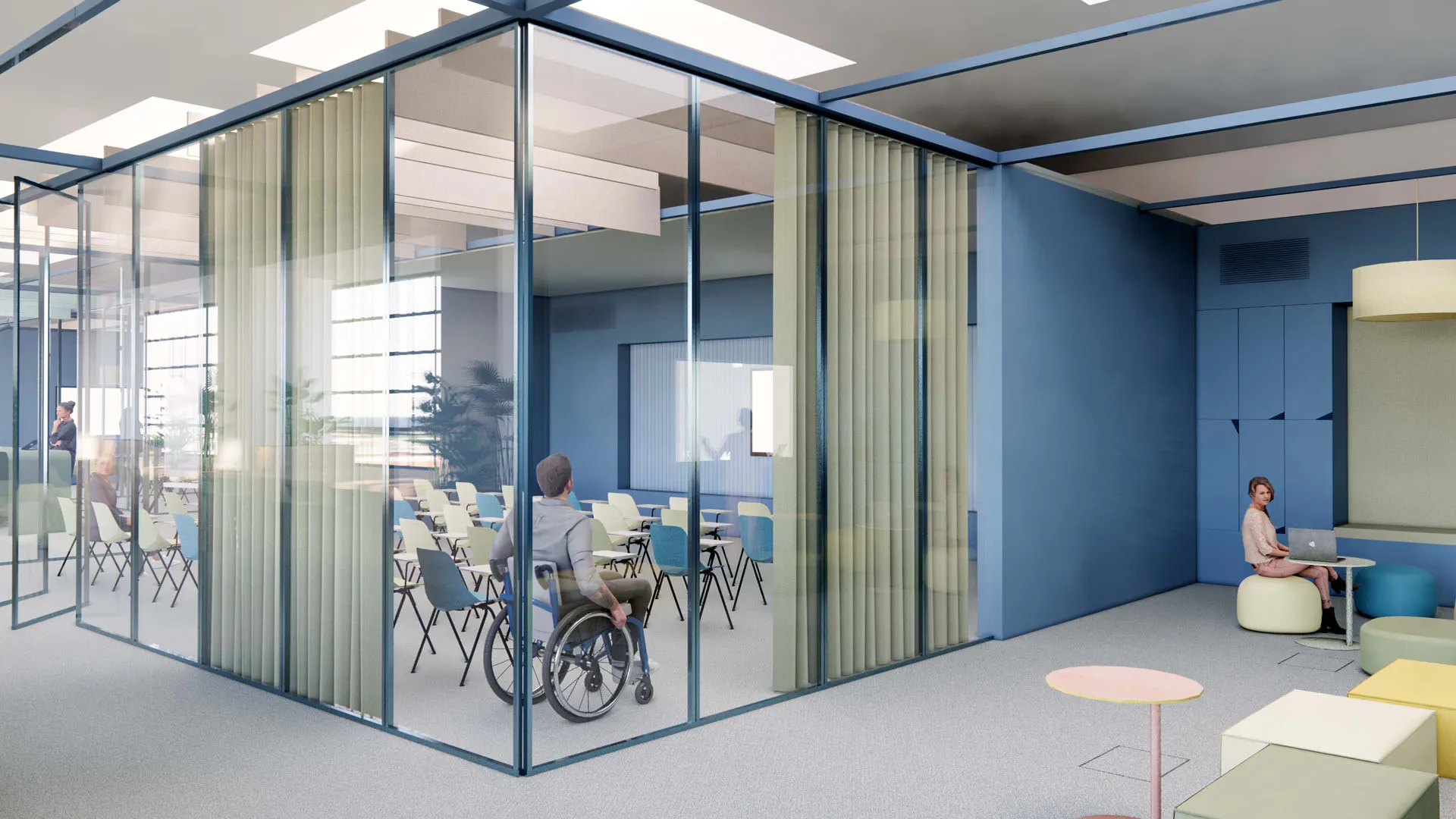
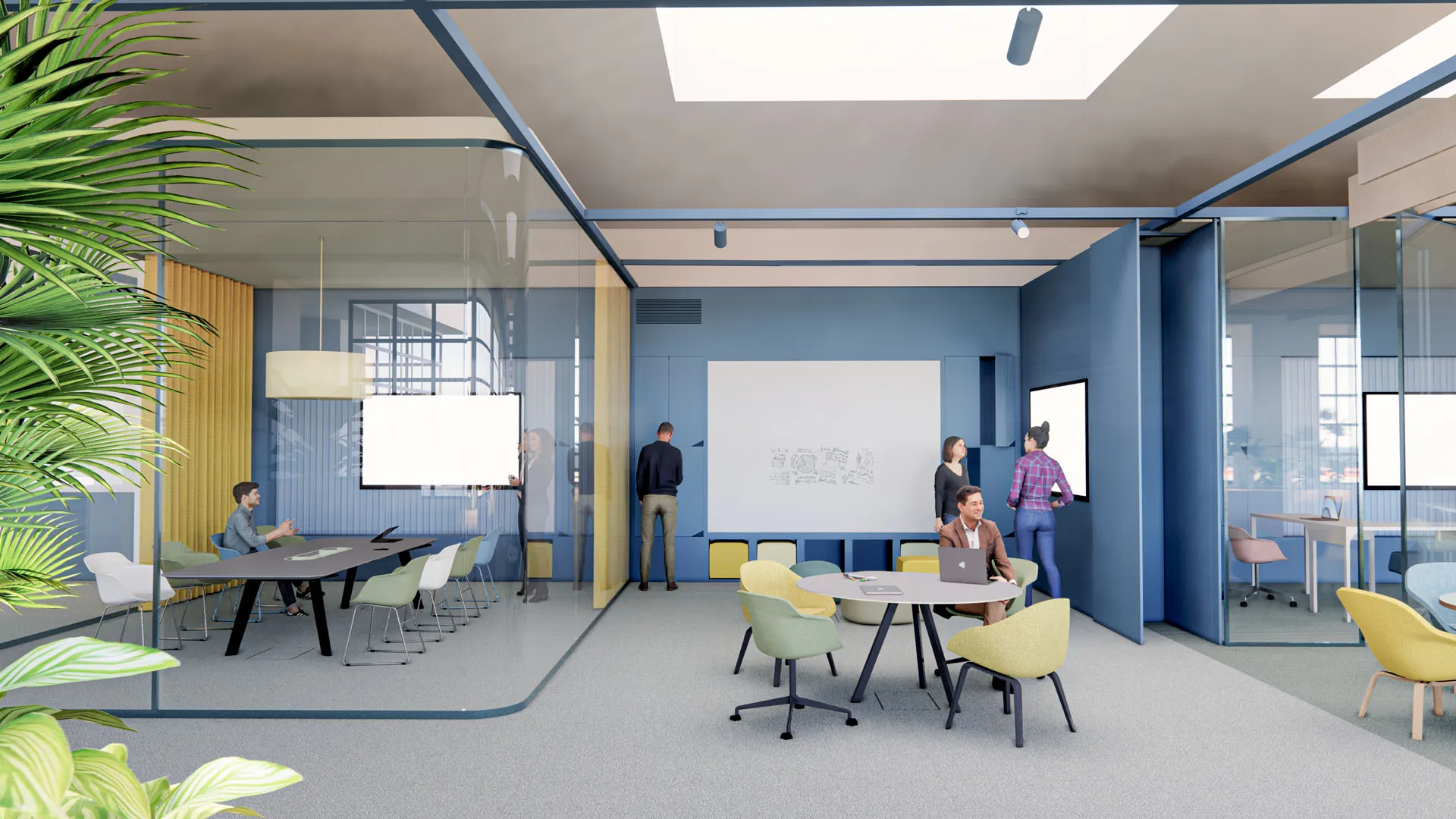
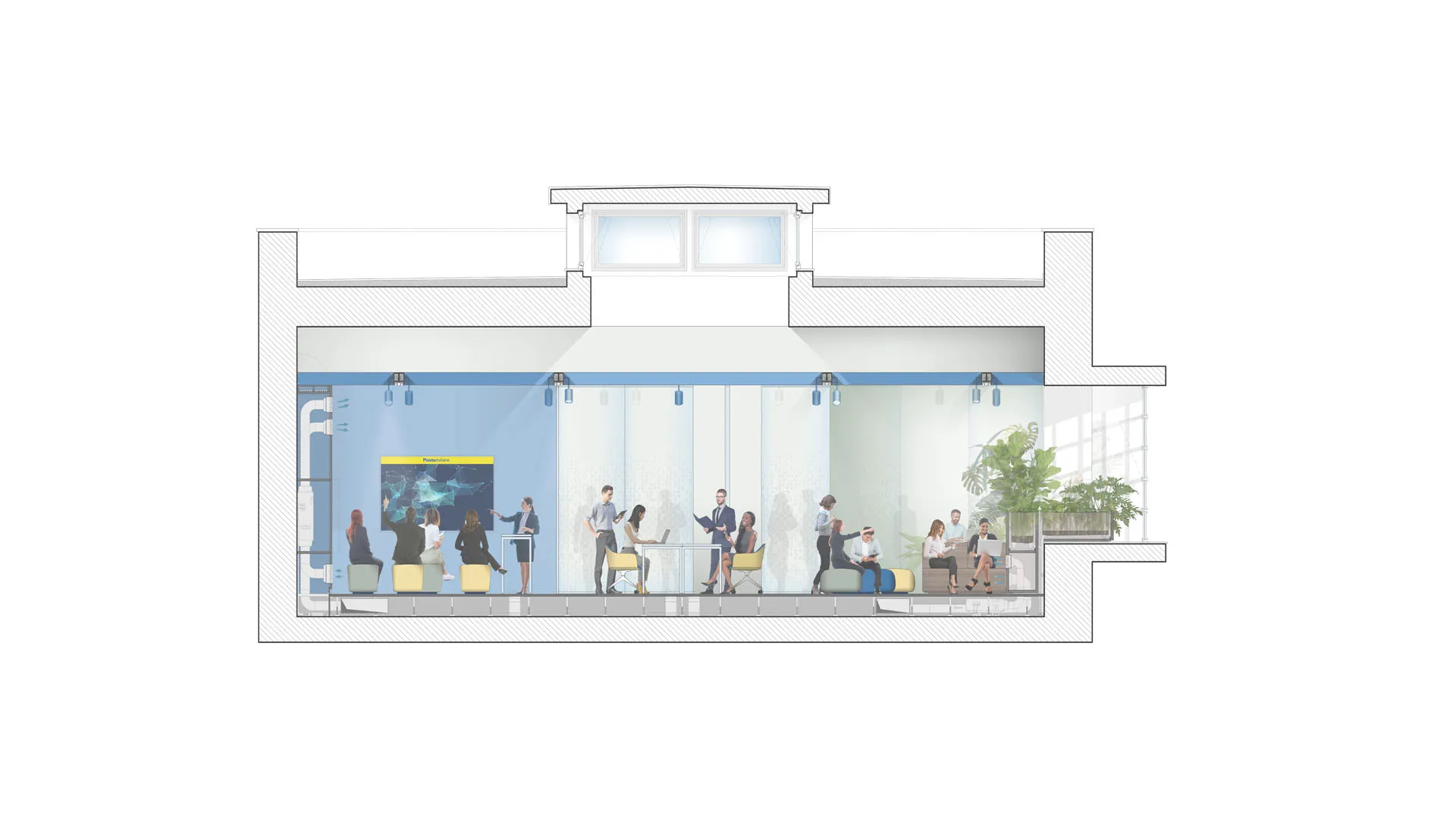
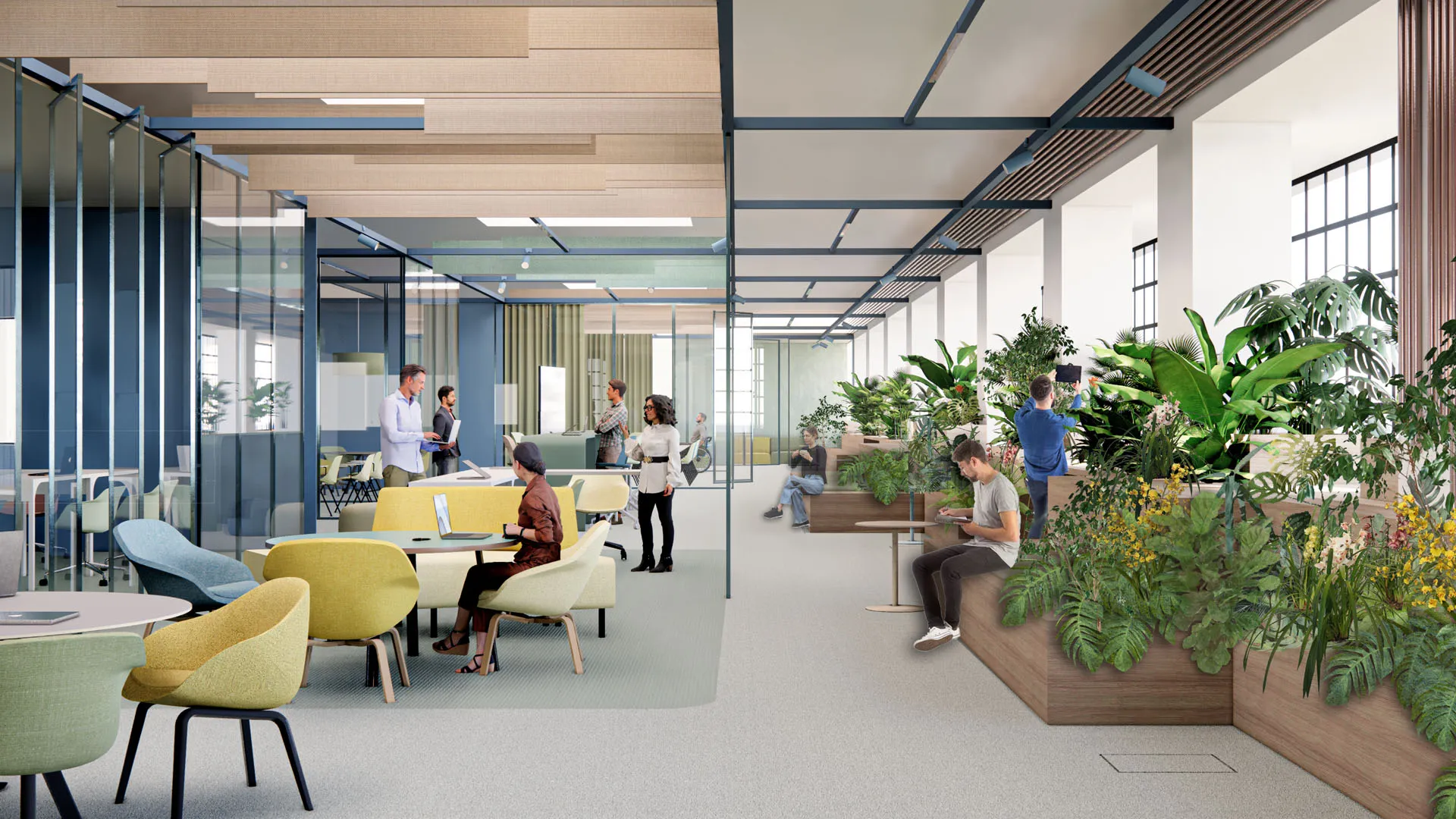
The design effortlessly integrates the building’s over one hundred years of history, creating a space that, in continuity with its historical evolution, harmoniously engages with the urban and landscape context.
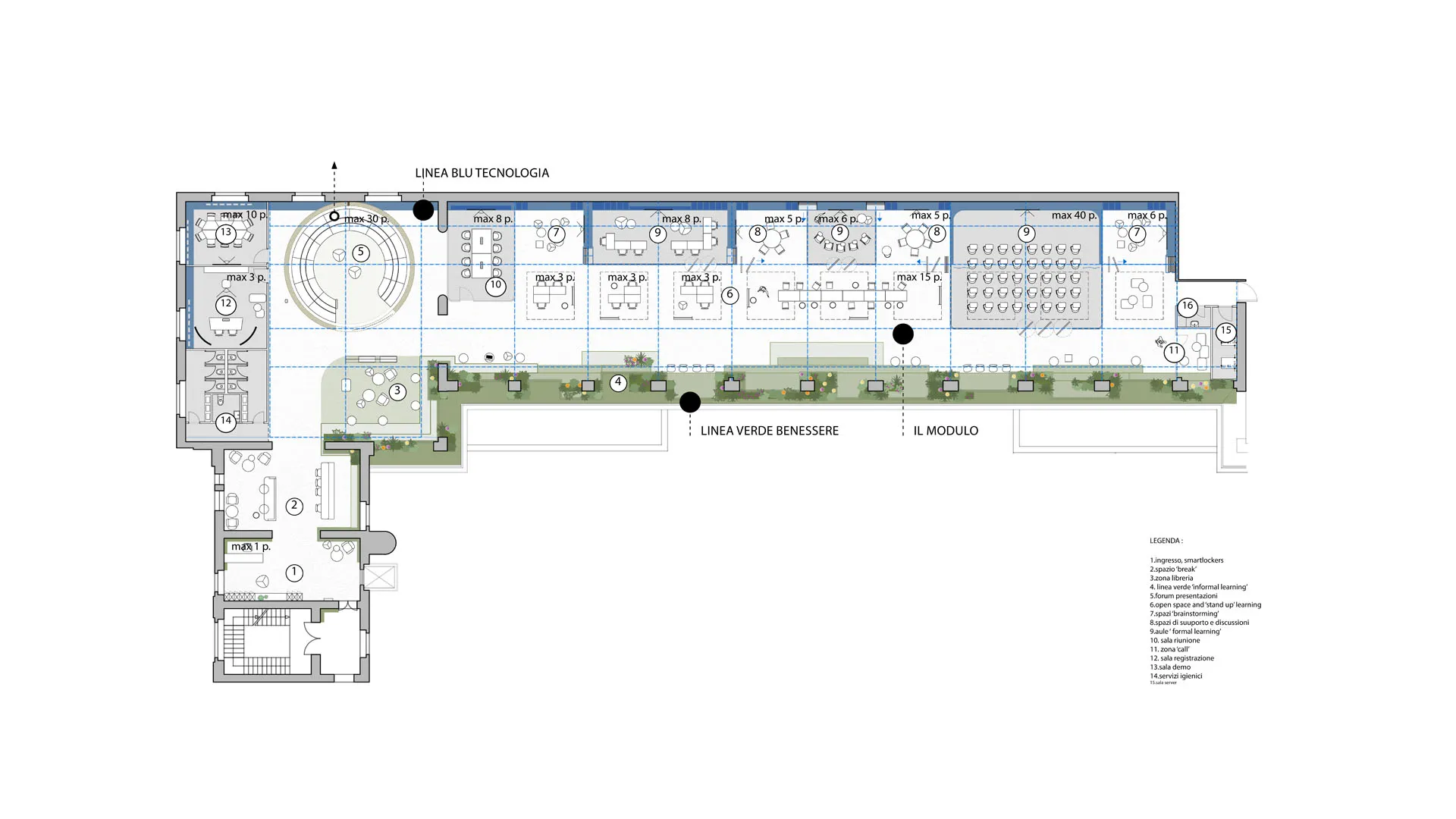
The architectural elements introduced are conceived as punctual, integrated, and recognizable additions, adhering to the principles of reversibility and minimal intervention. They contribute to strengthening awareness of the historical and cultural stratification that characterizes the building and the city of Palermo. The project introduces two main architectural devices into the existing space, capable of organizing and enhancing the interior spaces.
The GREEN LINE articulates a sequence of areas for work and informal training, directly connecting the activities with lush vegetation, conceived as a true linear greenhouse. This element becomes a mediating space between interior and exterior, offering panoramic views and enhancing environmental and perceptual comfort.
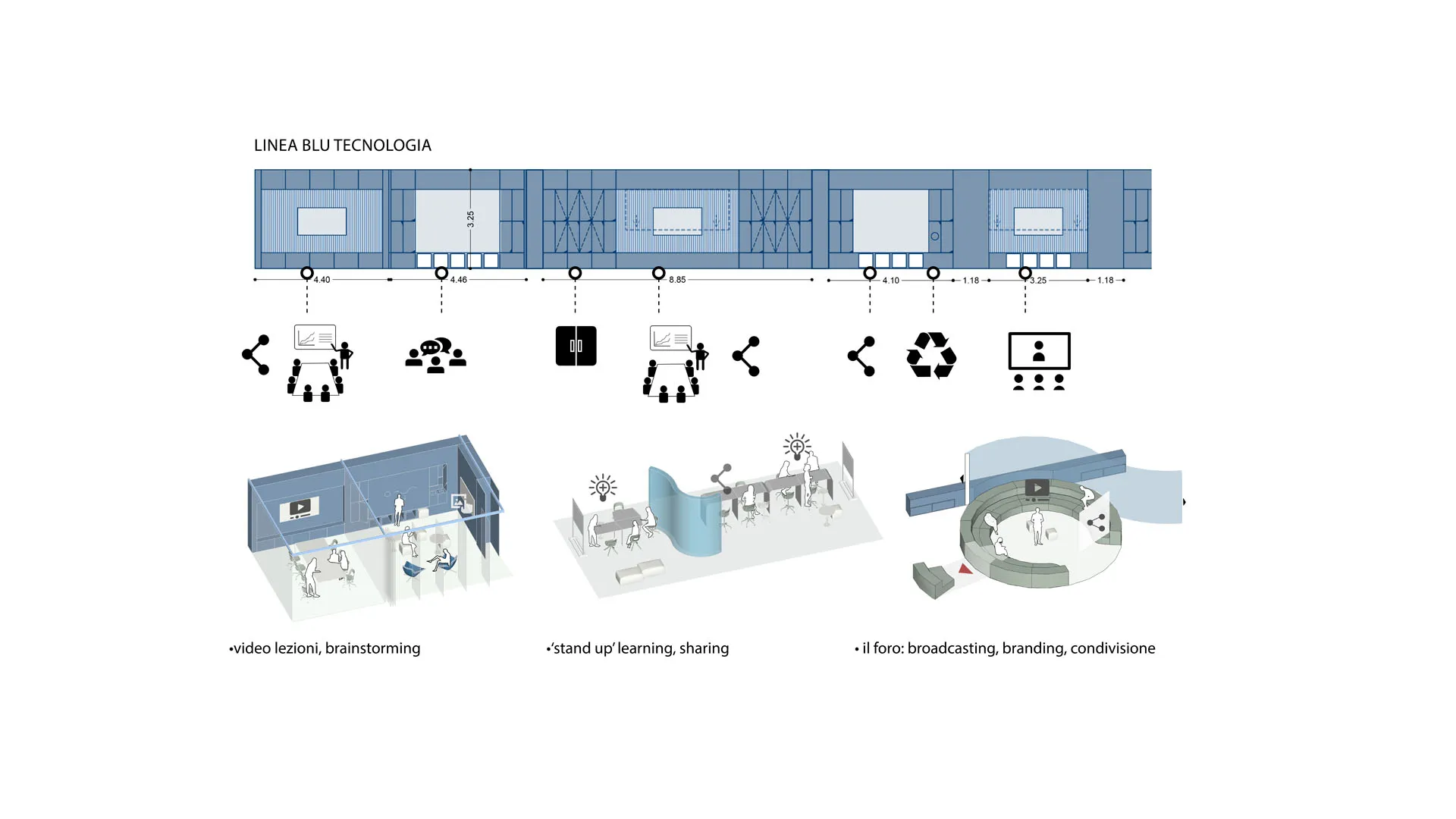
The BLUE LINE concentrates and organizes the technical and technological aspects serving the uses of the space; From this, the MODULO takes shape, a square-based grid sized to frame the large skylights of the existing roof. The resulting indirect light enhances a flexible infrastructure, capable of supporting different configurations and uses of the spaces.
A key element of the project is the desire to preserve and enhance the historical identity and testimonial value of the ancient telegraph activity, through the conservation and highlighting of the protected elements: the spatiality of the historic architecture, the bow window, and the pneumatic post pipes, understood as integral parts of the architectural and functional narrative of the site.