
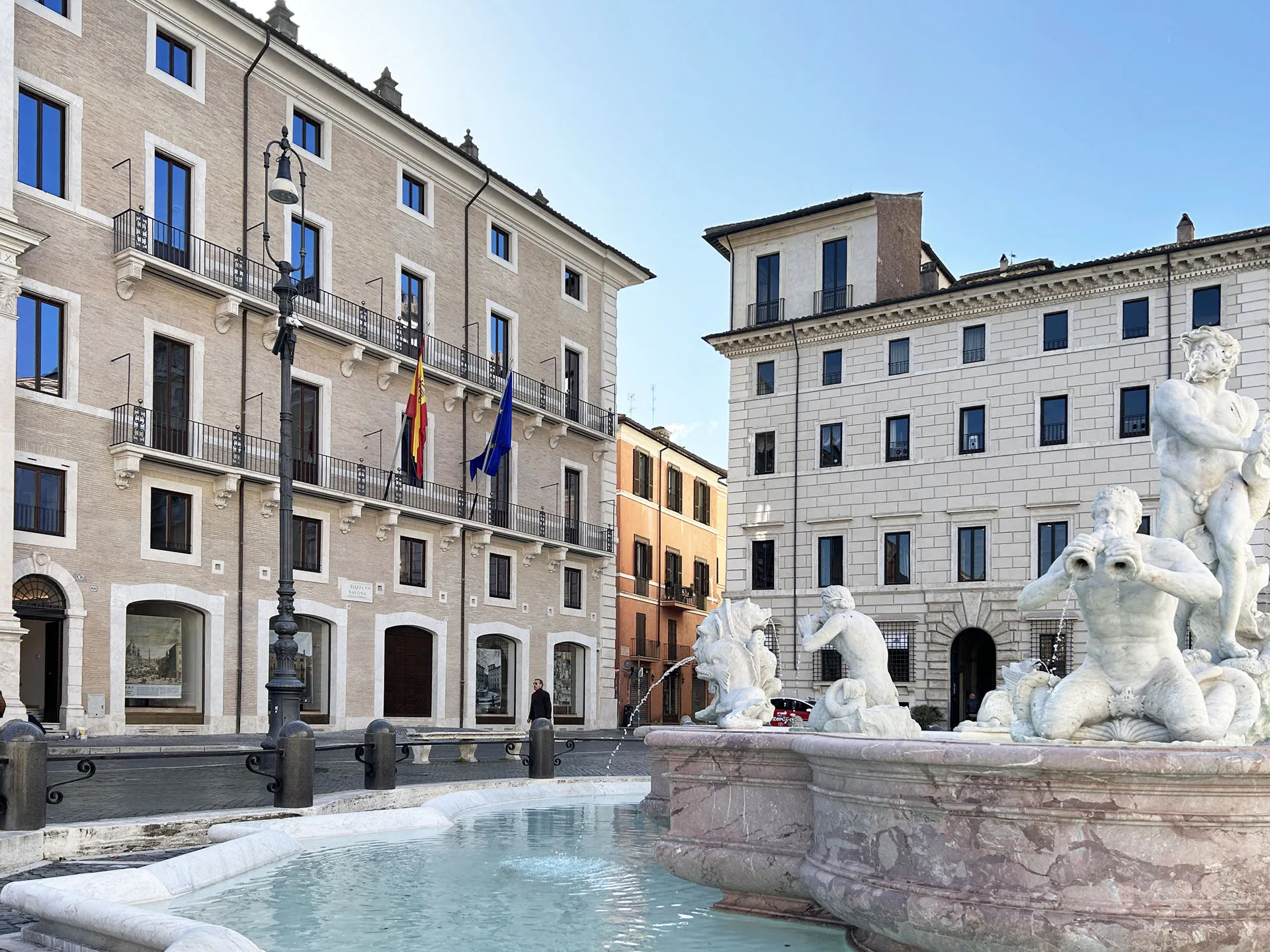
Chancellery of the Spanish Embassy to the Italian State
/ Code
Location: Roma
Date: 2018 – 2025
Project: restoration, design of new spaces, seismic adaptation, energy efficiency
Client: Opera Pia Stabilimenti Spagnoli in Italia
Assignment: preliminary project, definitive project, executive project and construction management
Role: designers in charge and coordinators of the working group
Status: Completed
Working group: CHVL Architetti Associati, Impianti: EIDEO – Servizi di Ingegneria S.r.l; Strutture: Ing. Roberto Furlanetto, TRAVAGLINI progetti
Under the high supervision of the Special Superintendency of Rome: Architects Antonella Neri, Architects Elvira Cajano, and Dr. Paolo Castellani
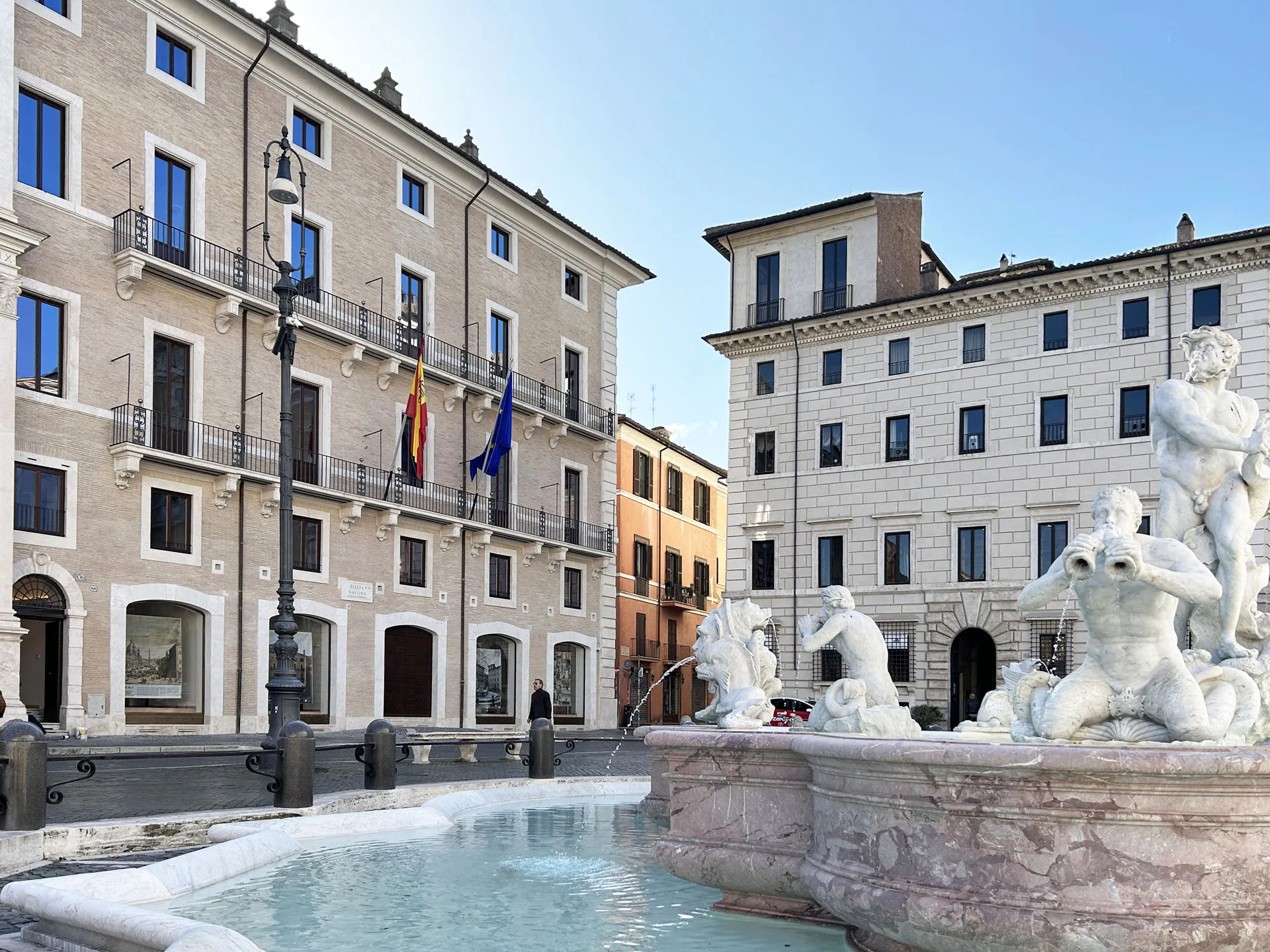
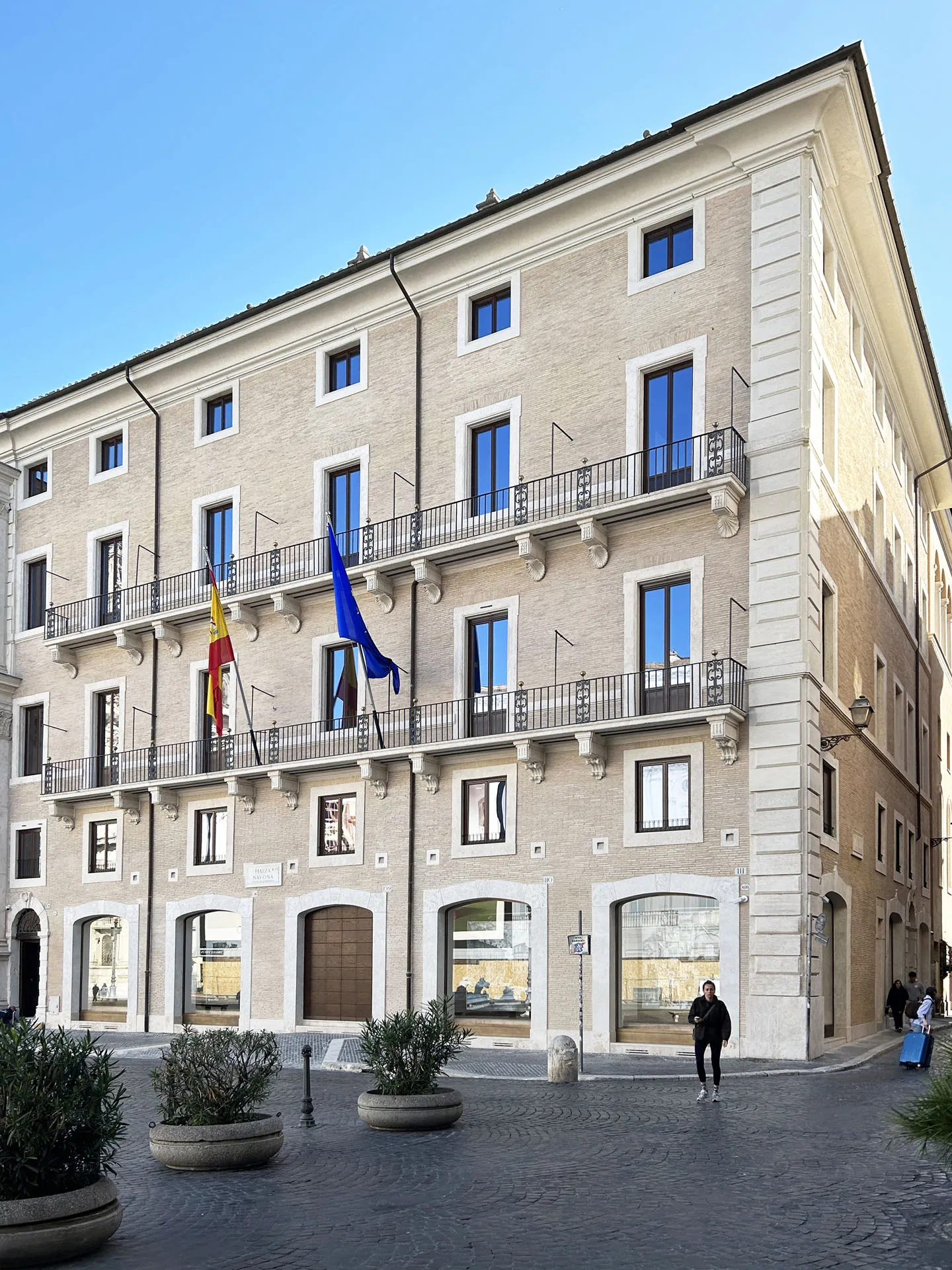
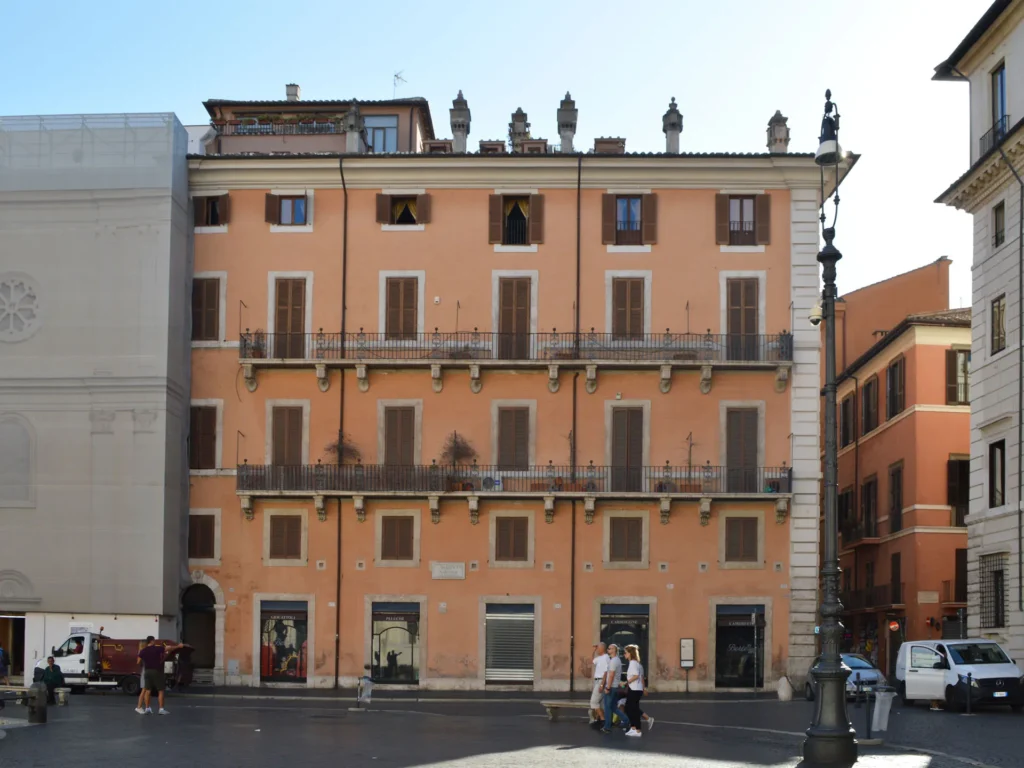
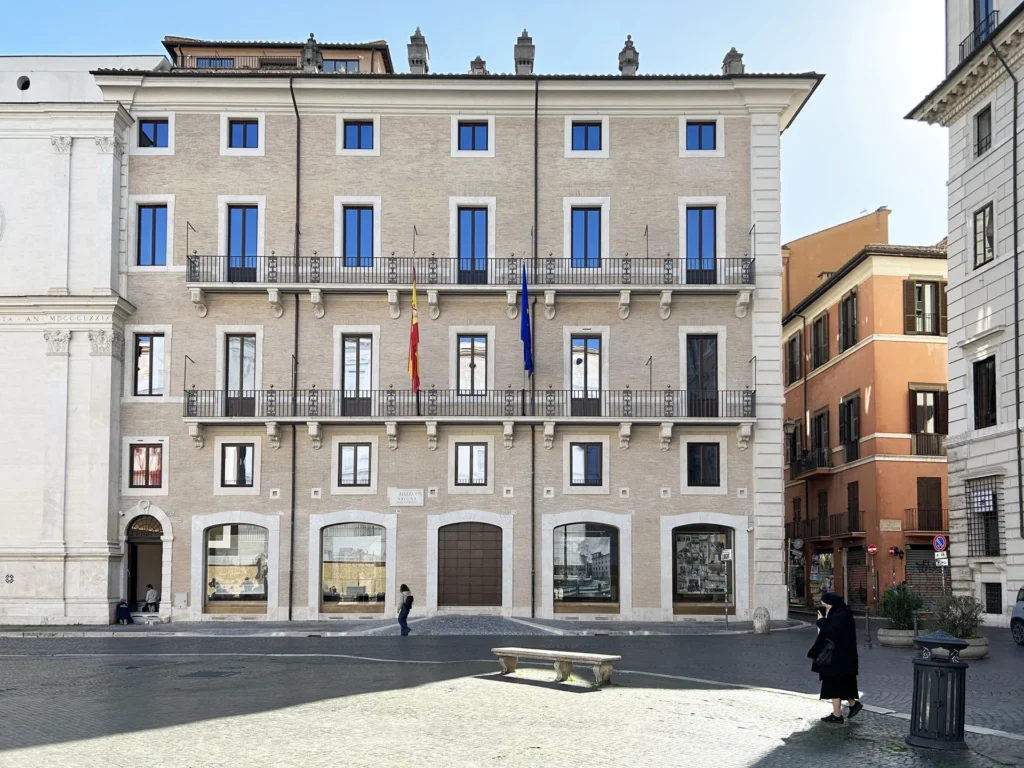
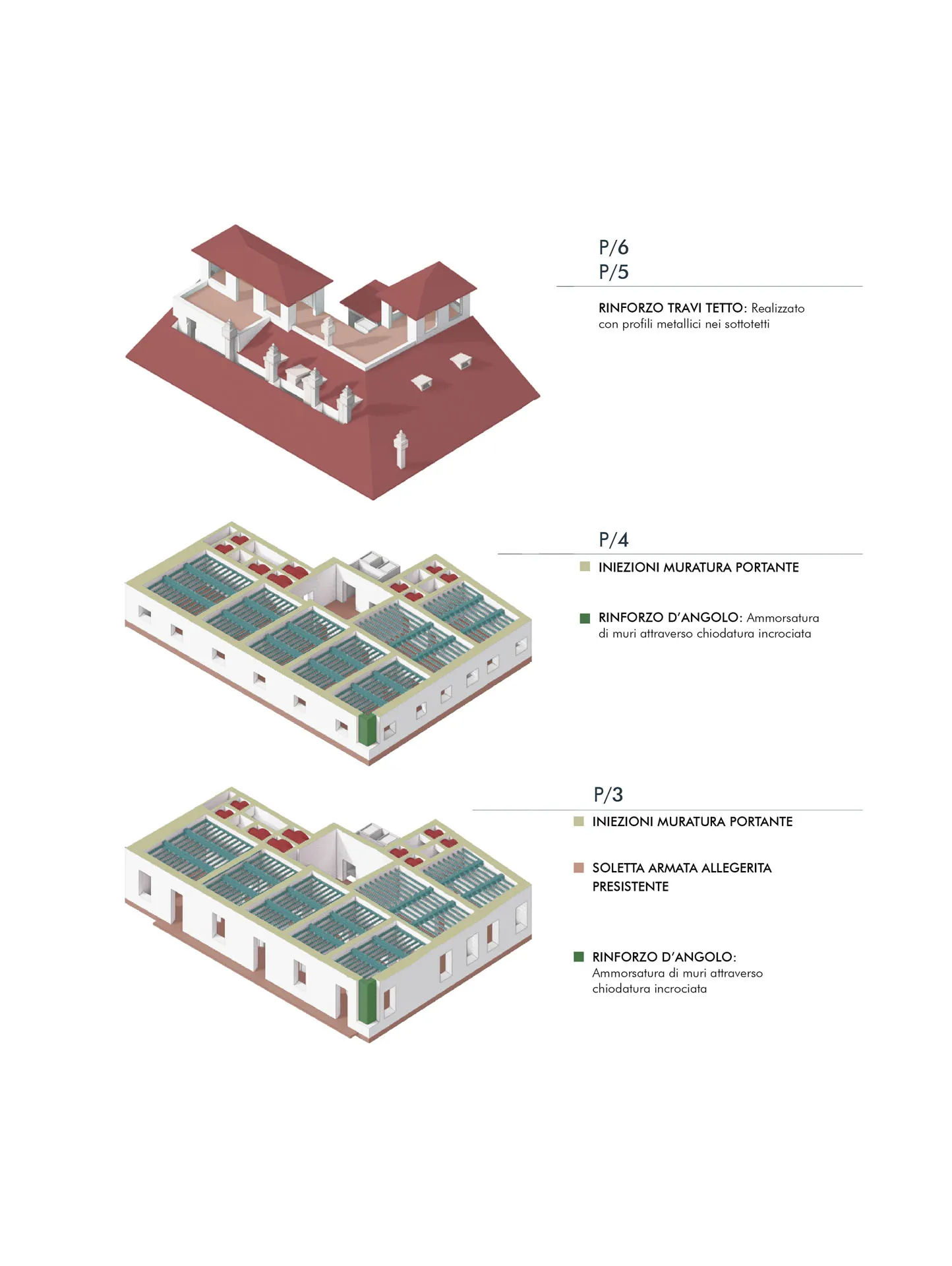
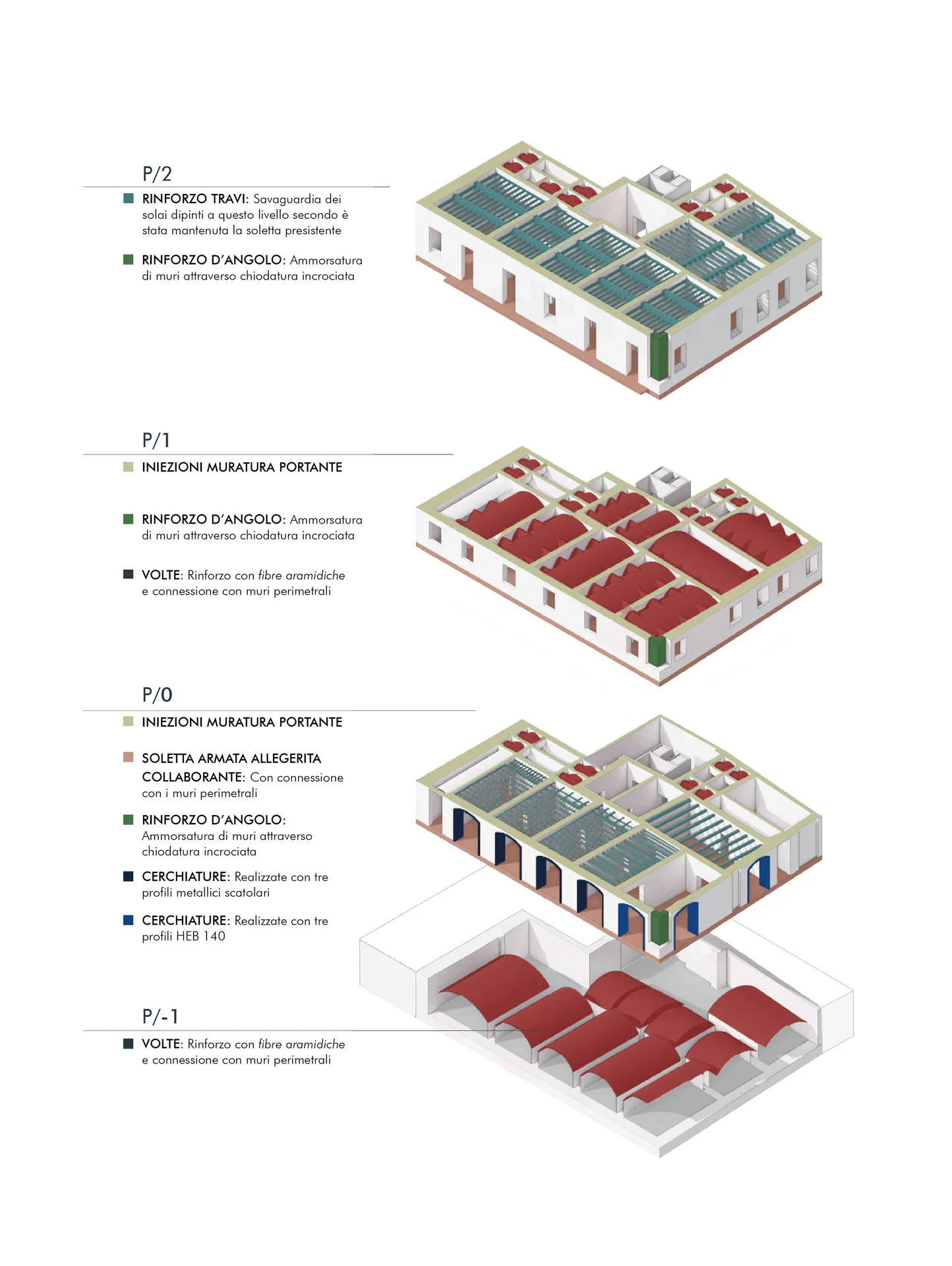
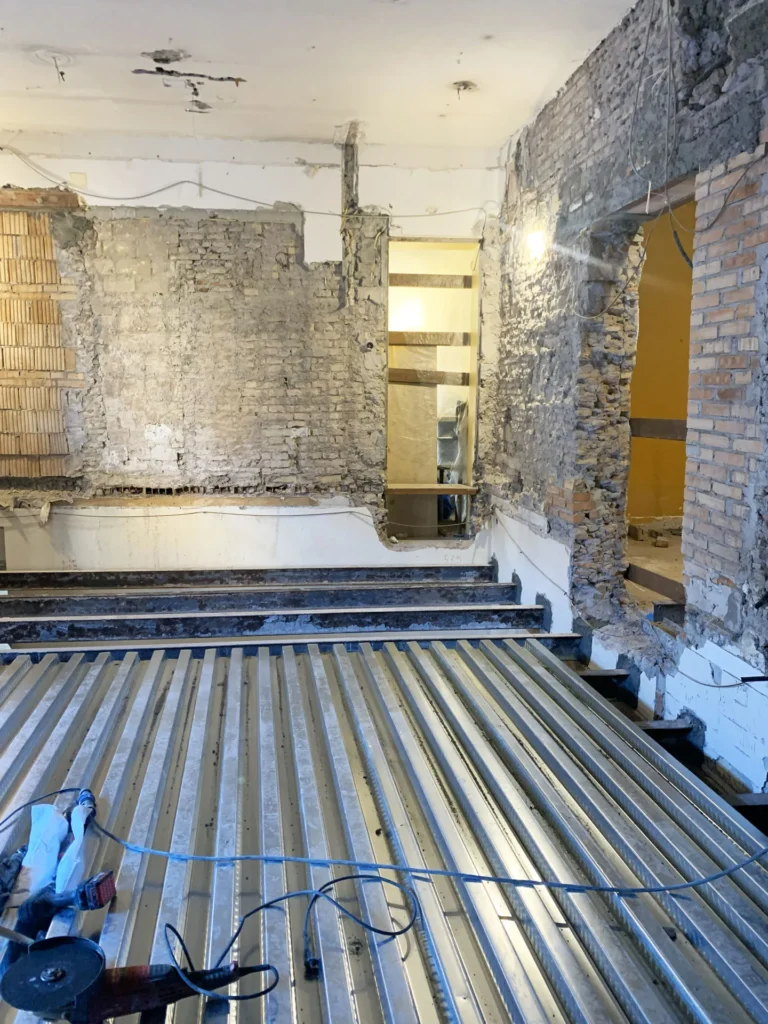
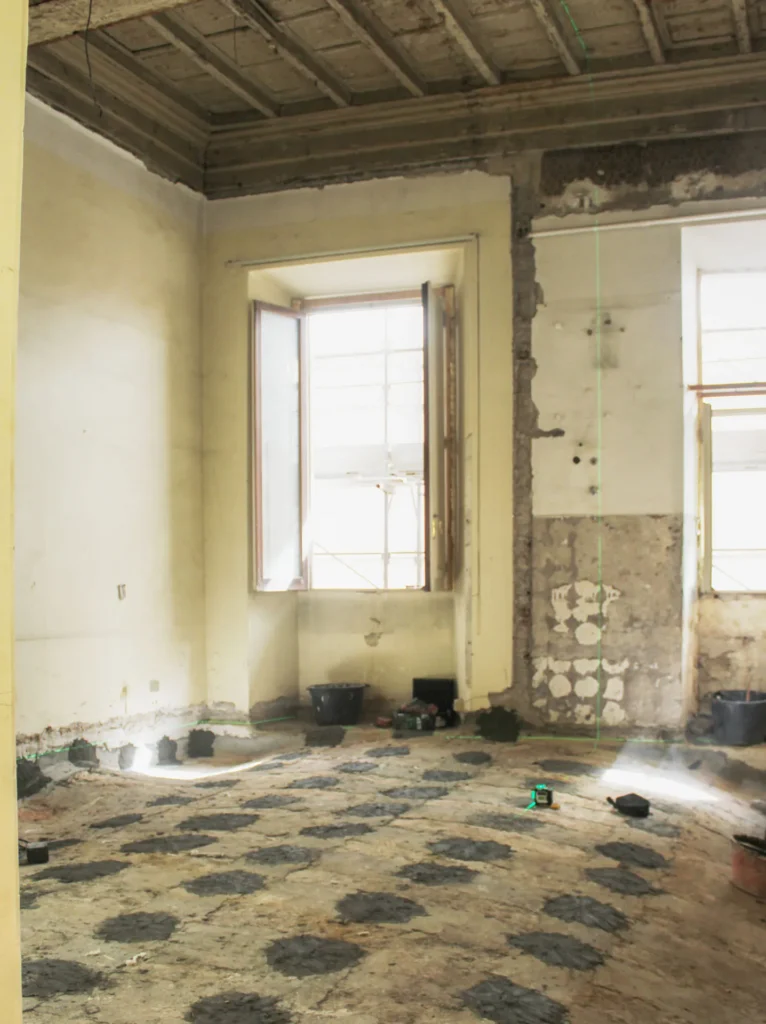
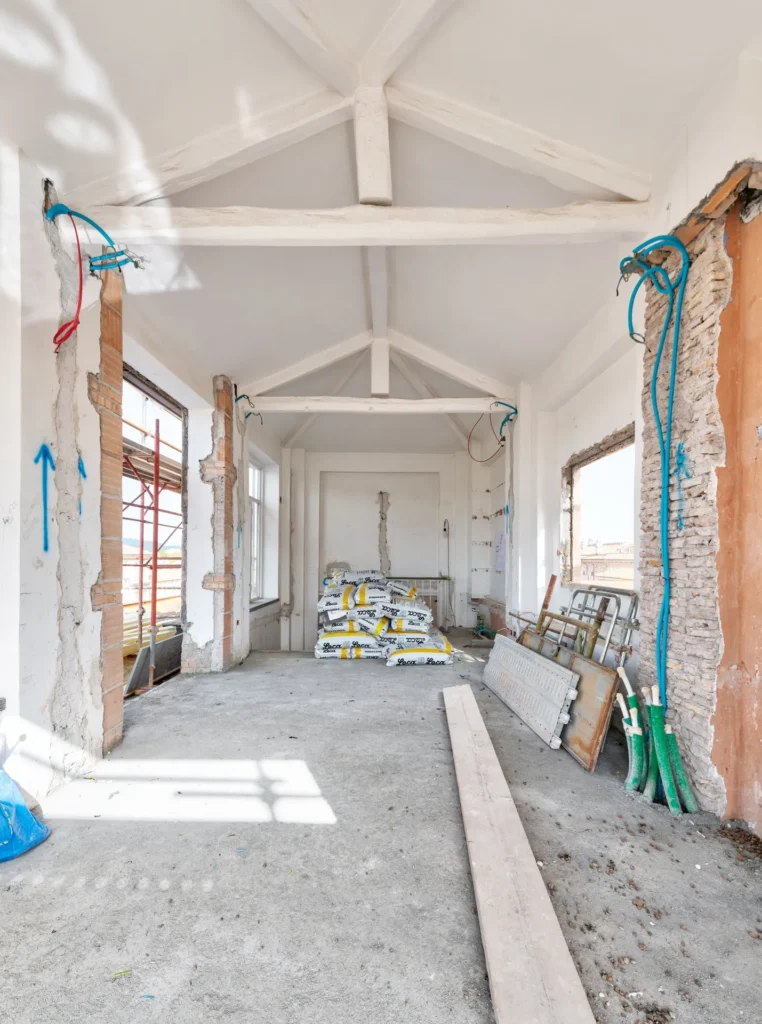
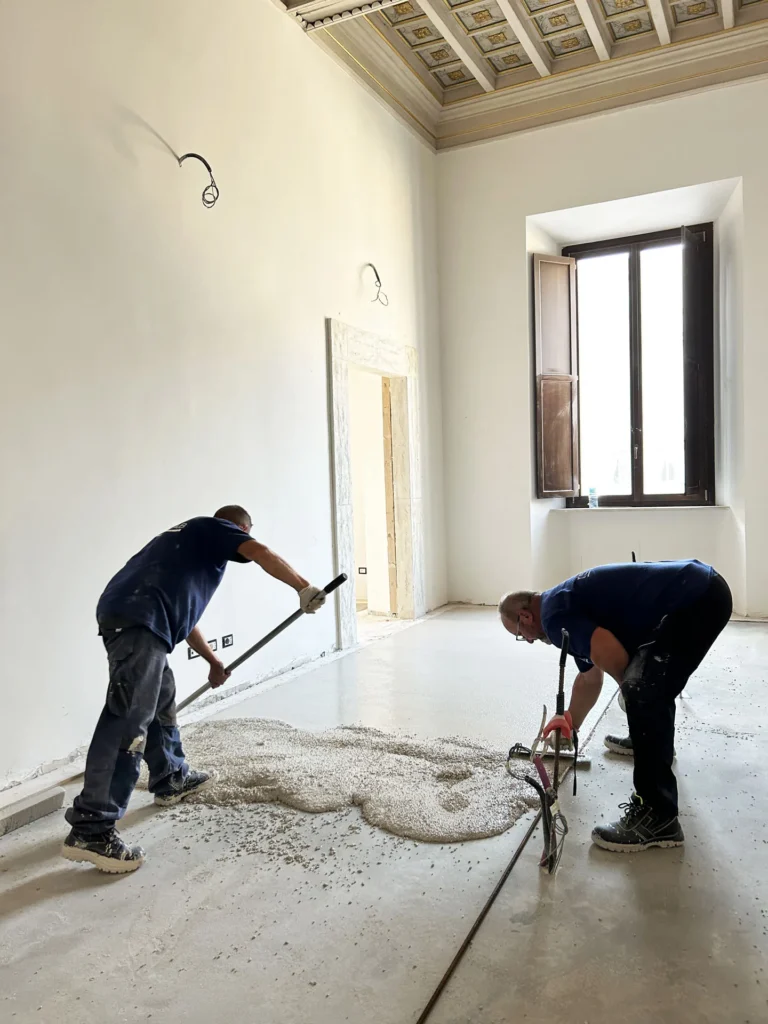
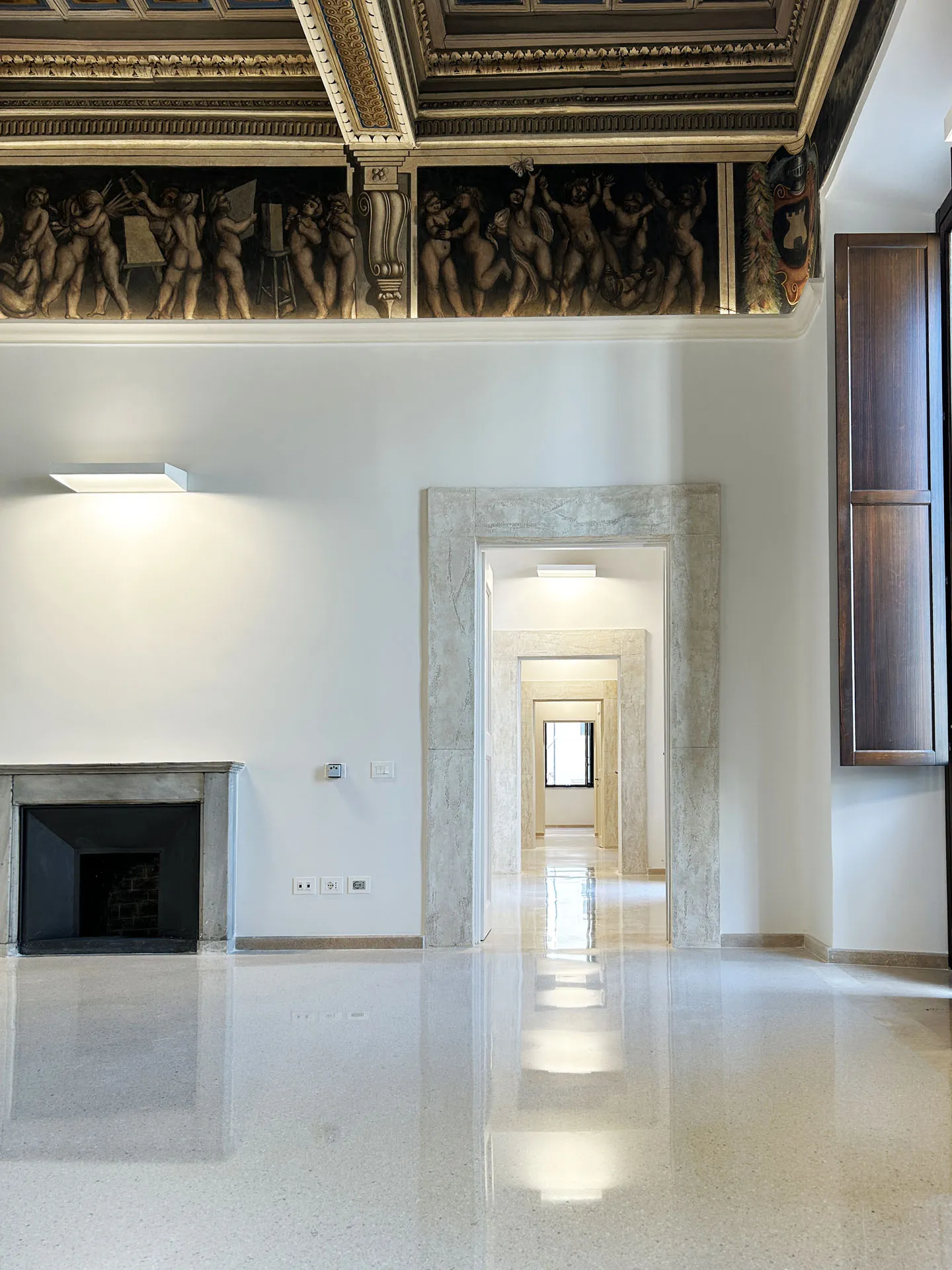
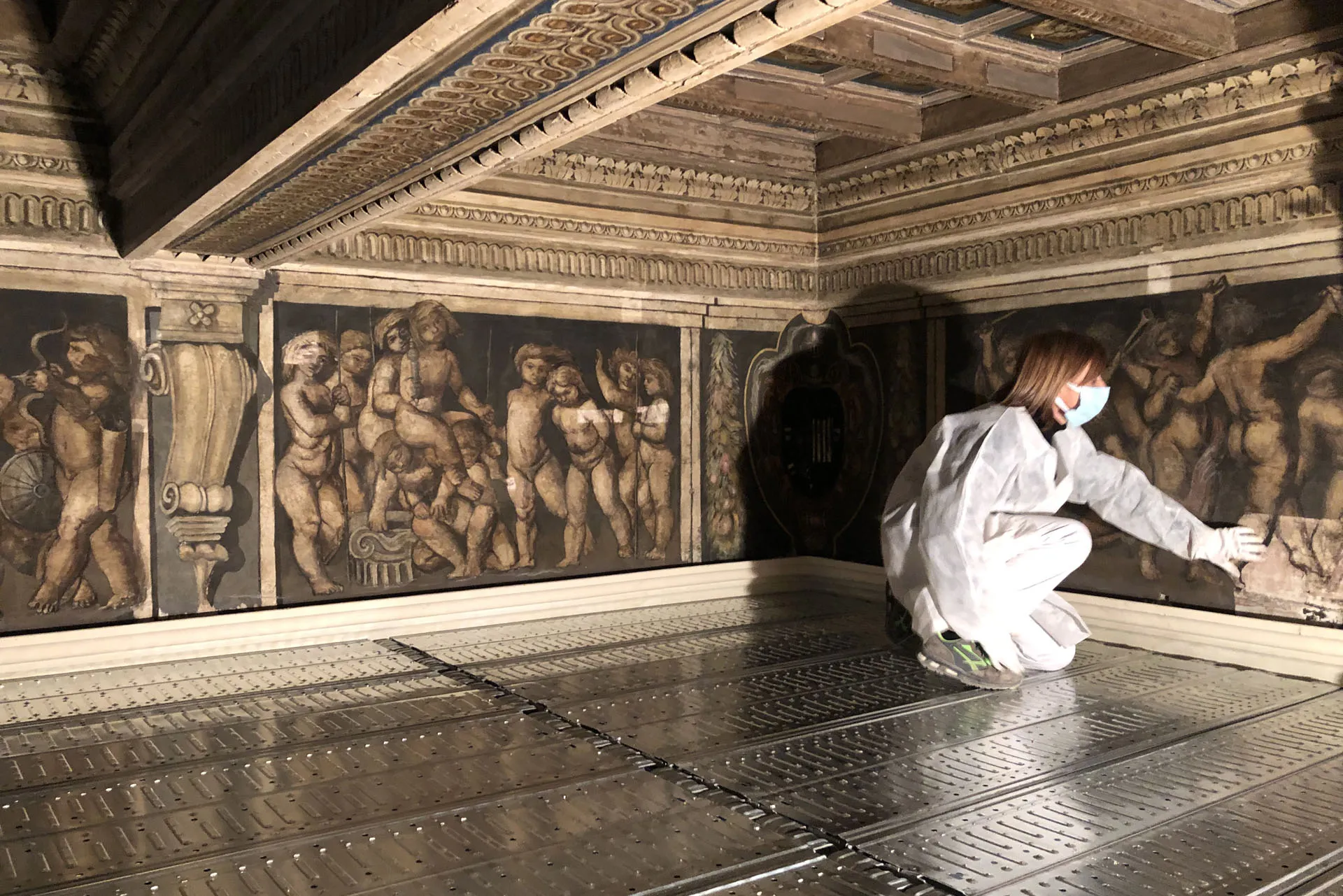
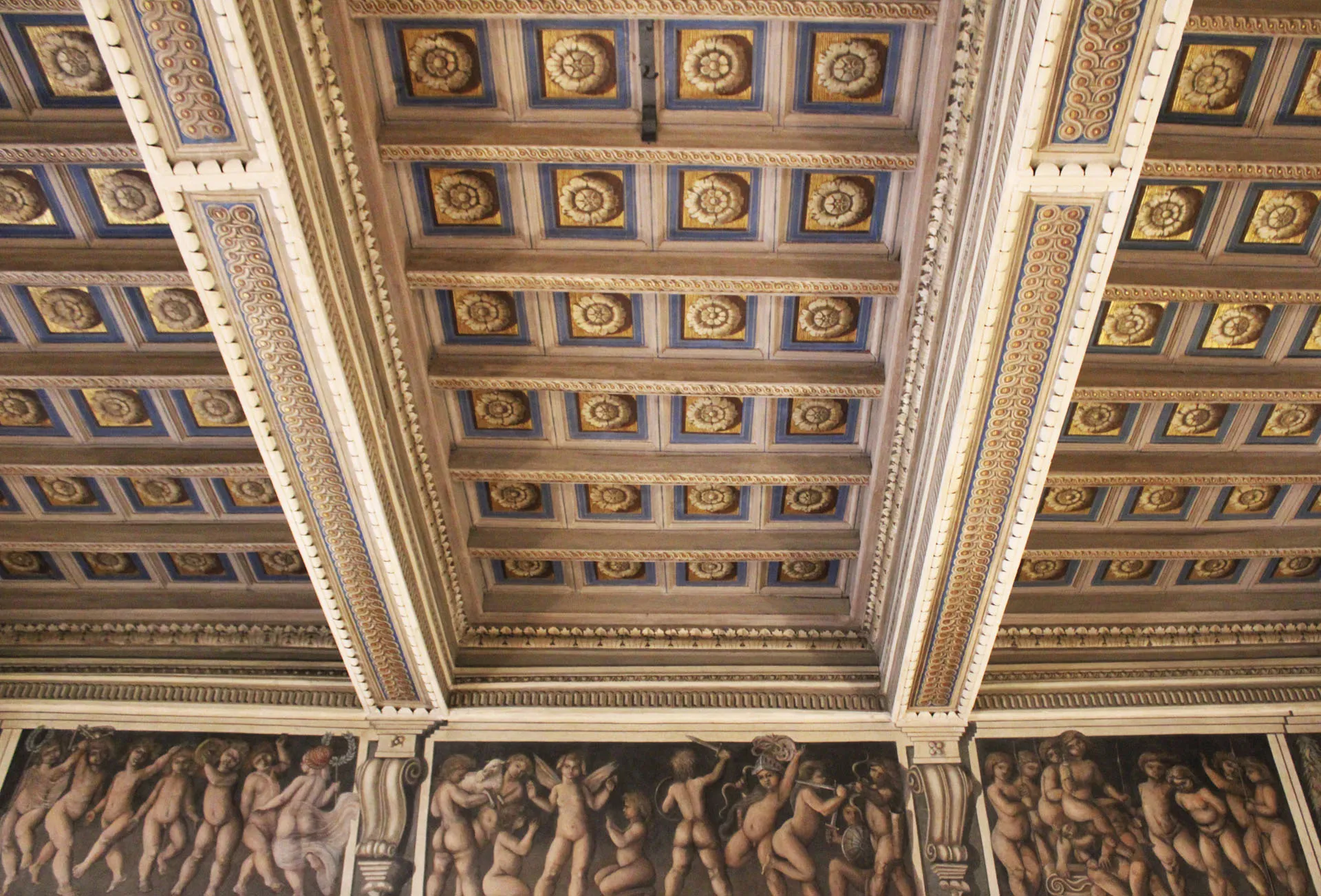
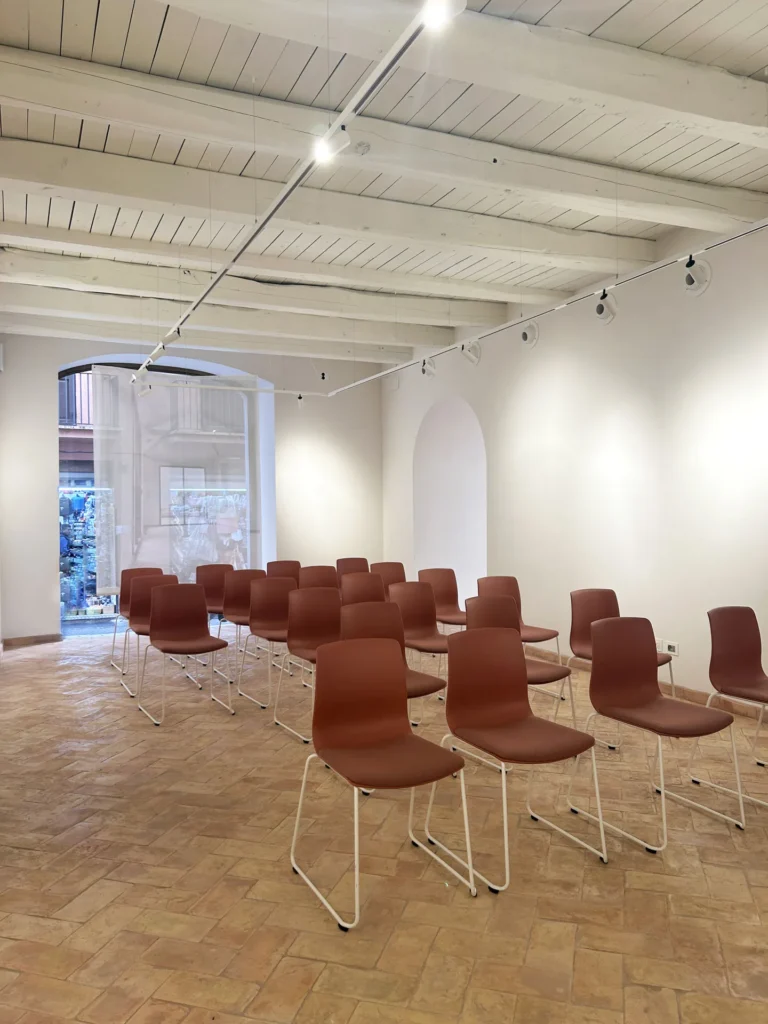
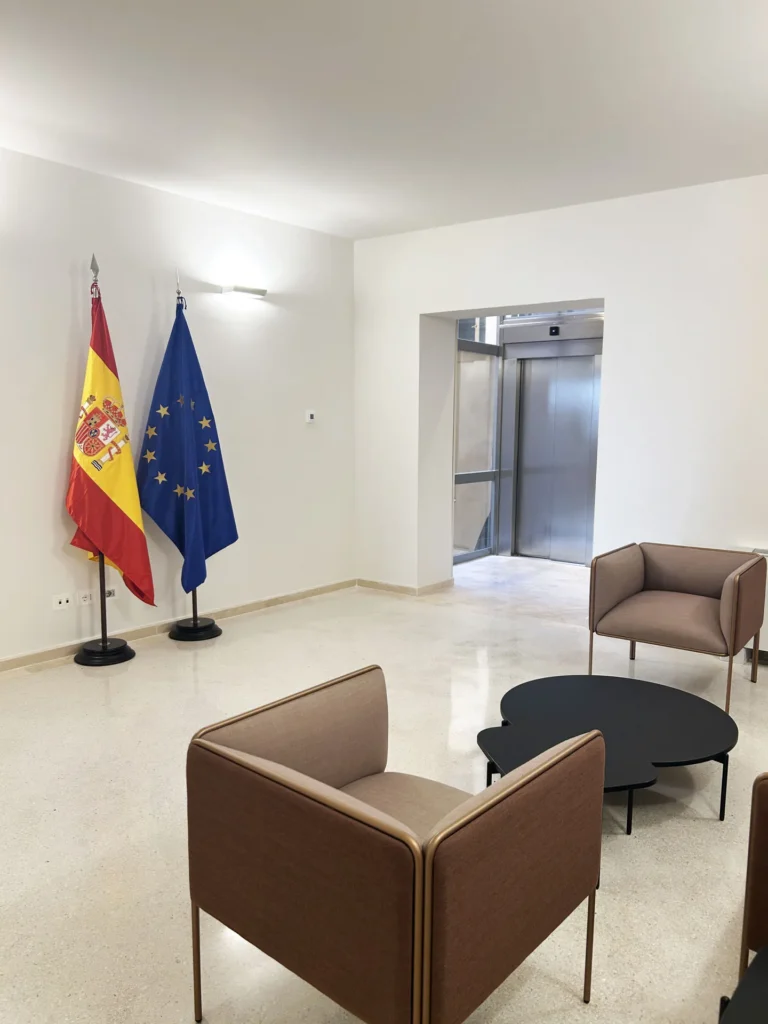
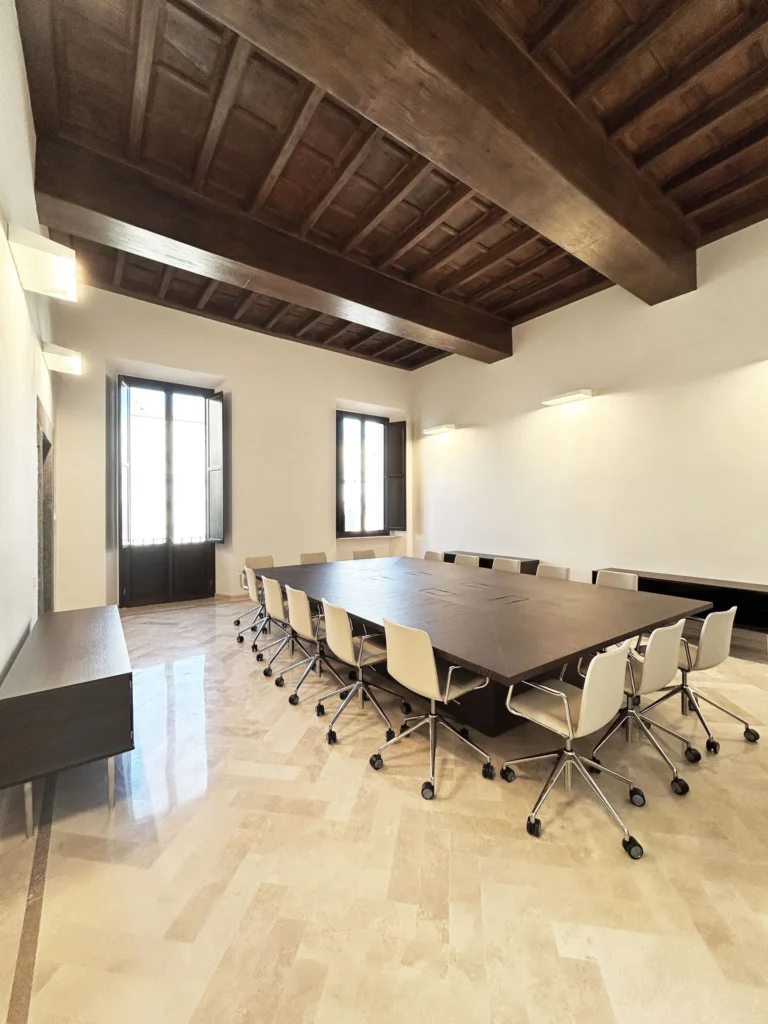
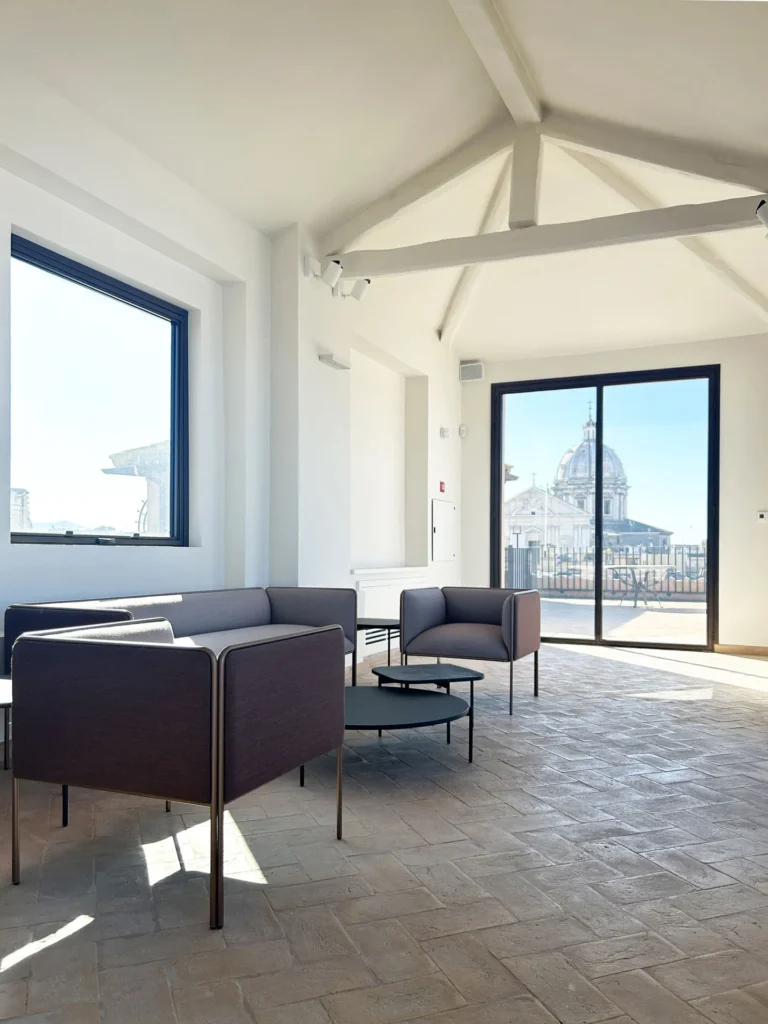
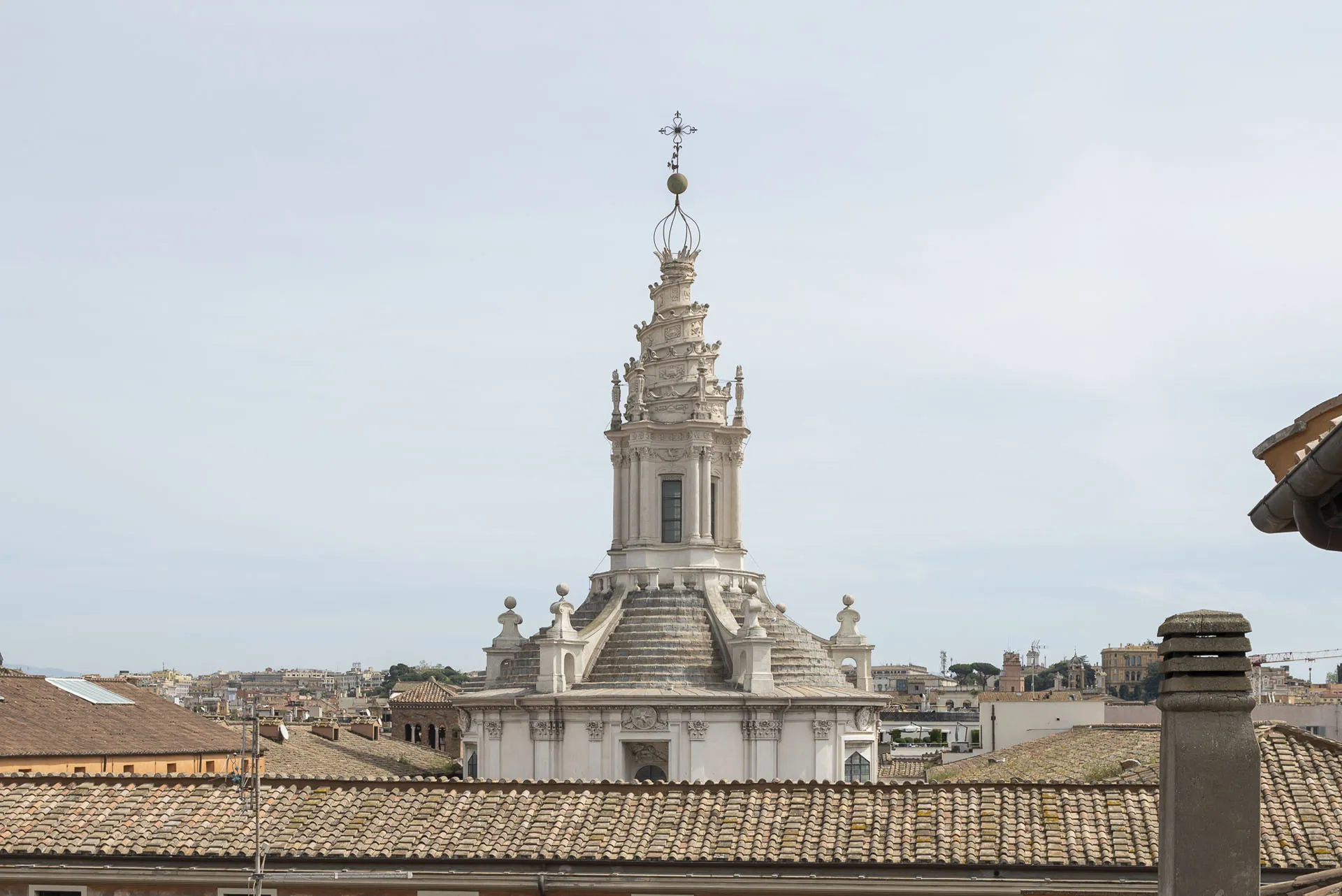
CHVL Studio conducted the design and construction management of a prestigious building that had undergone extensive renovations over a long period of time, profoundly altering its original appearance.
The project achieved the goal of restoring and adapting the building to its original use as a diplomatic residence, meeting all the requirements and technical requirements of current Italian and Spanish laws: static improvement of the structure to ensure the building’s Class IV use; complete overhaul of all utilities and installation of fire prevention systems; conservative restoration of the decorative paintings (frescoes and ceiling paintings); and accessibility of all levels of the building. These requirements then had to be combined with the need to enhance the internal spatiality, which involved the elimination of surreptitious, layered interventions carried out in different periods and which often detracted from the spaces of the large rooms overlooking Piazza Navona.
The most complex task was to upgrade or improve the building’s performance through conservative restoration and the recovery of the Palazzo’s original features.
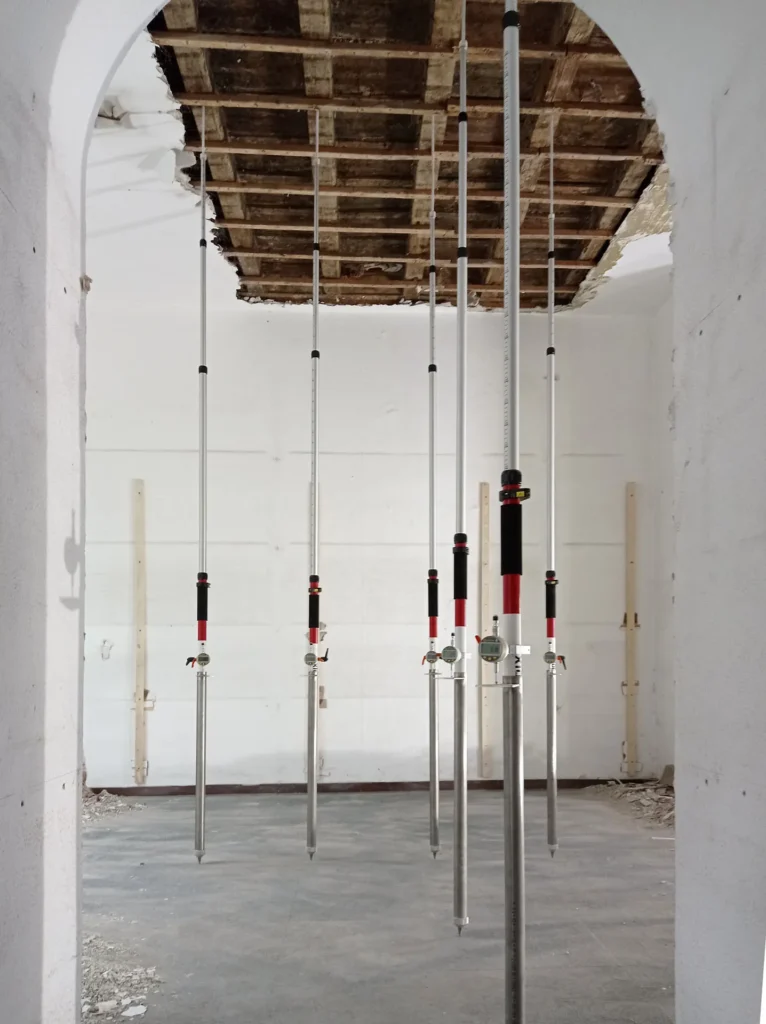
The seismic improvement project upgraded the building to Class IV, based on an in-depth structural and seismic study involving geological surveys and analysis of the foundations, walls, and floors. Consolidation work was carried out using basalt fibers, reinforced screeds, window surrounds, wall stiffening, and removal of excess, while respecting the compatibility of the materials and restoration principles.
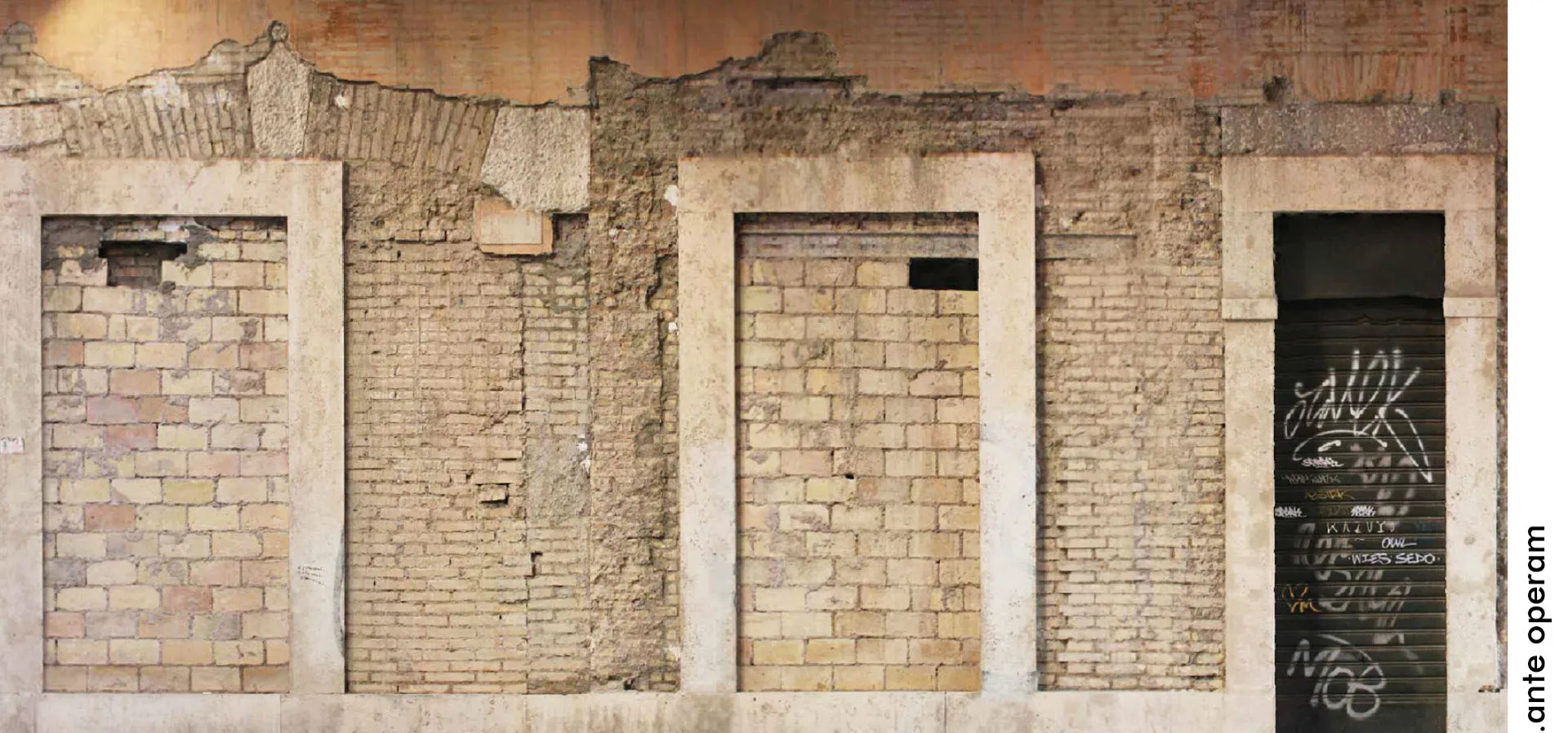
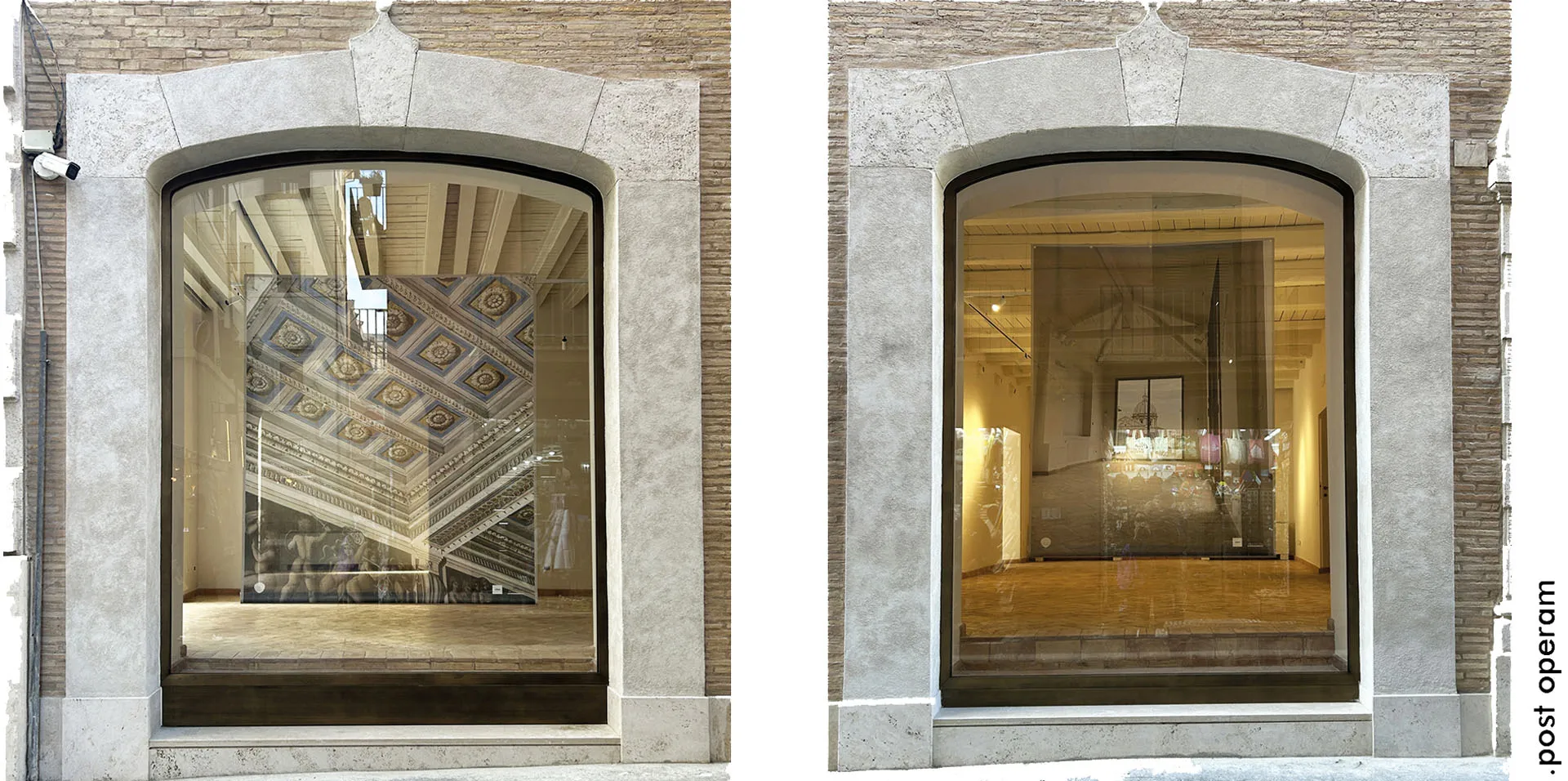
At the same time, a stratigraphic and historical study of the façades guided the restoration of the original architectural partition, altered by 20th-century interventions. The discovery of the arches of the old shops and archival research allowed the restoration of the original openings and the brick curtain wall, restoring the correct relationship between the palazzo and the Church of San Giacomo degli Spagnoli. The project, carried out by specialized restorers and under the supervision of the Superintendency, involved both the exterior façades and interior elements, with the aim of restoring the building’s historical, structural, and urban value.
The lighting design achieved the required lighting levels in all spaces, while also creating artistic lighting that, when the building is closed at night, provides Piazza Navona with glimpses of some of the palace’s most valuable features. The palace now houses the Spanish Embassy to the Italian Republic.